
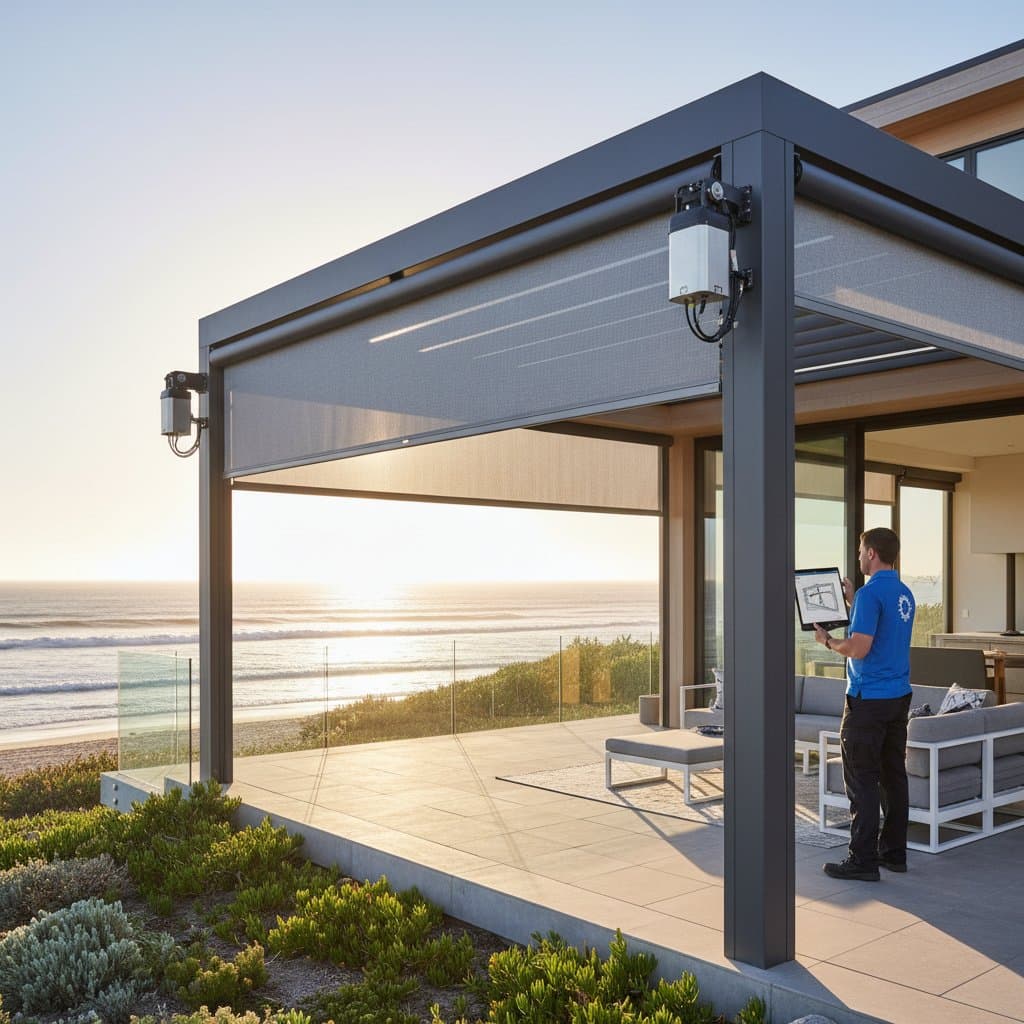
Cut Coastal Cooling Costs by 35 Percent with Smart Shades
Imagine returning home on a sunny afternoon, with sunlight reflecting off the ocean and generating intense heat through your windows. The air conditioner operates continuously, yet the indoor temperature remains elevated. Consider using a smartphone application to deploy outdoor smart shades, which immediately shade the patio and prevent solar heat from entering the home. This action reduces coastal cooling expenses by up to 35 percent, particularly in areas such as San Diego that receive abundant sunlight.
This article details how smart outdoor shades lower energy bills, safeguard homes from salt air and harsh sunlight, and enhance outdoor living areas. Readers learn about suitable automated shade types for coastal settings, associated costs, and circumstances that require professional installation.
Key takeaway: Installation costs for smart outdoor shades average between $1,500 and $10,000, varying by size, materials, and automation capabilities. Homeowners typically recoup the investment in a few years via reduced energy consumption and greater comfort.
For guidance in selecting an appropriate system, obtain estimates from qualified local shade specialists familiar with coastal conditions.
Cost Factors
Prices for smart outdoor shade systems range from $1,500 to $10,000 or higher, influenced by materials, design intricacy, and automation features. The typical expenditure for a mid-range setup covering a patio or expansive window area amounts to approximately $4,800.
Costs generally distribute as follows:
- Motorized roller shades: $1,500 to $3,500 per opening
- Louvered pergola systems: $6,000 to $12,000 for a complete structure
- Retractable awnings with smart sensors: $3,000 to $7,000
- Integrated smart shade networks (linked to home automation): $8,000 to $15,000
Primary Cost Influences
- Size and coverage area: Larger areas or multiple sections elevate material and motor expenses.
- Materials: Options such as marine-grade aluminum, stainless steel, and UV-resistant fabrics incur higher costs yet provide extended durability in salty coastal environments.
- Automation level: Systems with basic remote operation cost less than those incorporating light sensors, temperature activation, or application-based programming.
- Installation complexity: Adapting shades to current structures or connecting to a smart home system increases labor requirements.
- Permits and electrical modifications: Wiring or structural alterations necessitate extra charges from electricians or municipal authorities.
Pro tip: Select corrosion-resistant hardware and sealed motors for coastal installations. Salt-laden air accelerates deterioration of ordinary steel parts, undermining long-term energy efficiencies.
Retractable Awnings with Sensors
Retractable awnings deliver adaptable shading that deploys electronically from a protective cassette. Numerous models feature motion or wind sensors that automatically withdraw the awning in response to strong breezes.
Best for: Residences in coastal zones with fluctuating weather and expansive seating zones.
Advantages:
- Covers substantial areas effectively
- Shields outdoor furnishings and deck surfaces
- Retracts for safety in adverse conditions
Drawbacks:
- Involves additional mechanical elements requiring upkeep
- Demands robust mounting points and electrical connectivity
Photo: Joe Schmelzer / Getty Images
Smart Interior-Exterior Hybrid Shades
In locations near the shoreline with persistent humidity and salt exposure, hybrid systems mounted within window frames offer an effective solution for managing exterior light. These utilize dual-layer fabrics to deflect solar heat prior to its penetration through glass.
Best for: Properties on the beachfront or condominiums featuring prominent ocean-view windows.
Advantages:
- Preserves interior surfaces from discoloration
- Eases the burden on heating, ventilation, and air conditioning units
- Demands less ongoing maintenance compared to fully exterior installations
Drawbacks:
- Offers reduced coverage for extensive outdoor spaces
- Requires accurate measurements to achieve optimal performance
Photo: Hero Images / Getty Images
DIY Versus Professional Installation
DIY Installation
Assembling basic motorized roller shades or compact awnings qualifies as a moderate-difficulty do-it-yourself endeavor, provided electrical outlets exist nearby.
Required tools:
- Power drill, level, and stud finder
- Ladder and safety harness for high placements
- Electrical tester and wire connectors
Procedure:
- Measure precisely. Document the precise width and height of each area.
- Install brackets. Fasten securely to wooden framing or masonry with corrosion-proof screws.
- Secure the roller or cassette. Verify level positioning to prevent operational issues.
- Wire for power. Connect to an available outlet or route wiring discreetly via protective conduit.
- Configure the motor. Employ the provided application or remote to establish operational limits and routines.
Do-it-yourself approaches conserve $500 to $1,500 in labor fees, although errors in wiring or alignment may lead to expensive corrections. Adhere to safety protocols and regional building regulations at all times.
Professional Installation
Professionals prove essential for expansive or interconnected systems. They guarantee watertight seals, hidden wiring, and accurate motor adjustments.
Labor charges span $500 to $2,000, scaled to project scope. Qualified installers often manage permitting for any structural adjustments.
Solicit bids from experienced local contractors specializing in coastal applications. Such experts advise on materials suited to particular local weather patterns.
Maintenance and Longevity
Coastal atmospheres, while scenic, challenge outdoor components rigorously. Scheduled cleaning and evaluations maintain peak functionality for smart shades.
Essential maintenance practices:
- Flush with fresh water monthly to eliminate accumulated salt deposits.
- Examine hardware quarterly for signs of rust and apply lubricant to joints yearly.
- Verify fabric tautness and alignment to avert early degradation regularly.
- Wipe sensors gently with a soft cloth to sustain precise environmental detection.
- Encase electronics in waterproof enclosures for systems in direct exposure.
Proper upkeep enables high-quality smart shades to endure 10 to 15 years with only minor part replacements.
Frequently Asked Questions
How Substantial Are the Cooling Cost Savings from Smart Shades?
In sun-intense coastal regions, automated shades diminish indoor heat accumulation by up to 35 percent. This reduction lessens air conditioning demands and yields tangible monthly utility reductions.
Do Smart Shades Perform Well in Wind-Prone Locations?
Affirmative, provided models carry ratings for coastal winds. Retractable awnings benefit from motion sensors that initiate withdrawal during gusts. Louvered pergolas exhibit superior resistance to winds.
Is Integration with Existing Home Automation Possible?
Contemporary systems interface seamlessly with platforms including Google Home, Alexa, or Apple HomeKit. Program shades to activate upon rising indoor temperatures or at designated daily intervals.
Implement Coastal Upgrades for Lasting Efficiency
Smart outdoor shades deliver immediate enhancements in comfort and cost management for coastal residences. By blocking solar heat and resisting environmental stressors, these systems extend usability of outdoor areas year-round. Consult local experts to tailor a solution that aligns with specific property needs and budget constraints.