
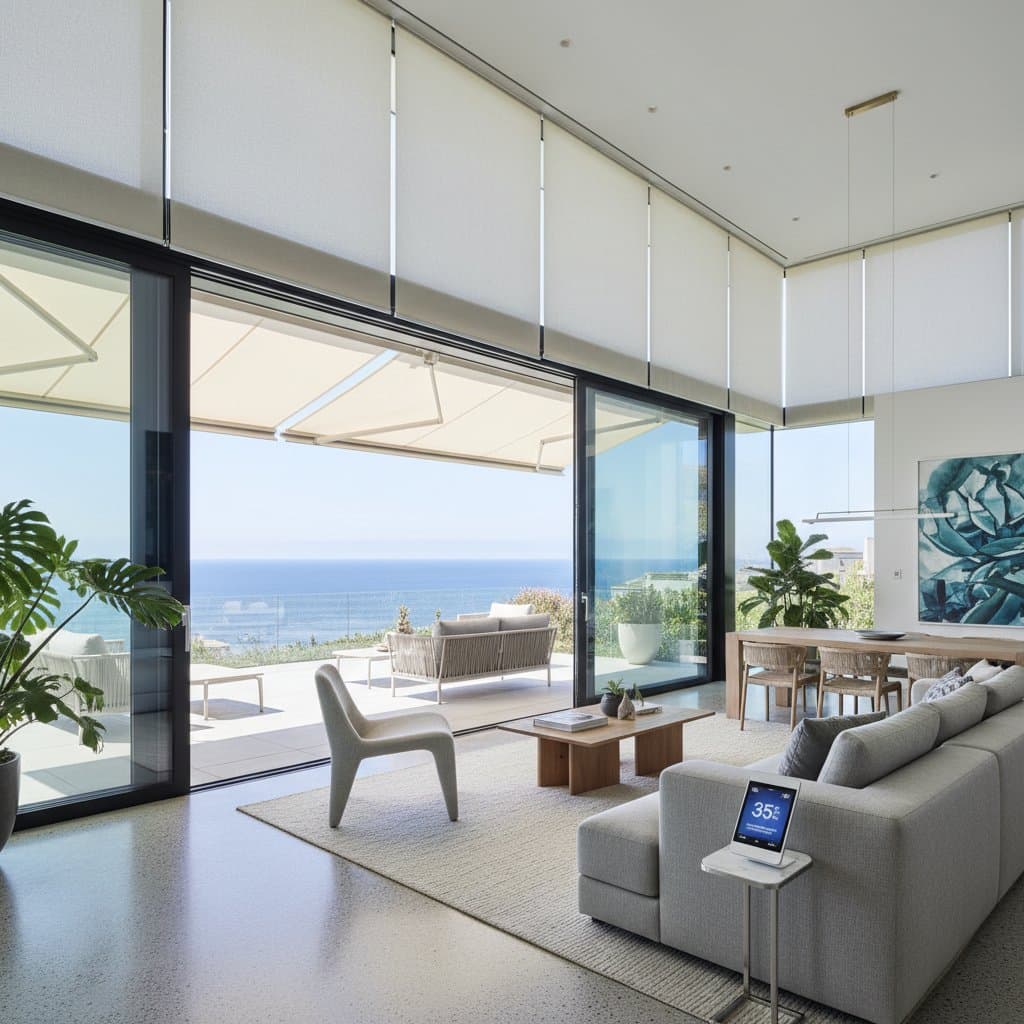
Achieving Strong Returns on Investment
Initial expenditures appear substantial, but sustained savings prove noteworthy. Coastal residents frequently achieve energy decreases of 25 to 35 percent. Systems recoup costs via diminished utilities and optimized HVAC performance over time.
Furthermore, smart shades shield furnishings, floors, and artwork from UV degradation, upholding property value and aesthetics.
Selecting Appropriate Smart Shade or Awning Systems
Choices hinge on architectural style, solar exposure, and daily routines. Some opt for solar screen fabrics that diffuse light; others select opaque options for optimal privacy and heat blockage.
Varieties of Smart Shades
- Solar shades: Constructed from fabrics that repel UV rays while upholding outward visibility. Suited for expansive ocean-view windows.
- Cellular shades: Incorporate honeycomb cells that capture air for superior insulation.
- Roller shades: Offer streamlined profiles ideal for contemporary coastal designs.
- Motorized awnings: Project over outdoor areas to supply shade and curb indoor heat influx.
Essential Features
- UV protection: Seek fabrics blocking at least 90 percent of UV rays.
- Moisture resistance: Critical in salty, humid coastal settings.
- Smart compatibility: Select systems integrating with home assistants and apps.
- Quiet motors: Premium units provide seamless, noiseless adjustments.
Fabric and Color Choices
Light hues reflect heat; darker shades absorb it. Neutral or pale tones suit beach residences, promoting luminous, open atmospheres. Acrylic or treated polyester materials endure salt-laden air effectively.
Installation Options: Professional versus Self-Installation
Manual shades permit homeowner installation, but motorized and solar-powered variants typically necessitate expert involvement. Professionals guarantee accurate wiring, positioning, and setup.
Advantages of Expert Installation
- Precise fitting: Tailored measurements eliminate light leaks and maximize performance.
- Electrical compliance: Experts manage connections securely.
- Seamless integration: Technicians align shades with current smart home setups.
- Warranty adherence: Producers often mandate professional work for coverage validity.
Self-Installation Factors
For independent efforts, prioritize battery-operated smart shades avoiding wiring. These mount easily and link via Wi-Fi. Reserve heavy or oversized units for professionals to ensure safety and longevity.
Mechanisms of AC Cost Reduction via Smart Shades
Primary savings stem from solar heat management. Intercepting rays at windows prevents interior warming, allowing air conditioners to operate infrequently and at reduced capacity.
Process of Energy Conservation
- Solar interception: Shades deploy during intense sun to bar heat entry.
- Thermal stability: Rooms maintain even temperatures, easing cooling demands.
- HVACUnits cycle sparingly, conserving power.
- Evening ventilation: Retracted shades expel accumulated warmth.
- Seasonal programming: Elevate shades in milder periods to admit passive heating.
Anticipated Savings
Reductions depend on window alignment, glazing quality, and regional weather. Coastal installations commonly cut cooling expenses by 25 to 35 percent. South- or west-oriented windows yield maximal gains.
Combining Smart Shades with Solar Energy Systems
Coastal dwellers with solar panels benefit from pairing them with smart shades. These diminish peak-hour energy needs, extending solar contributions.
Integration Advantages
- Grid autonomy: Reduced dependence during demand surges.
- Coordinated performance: Shades activate as solar production maximizes, enhancing usage.
- Environmental gains: Combined approaches lower carbon emissions.
Setup Recommendations for Solar Pairing
Collaborate with solar and shade specialists for compatibility. Certain motorized shades draw from solar batteries, bypassing main power sources.
Care and Upkeep for Smart Shades
Routine maintenance prolongs functionality amid coastal elements like salt and moisture.
Upkeep Protocols
- Monthly vacuuming: Employ soft-brush attachments to clear dust and grit.
- Targeted cleaning: Dab stains with diluted soap solution; eschew abrasives.
- Periodic motor tests: Verify operation quarterly.
- Lubrication: Apply sparingly per manufacturer directives.
- Firmware refreshes: Update applications for optimal function.
Safeguarding Against Elements
Retract motorized awnings in high winds or storms. Wind-sensitive models auto-secure at threshold velocities, shielding hardware and facades.
Common Questions
What savings on air conditioning can smart shades provide?
Coastal users typically experience 25 to 35 percent drops in cooling costs, influenced by window scale, direction, and climate specifics.
Do smart shades justify costs for seasonal properties?
Affirmative. They safeguard interiors, avert heat accumulation, and enable app-based oversight during absences, preserving climate control.
Do smart shades function offline?
Yes. Remote or switch controls operate sans internet, though advanced automation demands connectivity.
Which materials suit coastal conditions?
Prioritize moisture-proof, UV-resistant options like acrylic, vinyl-polyester blends, or marine fabrics that withstand salt and fading.
Is maintenance intensive for smart shades?
Minimal. Cleaning and updates suffice; motors endure reliably.
Can smart shades link to current home automation?
Leading brands support major platforms for voice commands and routines; verify prior to acquisition.
How do motorized shades differ from awnings?
Shades manage interior window light; awnings shade exterior spaces. Both curb heat and boost efficiency.
Implementing Your Coastal Cooling Upgrade
Smart shades and motorized awnings transcend conveniences; they represent strategic enhancements for comfort, protection, and bill reductions. In sun-drenched, humid coastal zones, they deliver tangible efficiencies and consistent ease.
Assess solar exposure, define budgets, and engage installers versed in coastal solar systems. Post-installation, benefits emerge swiftly: tempered rooms, lessened glare, and trimmed AC outlays.
Equipped properly, coastal homes achieve balanced, efficient havens across seasons, fostering relaxed spaces where ocean air flows unhindered.