
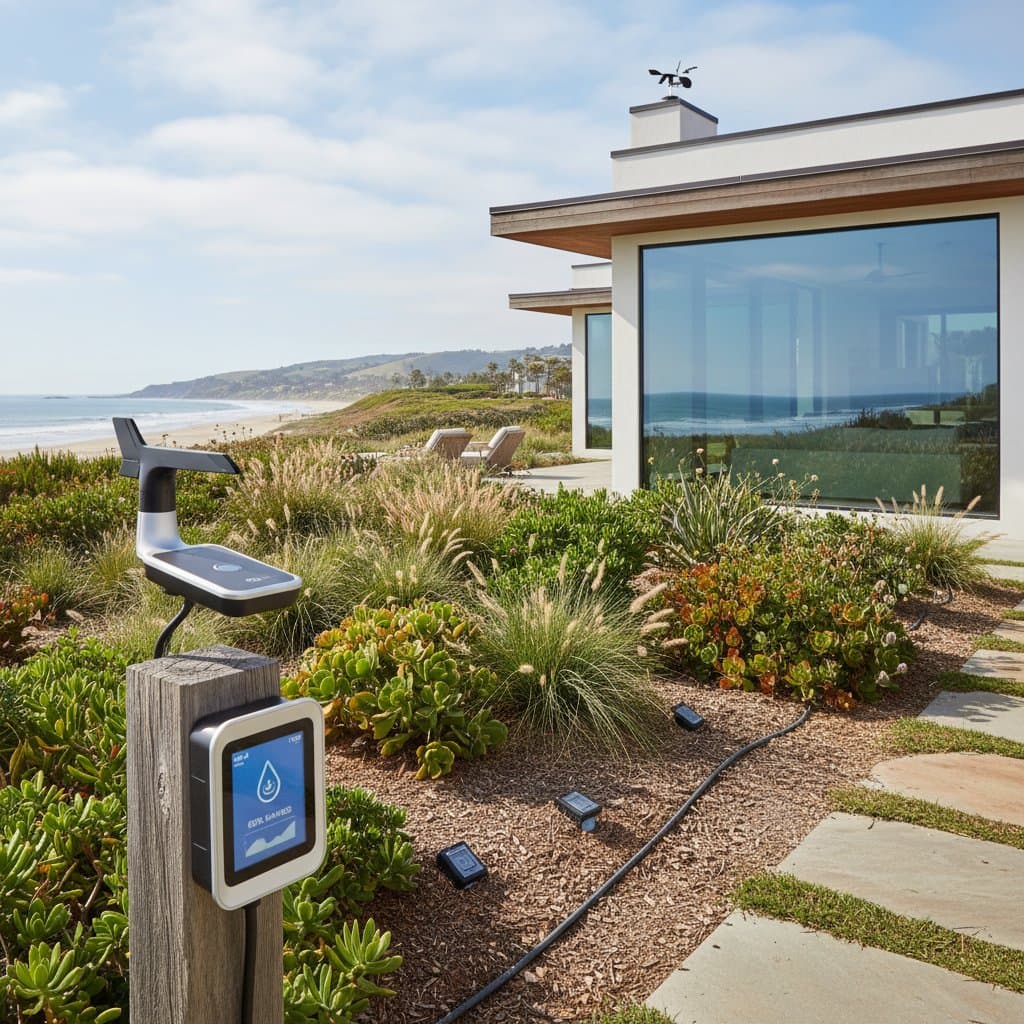
Slash Beach House Water Use by 60 Percent with Smart Irrigation
Beach houses evoke images of relaxation, ocean breezes, and scenic coastal views. However, preserving the surrounding landscapes often leads to elevated water bills and inefficient irrigation practices. Smart irrigation technology provides an effective remedy. Property owners can achieve reductions in water consumption of up to 60 percent while sustaining verdant lawns, native vegetation, and inviting outdoor areas. In arid coastal areas such as San Diego, this enhancement promotes environmental stewardship and financial benefits.
Mechanisms of Smart Irrigation in Reducing Water Waste
Smart irrigation systems employ sensors, data analytics, and automation to supply water precisely when and where vegetation requires it. The primary distinction from conventional sprinkler setups lies in their accuracy. Rather than adhering to predetermined timers, these controllers modify schedules according to current weather, soil hydration levels, and specific plant requirements.
Typical Water Conservation Levels:
- Conventional irrigation: 50 to 75 percent of water dissipates through evaporation and surface runoff
- Smart irrigation: Diminishes waste by as much as 60 percent via responsive programming
These systems analyze historical data and make autonomous adjustments. During rainfall, irrigation halts to avoid excess. In conditions of elevated wind, operations suspend to minimize aerosol dispersion. Such strategies foster improved soil health and encourage robust root development.

Installation Expenses and Investment Recovery
The expense for implementing smart irrigation typically spans $800 to $2,500 for a standard beachfront property. Total outlay varies with the scale of the system, controller model, and incorporation of drip or sprinkler configurations.
| Component | Estimated Cost Range | Water Savings Potential | ROI Timeline |
|---|---|---|---|
| Smart controller | $150 - $400 | 20-30% | 1-2 seasons |
| Soil moisture sensors | $100 - $300 | 10-15% | 1 season |
| Drip irrigation zones | $300 - $800 | 25-40% | 2-3 seasons |
| Full system installation | $1,000 - $2,500 | Up to 60% | 2-4 seasons |
Given the upward trajectory of coastal water tariffs, proprietors generally recover expenses via reduced utility charges within several seasons. These economies persist annually with limited ongoing care.

Tailored Smart Irrigation Solutions for Coastal Residences
1. Weather-Responsive Controllers
These devices leverage regional meteorological information to determine irrigation demands. They adapt seamlessly to fluctuations in temperature, precipitation, and atmospheric moisture, ideal for dynamic seaside environments.
2. Soil Hydration Monitors
These probes assess residual moisture in the ground. Irrigation ceases upon attaining optimal saturation. This method averts saturation in fast-draining sandy soils common to coastlines, thereby curbing nutrient leaching.
3. Precision Drip Networks
Drip conduits transport water straight to root zones. Such setups suit perimeters around terraces, floral arrangements, and indigenous seaside flora including succulents and decorative grasses.
4. Intelligent Sprinkler Nozzles
These components disperse water in targeted configurations, curtailing spray onto non-vegetated surfaces like patios and pathways. Integration with intelligent controllers enables full operational autonomy.

Variables Affecting Irrigation Efficiency
Effectiveness of smart irrigation hinges on multiple elements.
- Soil Composition: Coarse sands facilitate rapid drainage, necessitating brief, repeated cycles.
- Vegetation Choices: Indigenous and arid-adapted species demand minimal hydration post-establishment.
- System Layout: Accurate segmentation allocates distinct timetables to turf, hedges, and containers.
- Climatic Conditions: Seaside vapor and mist diminish irrigation needs relative to interior locales.
- Upkeep Practices: Routine filter cleansing, sensor verification, and nozzle calibration sustain minimal consumption.
Alignment of these aspects frequently yields water reductions exceeding 50 percent, preserving aesthetic and vitality of landscapes.
Strategies for Optimized Seaside Landscape Management
Integrating smart irrigation with deliberate design yields enduring outcomes.
- Categorize Vegetation by Hydration Demands. Isolate thirstier varieties such as sod from resilient locals.
- Apply Mulch and Organic Amendments. These retain hydration and enhance granular soil integrity.
- Deploy Shade Elements Thoughtfully. Canopies and arbors mitigate soil and surface evaporation.
- Establish Distinct Irrigation Sectors. Customize regimens for grassy areas, planted beds, and vessels separately.
- Conduct Periodic Evaluations. Identify seepages, obstructed dispensers, or deviated sprayers that squander resources.
- Implement Incrementally. Initiate with a controller upgrade, followed by sensor and drip additions progressively.

Frequently Asked Questions
How substantial are the water savings from smart irrigation at a seaside property?
Up to 60 percent relative to legacy systems, contingent on ground composition, flora selections, and regional meteorology.
Do smart irrigation setups integrate with pre-existing sprinkler infrastructure?
Yes. Typically, a smart controller interfaces with existing valves and cabling sans comprehensive overhaul.
Can smart irrigation withstand saline seaside atmospheres and dampness?
Premium units feature rust-resistant construction. Regular decontamination and scrutiny prolong durability.
Is operation of smart irrigation complex?
No. Many controllers link to mobile applications for remote configuration. Post-initial setup, functions proceed independently.
Does installation necessitate expert assistance?
Individuals adept in electrical and piping tasks may handle elementary units. For expansive seaside terrains, certified irrigation professionals guarantee peak efficacy.
Sustaining System Performance
Post-installation, smart irrigation demands sparse attention. Inspect sensors biannually, purge filters, and track consumption via application interfaces. Adjust seasonally for vegetative maturation and atmospheric shifts to uphold reliability.
In the long term, the system reimburses its cost through resource preservation, ecological safeguarding, and flourishing exteriors. A meticulously planned smart irrigation framework elevates seaside landscapes to exemplars of littoral proficiency, merging aesthetics with accountability.
For San Diego residents, this innovation transcends mere utility. It represents a pragmatic approach to conserving vital assets while relishing verdant, dynamic havens adjacent to the ocean.