
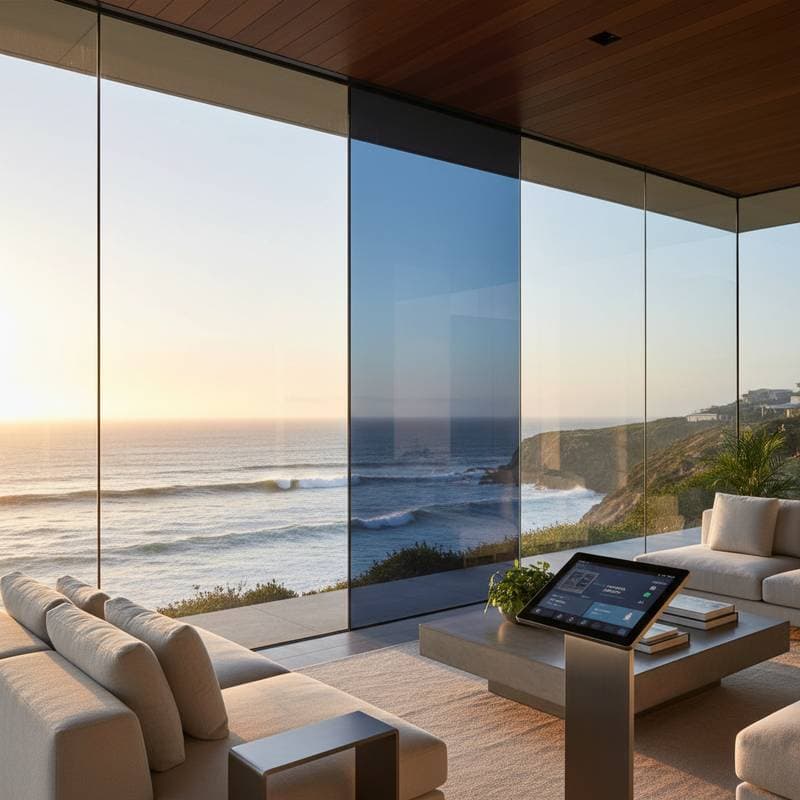
Smart Glass Walls Manage UV and Heat in Coastal Sunrooms
Coastal sunroom design requires balancing abundant natural light with practical comfort. Ocean breezes and sunlight enhance appeal, but intense rays often cause glare, furniture fading, and elevated indoor temperatures. Homeowners frequently struggle to enjoy panoramic views while controlling heat and UV effects. Smart glass walls provide an innovative resolution, preserving ocean vistas in a comfortable, efficient environment.
This guide details electrochromic glass operations, comfort enhancements, and efficiency gains. It also outlines key considerations for integrating this technology into coastal sunrooms. Readers gain insights to align the upgrade with specific home needs and routines.
Understanding Smart Glass Technology
Smart glass, or electrochromic glass, alters tint levels automatically or manually. This capability regulates light and heat entry without relying on blinds or shades.
How Electrochromic Glass Functions
Electrochromic glass incorporates material layers that shift transparency under electrical current. Activation darkens the glass to filter sunlight and lessen glare. Deactivation restores clarity for full natural illumination. Transitions occur gradually, with options for varied tint intensities to fine-tune brightness and privacy.
Advantages in Coastal Settings
Coastal properties encounter humidity, salt exposure, and intense solar radiation. Smart glass mitigates these factors through:
- Heat gain reduction: Tinting limits solar absorption, maintaining cooler interiors during sunny periods.
- UV ray filtration: It blocks damaging ultraviolet light to safeguard floors and furnishings.
- EnergyDecreased cooling demands lead to reduced overall power usage.
- Comfort elevation: Automated adjustments stabilize light and temperature amid daily solar variations.
Why Smart Glass Walls Suit Coastal Sunrooms
Sunrooms emphasize light capture and scenic enjoyment, but such exposure invites glare and overheating. Smart glass walls convert these issues into strengths.
Regulating Temperature and Illumination
Standard glass walls frequently result in overheated areas under direct sun. Smart glass modulates tint according to solar intensity. Sensor-equipped systems respond to external conditions autonomously, sustaining steady temperatures without user input.
Safeguarding Interior Elements
Coastal sunlight, though scenic, proves relentless. UV exposure gradually discolors textiles, artwork, and wood surfaces. Smart glass walls intercept most UV rays, preserving material integrity and appearance over time.
Maintaining Unobstructed Views
Traditional coverings like blinds obscure valued scenery. Electrochromic glass delivers continuous ocean sightlines with glare management. The tint applies evenly, retaining visual sharpness in shaded states.
Planning Smart Glass Installation
Thorough preparation guarantees optimal results for structure and finances before adopting full smart glass walls.
Evaluating Current Infrastructure
Not all sunrooms accommodate smart glass directly. Assessments must cover:
- Frame robustness: Panels weigh more than conventional glass, demanding reinforced supports.
- Power availability: Low-voltage requirements may necessitate wiring modifications.
- Environmental resilience: Coastal installations require rust-proof seals and frames against salt corrosion.
Engage a certified contractor or glazing expert for structural review to ensure safe integration.
Selecting Full or Partial Coverage
Options include outfitting entire walls or targeting sun-exposed panels. Many integrate smart glass with insulated standard panels to balance expenses and benefits effectively.
Linking to Automation Systems
Compatible smart glass integrates with home networks for app-based or voice-activated control. Advanced setups synchronize with sensors and thermostats, automating tint based on real-time environmental data.
Cost and Value Analysis
As a high-end option, smart glass demands clear financial evaluation.
Typical Pricing
Installation costs average $90 to $150 per square foot nationwide, influenced by manufacturer, dimensions, and controls. Local factors, sunroom complexity, and frame needs affect totals. Obtain multiple detailed quotes from qualified providers.
Ongoing Savings and Returns
Initial expenses exceed those of regular glass, yet energy reductions accumulate. In sun-drenched coastal regions, diminished cooling costs, fading prevention, and comfort gains recoup investments progressively. The contemporary aesthetic often boosts property market value.
Upkeep and Longevity
Electrochromic glass demands minimal maintenance, cleaning similarly to ordinary glass without mechanical wear. Sealed units resist fogging and humidity ingress, ideal for coastal conditions. Verify warranty terms for glass and electronics coverage.
Steps for Effective Smart Glass Implementation
Specialized installation involves collaboration among designers, builders, and electricians. This checklist streamlines the process.
- Establish objectives: Prioritize heat mitigation, glare reduction, privacy, or visual appeal.
- Engage experts: Consult contractors experienced in smart glass and coastal builds.
- Solicit comprehensive bids: Include breakdowns for materials, labor, wiring, and guarantees.
- Verify credentials: Confirm installer expertise with electrochromic applications.
- Time for favorable conditions: Opt for moderate weather to facilitate sealing and avoid disruptions.
- Conduct full testing: Ensure panel responses to controls and sensors before settling payments.
Adhering to these measures secures reliable, enduring performance.
Design Configurations for Coastal Residences
Smart glass walls adapt to diverse styles and functions.
Frameless Sliding Arrangements
Suited to contemporary sunrooms, these promote expansive feel. Paired with smart glass, they enable fluid indoor-outdoor connections.
Folding Wall Systems
Such designs permit complete ventilation. Electrochromic features add shade and protection in closed positions.
Stationary Panoramic Installations
For observation-focused sunrooms, fixed panels offer pristine views sans moving elements.
Tailored Tint Variations
Select systems support zoned tinting, darkening specific areas independently. This proves valuable for uneven sunlight distribution.
Frequently Asked Questions
How does electrochromic glass differ from smart film?
Electrochromic glass embeds tinting directly within the material, unlike smart film, which adheres to existing surfaces. Film offers lower initial costs but may degrade faster in humid coastal areas and deliver inferior performance.
Does smart glass eliminate all UV rays?
Premium electrochromic glass blocks up to 99 percent of UV radiation, protecting interiors effectively. Review manufacturer data for precise capabilities.
Is retrofitting possible for existing sunrooms?
Yes, provided frames support added weight and wiring. Professional evaluations identify required adjustments.
What is the lifespan of smart glass?
Warranties typically span years for glass and components. Proper maintenance yields decades of consistent operation.
How much power does smart glass consume?
It operates on low voltage, drawing energy only during tint shifts. Stable states require no ongoing power.
Is smart glass suitable for coastal salt and humidity?
Yes, when using corrosion-resistant framing and seals. Select products designed for such environments.
Can curtains or shades accompany smart glass?
Certainly, for added versatility. They complement tinting during extreme conditions or for stylistic preferences, though smart glass often suffices alone.
Maximizing Comfort in Your Upgraded Sunroom
Post-installation, smart glass walls adapt your coastal sunroom to daily light changes seamlessly. Ocean views remain vivid, with protections for interiors against UV and heat.
This upgrade invests in sustained efficiency, modern elegance, and usability. Through strategic planning, expert execution, and routine care, the space evolves into a versatile, inviting area resilient to coastal intensities.