
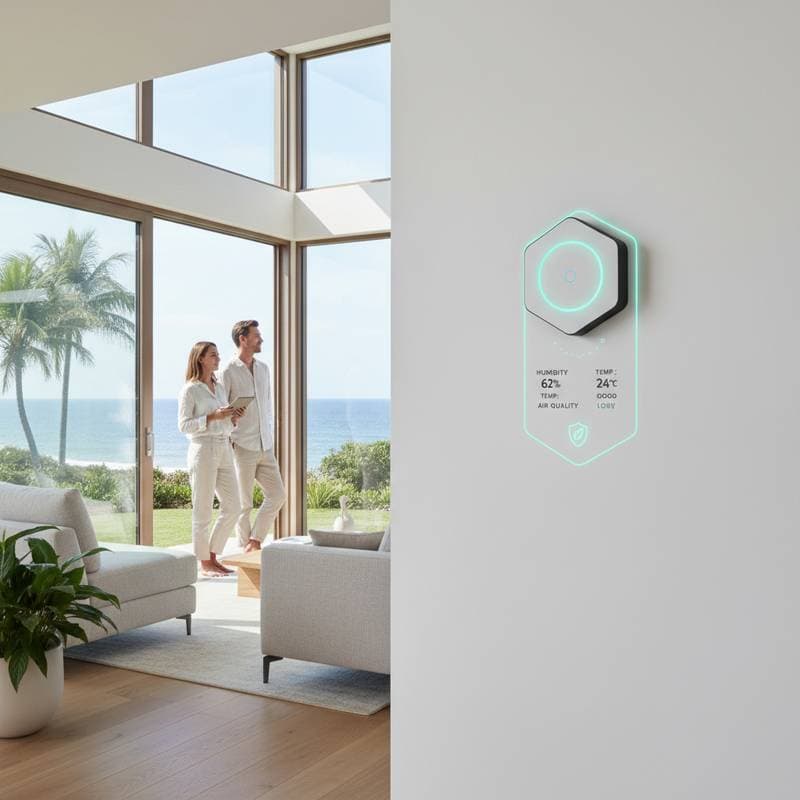
AI Sensors: Preventing Mold in Coastal Homes by 2026
Coastal living offers refreshing ocean air and temperate weather, yet persistent humidity poses a significant threat of mold development. Homeowners in these areas frequently encounter damp walls, persistent odors, and structural deterioration from unchecked moisture. Advanced AI-powered sensors address these challenges by identifying potential mold risks in their earliest stages, enabling timely interventions that safeguard homes and health.
How AI Sensors Identify Mold Risks
These sensors operate continuously, measuring environmental variables that foster mold, including humidity, temperature, and air quality. Machine learning algorithms analyze data streams to detect subtle patterns, such as gradual moisture accumulation or inadequate airflow, long before visible damage appears.
Upon identifying risky conditions, the system delivers immediate notifications to a smartphone or integrated smart home device. Homeowners can then activate dehumidifiers, enhance ventilation, or arrange inspections to avert escalation.
Essential Metrics Tracked by AI Sensors
- Relative humidity exceeding 60 percent
- Moisture levels on surfaces like walls, ceilings, and floors
- Concentrations of airborne particles indicating mold spores
- Fluctuations in temperature that promote condensation
- Patterns in ventilation and air circulation
This integrated approach delivers superior precision compared to conventional devices, offering proactive insights into environmental health.
The Importance of Mold Prevention in Coastal Environments
Saline coastal air and high moisture content create optimal environments for mold proliferation. Beyond aesthetic issues, mold compromises structural integrity and compromises indoor air quality, potentially leading to respiratory concerns.
Remediation efforts for extensive infestations typically range from $2,000 to $6,000, involving removal of affected drywall or flooring. Proactive AI monitoring proves more cost-effective, preserving property values and ensuring safer living conditions.
Traditional Versus AI-Based Mold Detection
| Detection Method | Average Cost | Accuracy Level | Response Time | Maintenance Requirement |
|---|---|---|---|---|
| Basic humidity sensors | $50 to $150 | Low | Reactive | Occasional calibration |
| Professional inspection | $300 to $800 | Medium | Post-outbreak | None between visits |
| AI smart sensors | $200 to $600 | High | Preventive, real-time | Automatic updates |
AI systems eliminate the need for periodic manual checks, providing ongoing vigilance that minimizes unexpected expenses and supports sustained home integrity.
Influences on AI Sensor Effectiveness
- Home configuration: Expansive properties benefit from multiple units for thorough monitoring
- Insulation standards: Subpar materials heighten condensation risks
- Ventilation setup: High-moisture zones like bathrooms and kitchens demand focused oversight
- External elements: Proximity to shorelines increases exposure to salt and dampness
- Upkeep routines: Consistent HVAC maintenance and filter changes enhance data reliability
Addressing these variables optimizes sensor performance and extends their protective benefits.
Strategies to Reduce Costs with AI Mold Prevention
- Prioritize installation in vulnerable spaces, such as bathrooms, laundry areas, and basements.
- Opt for scalable systems that permit gradual additions without full replacements.
- Link sensors to HVAC controls for automated humidity regulation.
- Track energy usage, as smart adjustments can shorten dehumidifier operation times.
- Heed predictive notifications promptly to avoid water-related damages and repairs.
These steps maximize value while minimizing ongoing expenditures.
Installation Options: DIY or Professional
Most AI sensors feature straightforward Wi-Fi connectivity and simple mounting on walls or ceilings. DIY approaches keep labor costs below $100, ideal for compact residences or those comfortable with technology.
Professional services, costing $150 to $400, suit complex setups with intricate wiring or smart home ecosystems. In multi-story coastal dwellings, expert installation guarantees uniform coverage and precise configuration.
Frequently Asked Questions on AI Mold Prevention
Does installing AI sensors require a permit?
No, these units function as plug-and-play devices without modifying electrical or structural components.
What is the typical lifespan of AI sensors?
Units generally perform reliably for five to ten years, subject to regular upkeep and brand guidelines. Battery-dependent models require replacements every one to two years.
Can AI sensors integrate with current smart home setups?
Yes, compatibility extends to major platforms, facilitating coordination with thermostats, purifiers, and dehumidifiers.
Which home areas demand the most sensor attention?
Target bathrooms, kitchens, basements, and attics, where humidity accumulates and airflow remains limited.
Do AI sensors eradicate mold entirely?
They target preventive measures by controlling humidity below growth thresholds, halting mold development at its onset.
Sustaining Long-Term Protection Through Maintenance
Regular sensor checks ensure optimal function, including firmware updates and battery verifications. Coordinate with seasonal HVAC servicing to align environmental controls. This ongoing diligence reinforces the system's role in upholding a mold-free coastal home, delivering enduring peace of mind and financial savings.