
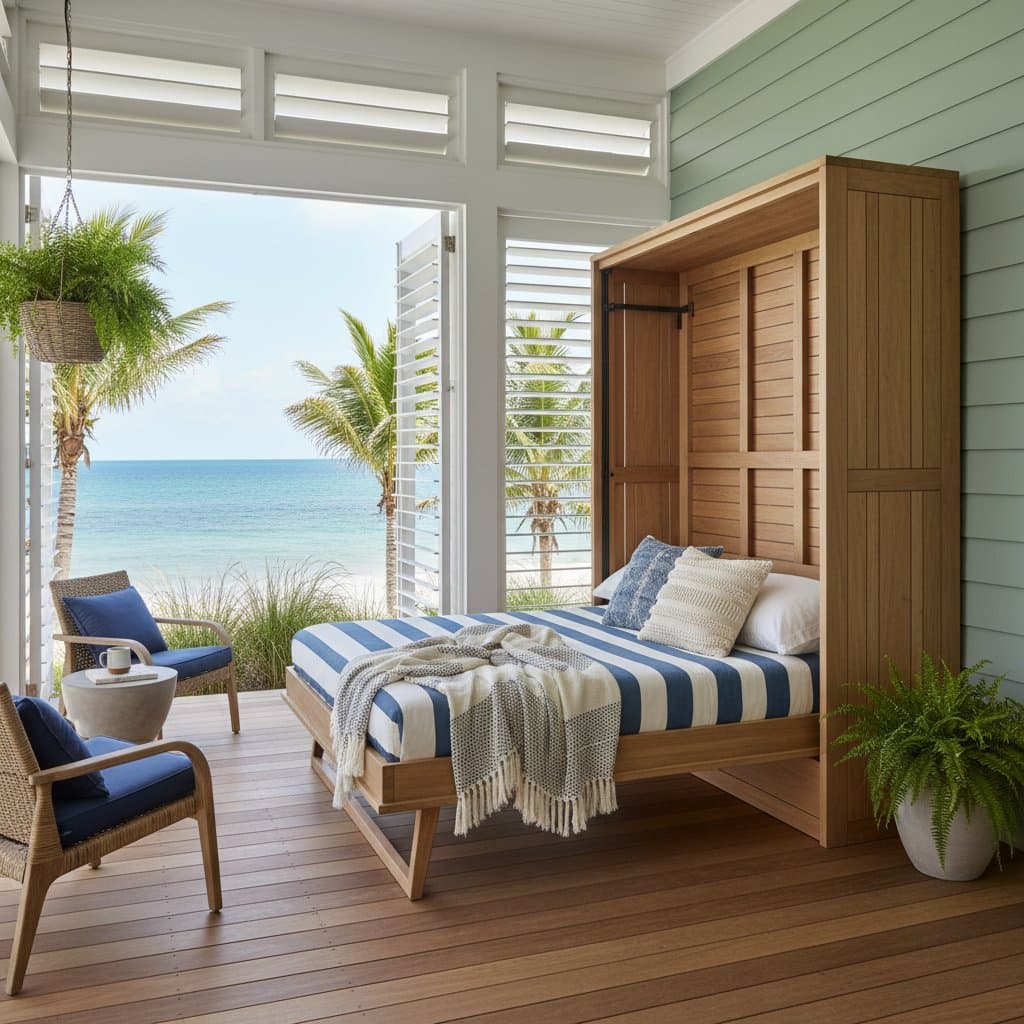
Reviving Sleeping Porches: The Appeal of Outdoor Murphy Beds
Fresh air, ocean breezes, and the rhythmic sound of waves transform ordinary sleep into a rejuvenating ritual. In coastal communities, residents revive a time-honored practice that fuses exterior spaces with repose: the sleeping porch. Popular in beachside bungalows and temperate dwellings long ago, these porches reemerge with innovative adaptations. Integration of outdoor Murphy beds renders this classic element functional and elegant for today's residences.
This overview examines the reasons behind the revival of sleeping porches, estimates for construction or updates, and strategies to customize one for specific homes and routines. Readers gain insights into material selections, Murphy bed mechanisms, and techniques to enhance relaxation while minimizing upkeep.
Defining the Sleeping Porch
A sleeping porch constitutes an enclosed or semi-enclosed exterior area intended for overnight rest amid natural ventilation. Historic designs featured mesh-enclosed verandas linked to sleeping quarters or elevated home levels. Current iterations merge interior luxury with exterior tranquility, incorporating roll-away mesh barriers, moisture-resistant surfaces, and versatile seating for leisure and slumber.
Pairing this setup with an outdoor Murphy bed introduces versatility. The bed retracts into a wall unit or enclosure during the day, liberating the zone for activities such as reading, exercise, or gatherings. Such pairings suit shoreline properties, where efficient use of area and attunement to weather patterns hold priority.
Estimating Costs for a Sleeping Porch
Construction or adaptation of a sleeping porch ranges from $8,000 to $30,000, influenced by dimensions, components, and engineering demands. The nationwide midpoint stands at approximately $18,000 for a standard enclosure with mesh barriers, illumination, and essential accessories.
Incorporating an outdoor Murphy bed adds $2,500 to $6,500, encompassing the frame, protected housing, and setup. Premium bespoke versions surpass $10,000 when including embedded compartments, electrical access, or humidity-defying coatings.
Standard Expense Allocation
| Component | Low Range | High Range | Average |
|---|---|---|---|
| Framing and structure | $4,000 | $10,000 | $7,000 |
| Screens or retractable glass | $1,500 | $6,000 | $3,500 |
| Flooring (composite or tile) | $1,000 | $4,000 | $2,000 |
| Lighting and fans | $500 | $2,000 | $1,200 |
| Outdoor Murphy bed system | $2,500 | $6,500 | $4,500 |
| Furniture and décor | $1,000 | $3,000 | $2,000 |
Total Estimated Cost: $8,500 to $32,000
Expenses by Porch Configuration and Dimensions
Overall expenditure varies based on whether the project involves a new addition or modification of an established porch.
| Porch Type | Typical Size | Average Cost Range |
|---|---|---|
| Small screened porch (conversion) | 8x10 ft | $8,000 to $12,000 |
| Medium sleeping porch (new build) | 10x14 ft | $15,000 to $22,000 |
| Large or upper-level porch with custom Murphy bed | 12x20 ft+ | $25,000 to $35,000 |
Adaptation initiatives prove more affordable, leveraging pre-existing supports and bases. Fresh constructions demand extensive engineering, elevating supplies and workforce expenses.
Expenses by Material Selection
Selections for materials impact not only budget but also usability, visuals, and endurance. The following table compares favored alternatives.
| Material | Cost per sq. ft. | Durability | Maintenance | Aesthetic Appeal |
|---|---|---|---|---|
| Pressure-treated wood | $4 to $9 | Moderate | High | Classic and warm |
| Composite decking | $8 to $14 | High | Low | Modern and clean |
| Tile or stone | $10 to $25 | Very high | Low | Sophisticated |
| Aluminum framing | $7 to $12 | High | Very low | Sleek and contemporary |
For the Murphy bed, marine-grade plywood or powder-coated aluminum withstands dampness effectively. Durable padding and exterior-compatible bedding enhance usability and longevity.
Workforce Expenses
Workforce contributions represent 40% to 60% of the overall budget. Involved specialists encompass woodworkers, wiring experts, and occasionally stoneworkers or roof installers. Hourly fees range from $50 to $100, varying by locale and task intricacy.
Positioning an outdoor Murphy bed demands accuracy and protective measures. Anticipate $500 to $1,200 for workforce on bed placement, particularly if securing to outer walls or integrating power sources.
Elements Affecting Overall Expenditure
Multiple aspects can adjust the final outlay:
- Location and climate: Shoreline zones necessitate rust-proof components and unique approvals.
- Foundation requirements: Raised platforms or upper-story designs require extra reinforcements.
- Enclosure type: Roll-away mesh or glass additions provide ease yet elevate prices.
- Electrical and lighting: Overhead fans, adjustable illumination, or connections for warming elements expand allocations.
- Furniture and accessories: Superior textiles and tailored enclosures can multiply accessory budgets.
- Weatherproofing: Protective coatings, runoff mechanisms, and barriers prolong service life at added cost.
Grasping these influences aids in formulating a feasible financial plan aligned with objectives and surroundings.
Strategies to Reduce Sleeping Porch Expenses
- Adapt rather than construct. Repurposing an existing porch offers substantial savings over ground-up builds.
- Select pressure-treated lumber for supports in place of cedar or rare timbers.
- Opt for a manual Murphy bed over hydraulic or automated variants.
- Acquire ready-made mesh barriers instead of bespoke roll-away systems.
- Handle personal touches such as coating, tinting, or minor assembly independently.
- Source locally for supplies and pieces to cut transport fees.
- Design for extended seasons to amplify the worth of the expenditure throughout the year.
Strategic foresight and deliberate choices can trim budgets by 15% to 25% while preserving standards.
Independent Work versus Expert Services: Evaluating Expenses and Benefits
Independent Approach
Pros:
- Reduced workforce outlays
- Complete design authority
- Adaptable schedule
Cons:
- Demands proficiency in woodworking and wiring
- Potential for framework flaws or protection lapses
- Absence of assurance safeguards
Skilled individuals may manage coating, meshing, or ready-made bed enclosure assembly. Framework, covering, and wiring tasks warrant professional involvement for security and adherence.
Expert Services
Pros:
- Skilled execution and prompt finalization
- Appropriate approvals and regulation conformity
- Sustained robustness and assurance options
Cons:
- Elevated initial investment
A combined method suits many owners. Engage specialists for framework and bed setup, then customize with personal selections in accessories, illumination, and styling.
Design Elements to Enhance a Sleeping Porch
To develop a sleeping porch that balances opulence and utility, emphasize these principles:
Comfort and Seclusion
- Position adjustable coverings or drapes for seclusion and light management.
- Employ moisture-resistant bedding and textiles suited for exteriors.
- Integrate overhead fans or mild warming units to broaden usability into milder periods.
Link to the Outdoors
- Select meshed barriers or gliding glass for ventilation regulation.
- Add container greenery or wall-mounted flora for vitality and air purification.
- Align the bed toward vistas of water, landscapes, or dawn.
Illumination and Mood
- Incorporate subtle LED linear lights for evening perusal.
- Feature movement detectors or schedulers for efficiency.
- Choose salt- and dampness-tolerant fixtures.
Area Optimization
- Pair the Murphy bed with compartment benches or retractable workstations.
- Utilize dual-function items like stools serving as surfaces.
- Maintain unobstructed routes for bed extension and upkeep.
Pitfalls to Sidestep
- Neglecting protective measures. Exterior dampness rapidly degrades raw timber and textiles.
- Selecting interior pieces. Prioritize exterior-compatible substances.
- Inadequate airflow. Mesh alone requires supplementary circulation for ease and durability.
- Overlooking regional regulations. Structures often demand approvals, notably with wiring or coverings.
- Excessive filling. Simplify arrangements to sustain openness and calm.
Steering clear of these errors guarantees the porch stays welcoming and resilient over time.
Common Queries on Sleeping Porches
Does construction of a sleeping porch require approval?
Most jurisdictions mandate approval for structural additions, wiring, or water systems. Modifying an established porch without significant framework alterations may bypass full requirements, yet verification with local officials remains essential prior to commencement.
What duration applies to sleeping porch construction?
Adaptations span two to four weeks, whereas new builds extend to six to ten weeks, contingent on conditions, supplies, and specialist schedules.
Do outdoor Murphy beds resist dampness effectively?
Affirmative, provided they feature protected enclosures, nautical hardware, and secured seams. Select rust-proof pivots and keep linens inside during disuse.
Which features most enhance a sleeping porch's worth?
Roll-away mesh, efficient illumination, and unified storage elevate usability and asset value. A thoughtfully crafted porch improves exterior allure and marketability.
How does one uphold a sleeping porch?
Routinely cleanse mesh and surfaces, recoat timber yearly, and check fittings for corrosion. Refresh exterior textiles periodically for sustained freshness.
Is year-round use feasible for a sleeping porch?
Yes, through suitable barriers, drapes, and temperature controls, the space serves as a versatile seasonal haven.
Which bedding suits an outdoor Murphy bed?
Select exterior-compatible foam or natural latex with removable, water-repellent casings. These options deter mildew and sustain support in moist settings.
Steps to Realize Your Sleeping Porch Vision
Begin by evaluating your property's layout and local guidelines to identify feasible spots. Consult architects or builders for tailored blueprints that incorporate Murphy bed integration. Source durable materials early, and prioritize phased implementation to manage costs effectively. With careful execution, your sleeping porch becomes a cherished extension of home, fostering restful nights under the stars and enhancing daily coastal joy.