
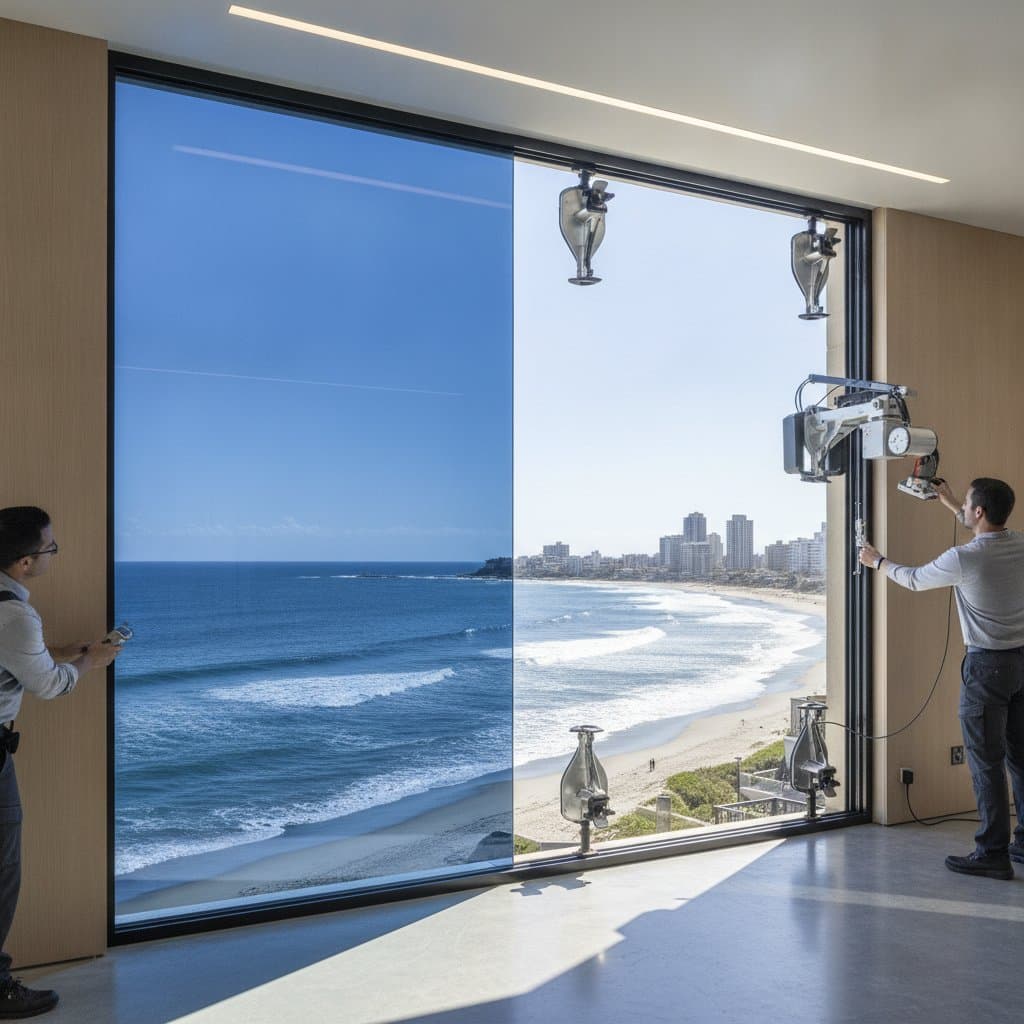
Smart Glass Windows Reduce Coastal Heat by Up to 60%
Homeowners along the coast often face a common challenge. They must keep interiors cool without overworking air conditioning systems. Coastal sunlight and humidity drive up energy bills, fade furnishings, and create uncomfortable indoor temperatures. Smart glass windows, also known as electrochromic glass, reduce coastal heat by up to 60 percent. They deliver comfort and energy efficiency in one upgrade.
This guide explains how smart glass works. It covers costs, comparisons to traditional options, and steps for informed decisions on coastal homes.
What Are Smart Glass Windows?
Smart glass windows use an electrochromic coating that changes tint when voltage is applied. The glass adjusts transparency based on sunlight intensity. Bright sunlight causes the glass to darken and block heat along with glare. Lower light levels allow it to clear for natural illumination. Control occurs manually through a wall switch or mobile app. Automatic adjustment uses built-in light sensors.
Coastal conditions make this technology valuable. High humidity, strong sunlight, and salt exposure reduce the effectiveness of standard windows over time. Smart glass protects against heat and ultraviolet rays while preserving ocean views.
Average Cost of Smart Glass Windows
Installation of smart glass windows in homes ranges from 700 to 1000 dollars per window. This covers glass and labor. Larger custom panels reach 1500 dollars or more per unit. Full home projects typically total between 25000 and 40000 dollars. The final amount depends on window quantity and control systems.
Cost Breakdown
| Component | Typical Cost Range | Percentage of Total Cost |
|---|---|---|
| Electrochromic Glass Panels | 400 to 700 dollars per window | 60% |
| Electrical Control System | 100 to 200 dollars per window | 15% |
| Installation Labor | 150 to 250 dollars per window | 20% |
| Wiring and Integration | 50 to 100 dollars per window | 5% |
These amounts represent complete projects that include materials, labor, and home automation connections.
Cost by Project Scope
Total price varies with project scale. Small upgrades for three to five windows in living areas range from 4000 to 7000 dollars. Mid-range work on ten to 15 windows costs 12000 to 20000 dollars. Full home replacements with control systems reach 25000 to 40000 dollars or higher.
Homes with modern wiring or existing smart home systems may see slightly lower installation expenses.
How Smart Glass Reduces Coastal Heat
Electrochromic glass adjusts the solar heat gain coefficient. This value measures solar radiation that passes through the glass. Traditional double pane windows show coefficients from 0.35 to 0.45. Tinted electrochromic glass lowers the range to 0.15 to 0.20. Heat entry drops by up to 60 percent.
Air conditioning runs less often. Cooling energy use falls by 20 to 30 percent. Coastal regions with high sunlight and humidity experience the greatest gains in comfort and savings.
Material Comparisons
Performance differences appear across several factors when comparing options.
| Material Type | Cost per Sq. Ft. | Heat Reduction | UV Blocking | Maintenance | Aesthetic Options |
|---|---|---|---|---|---|
| Standard Double-Pane Glass | 12 to 18 dollars | 25% | Moderate | Low | Clear only |
| Tinted or Low-E Glass | 20 to 30 dollars | 40% | High | Low | Limited tints |
| Electrochromic Smart Glass | 50 to 75 dollars | Up to 60% | Very High | Very Low | Adjustable tint |
| Reflective Glass | 25 to 35 dollars | 50% | High | Moderate | Mirror-like appearance |
Smart glass requires higher initial investment. It provides superior heat control, clarity, and ultraviolet protection. Adjustable tint removes the need for blinds or films and maintains views.
Labor Costs for Smart Glass Installation
Professional installation handles both glazing and electrical wiring. Labor ranges from 150 to 250 dollars per window. This covers old glass removal, new panel placement, and control system connections. Electricians charge 75 to 125 dollars per hour for wiring work when new circuits are required.
Small projects finish in one to two days. Larger homes may require up to one week based on window count and access.
Factors That Influence Total Cost
Several elements affect overall investment. Window size and shape increase material needs for oversized or custom units. Control system type determines whether manual switches or full automation apply. Accessibility for higher floors raises labor rates. Existing wiring reduces preparation time. Coastal humidity and salt may require extra sealing.
How to Save Money on Smart Glass Windows
Costs can decrease without loss of performance through targeted steps.
- Begin with high exposure areas such as south or west facing windows.
- Pair smart glass with insulated vinyl or fiberglass frames.
- Select standard sizes to avoid up to 30 percent added production costs.
- Install in phases to spread expenses over time.
- Apply for utility rebates on energy efficient upgrades.
DIY vs. Hiring a Professional
Smart glass installation is not suitable for typical do it yourself work. Electrical components demand specialized skills. Self installation risks voided warranties and safety issues.
| Task | DIY Feasibility | Professional Required | Risk Level |
|---|---|---|---|
| Removing old windows | Possible | No | Low |
| Setting new glass panels | Possible with help | No | Moderate |
| Electrical wiring | Not recommended | Yes | High |
| System programming | Partially possible | Yes for calibration | Moderate |
Professional work ensures proper sealing, wiring, and calibration for reliable performance.
Common Mistakes to Avoid
Several errors can affect project success. Plan wiring access before installation begins. Include manual overrides for control systems during power outages. Verify ultraviolet blocking levels across products. Review warranty coverage for both glass and electronics. Confirm compatibility with existing smart home platforms.
Frequently Asked Questions About Smart Glass Windows
Do smart glass windows require electricity all the time?
No. Power is used only during state changes. Tint maintenance requires no energy. Consumption stays below one watt per square foot during transitions.
Can smart glass windows be installed in existing frames?
Yes in many cases. Frames must accommodate thicker glass and wiring channels. Installers assess compatibility during evaluation.
How long do smart glass windows last?
Quality electrochromic glass performs for two to three decades. Manufacturers offer warranties from 10 to 20 years on glass and electronics.
Do smart glass windows block UV and glare?
Yes. Up to 99 percent of ultraviolet rays are blocked. Glare drops significantly in bright conditions to protect interiors.
Are smart glass windows safe in coastal environments?
Yes. Many systems use laminated safety glass with coatings that resist salt, moisture, and wind debris.
Can I integrate smart glass with my existing home automation system?
Integration is possible with most major platforms. Confirm compatibility during product selection.
Maximizing Long Term Value
Proper selection and installation deliver sustained reductions in cooling costs. Views remain clear while interiors stay comfortable. Regular maintenance checks preserve performance across decades of coastal exposure.