
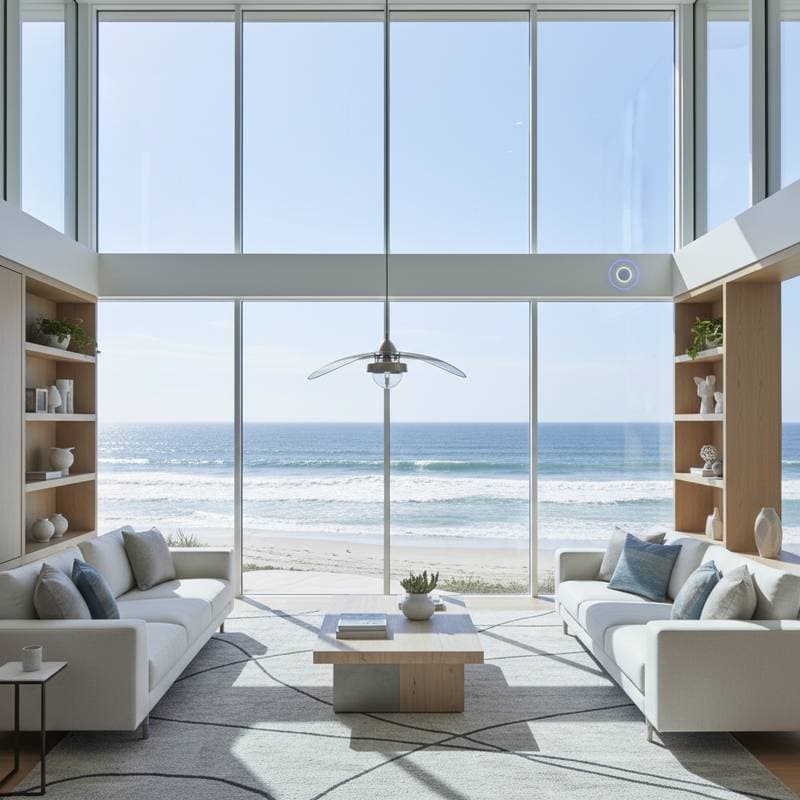
Introduction to Smart Glass for Coastal Living
Coastal homes face unique challenges from intense sunlight, including UV damage to furnishings and high energy demands for cooling. Smart glass windows address these issues effectively. By incorporating electrochromic technology, these windows switch from transparent to tinted states with a simple electrical impulse, providing customizable light control.
This innovation preserves breathtaking ocean views while protecting against harmful rays. Homeowners appreciate the balance of openness and security. In regions like San Diego, where salty air and humidity prevail, selecting the right materials ensures longevity and performance.
Key Benefits and Integration Options
Smart glass offers seamless integration with modern home automation systems. Users control tint levels via apps or voice commands, enhancing daily convenience. However, connecting to networks such as those from leading smart home brands increases upfront expenses by 10 to 20 percent.
Energy savings represent a significant advantage. These windows reduce solar heat gain, which lowers reliance on air conditioning. Studies indicate potential reductions in cooling bills by up to 20 percent, offsetting initial costs over time.
Practical Tip: Obtain quotes from at least three certified installers experienced in coastal installations. Their expertise ensures robust sealing against moisture and resistance to corrosion from marine environments.
Pros and Cons of Smart Glass Windows
Evaluating smart glass involves weighing its advantages against potential drawbacks. The table below summarizes key aspects for informed decision-making.
| Pros | Cons |
|---|---|
| Blocks 99% of UV rays | Higher initial cost |
| Reduces glare and heat gain | Requires professional installation |
| Provides instant privacy | Limited tint or color options |
| Integrates with smart systems | Slight delay in tint adjustment |
| Boosts property value | Specialized maintenance needed |
Despite the higher upfront investment, many coastal homeowners view smart glass as a valuable addition. It delivers superior comfort, reliable protection, and enhanced aesthetic appeal that traditional windows cannot match.
Suggested Visual: A modern coastal kitchen with smart glass windows transitioning from clear to tinted, highlighting the technology in action.
Installation and Maintenance Guidelines
Installing smart glass in coastal settings demands careful consideration of both technological and environmental factors. Moisture from ocean air can compromise seals if not addressed properly, potentially reducing system durability.
Step-by-Step Installation Process
- Site Assessment: Analyze daily sunlight patterns and window orientations to determine optimal placement for maximum UV protection.
- Precise Measurements: Tailor panels to fit existing frames or incorporate into new builds, ensuring minimal gaps.
- Secure Sealing: Apply corrosion-resistant sealants around frames to withstand salty winds and humidity.
- Electrical Integration: Wire connections for control systems, including low-voltage setups compatible with home automation.
- Performance Testing: Confirm fluid tint transitions and responsive controls before finalizing the setup.
Ongoing Maintenance Practices
Regular upkeep preserves the functionality of smart glass systems. Use a solution of mild soap and water for cleaning, steering clear of abrasive materials that could scratch the surface.
Arrange yearly professional inspections to examine seals, electrical components, and overall integrity. For smart-integrated units, update software firmware to maintain compatibility and security.
Additional Advice: Inquire with installers about specialized coatings that bolster resistance to coastal elements like salt spray and high humidity. These treatments extend the lifespan and reduce long-term repair needs.
Enhancing Energy Efficiency with Smart Glass
Beyond UV blocking, smart glass excels in temperature regulation. Adjustable tint levels minimize daytime heat influx while allowing passive solar warming during cooler evenings. This dynamic control optimizes indoor climates year-round.
Equipped homes typically see cooling costs drop by up to 20 percent, according to efficiency analyses. The technology cuts overall energy use, easing the burden on local power grids.
Pairing smart glass with solar panels amplifies these benefits. Solar installations generate clean energy to power the windows' low-voltage systems, fostering greater energy independence. Coastal residents achieve sustainability goals without sacrificing comfort or views.
Taking Action for Upgraded Coastal Windows
For those who cherish natural light yet seek safeguards against UV exposure and heat, smart glass presents a compelling solution. It resolves the tension between enjoying panoramic ocean vistas and preventing interior fading or escalating utility bills.
Begin by identifying sun-exposed rooms in your home. Next, engage a specialist in electrochromic glass installations familiar with local conditions. Proper execution and routine care will deliver enduring views, reduced expenses, and preserved interiors.
Transform your coastal residence into a haven of light, coolness, and resilience. Smart glass achieves this enhancement, window by window.