
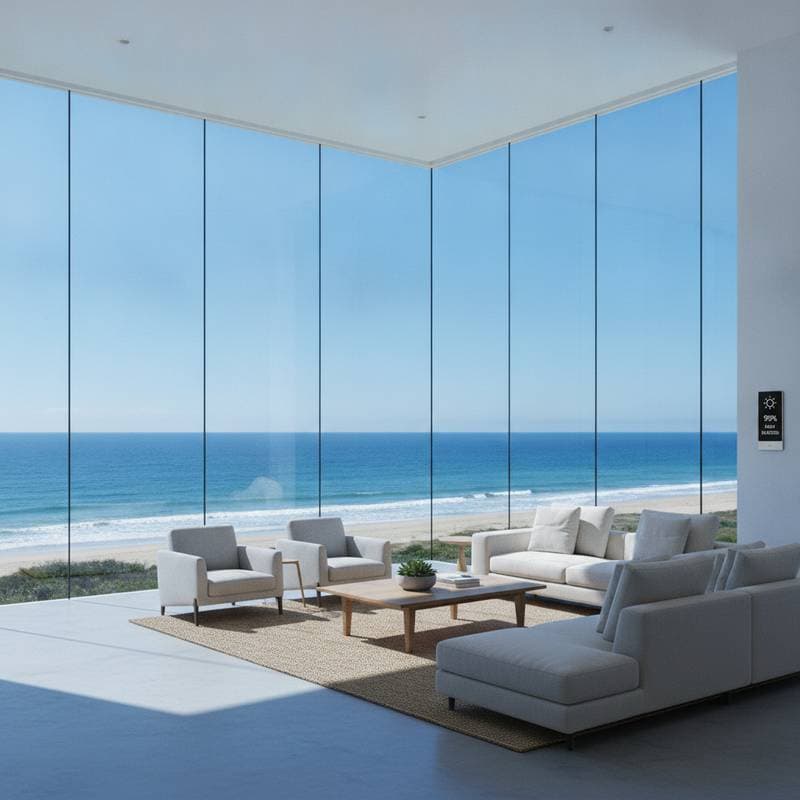
Smart Glass Blocks 99 Percent Heat in Coastal Homes
Smart glass offers a targeted solution for managing intense solar exposure in seaside properties. This technology adjusts its tint to limit heat gain while maintaining clear views of the ocean. Homeowners in coastal zones gain consistent indoor temperatures without heavy reliance on air conditioning.
Core Technology Behind Heat Reduction
Electrochromic layers within the glass respond to electrical signals or sunlight intensity. These layers shift from transparent to darkened states and block up to 99 percent of incoming solar heat. Visible light transmission remains sufficient for natural illumination throughout the day.
The process requires minimal power, often supplied by small solar cells integrated into the window frame. Sensors detect temperature changes and trigger automatic adjustments. Manual overrides through wall switches or apps provide additional control when needed.
Advantages Specific to Coastal Environments
Salt air and high humidity accelerate wear on standard windows. Smart glass resists corrosion better due to its sealed construction and durable coatings. Reduced heat transfer also limits moisture condensation on interior surfaces.
Energy savings appear quickly in regions with prolonged sunny conditions. Lower cooling loads decrease monthly utility expenses and extend the lifespan of HVAC equipment. Comfort improves as temperature swings between rooms diminish.
Available Configurations and Performance Levels
Several product categories suit different architectural needs.
- Suspended particle devices offer rapid switching speeds and strong glare control.
- Polymer dispersed liquid crystal options prioritize privacy alongside heat management.
- Electrochromic panels deliver the highest heat rejection rates for south and west facing exposures.
Each type supports custom sizing for retrofit projects or new construction. Performance data from manufacturers shows consistent results across varying angles of sunlight common along the coastline.
Planning Installation and Budget Considerations
Professional assessment determines structural compatibility and electrical requirements. Installation typically spans one to three days depending on the number of windows. Costs range from 800 dollars to 1500 dollars per square foot including controls and integration.
Rebates through local utility programs offset initial expenses for qualifying energy efficient upgrades. Phased installation allows owners to prioritize high exposure areas first. Warranties often cover 10 to 20 years on the glass units themselves.
Connecting Systems for Daily Operation
Smart glass pairs with whole home automation platforms through standard protocols. Voice commands adjust tint levels across multiple rooms simultaneously. Scheduling features align window states with occupancy patterns and weather forecasts.
Battery backups maintain function during power interruptions. Firmware updates refine sensor accuracy over time without hardware changes. These connections create a responsive envelope that adapts to daily coastal conditions.
Selecting and Maintaining the Right System
Compare independent test results for solar heat gain coefficients before purchase. Request samples to evaluate tint transitions under local light conditions. Verify that installers hold certifications specific to dynamic glazing products.
Routine cleaning with nonabrasive solutions preserves coating integrity. Annual inspections check electrical connections and sensor calibration. Proper care sustains the 99 percent heat blocking performance across seasons.
Next Steps for Property Upgrades
Consult with certified glazing specialists to model projected savings based on your home orientation and usage. Obtain multiple proposals that detail both equipment and integration expenses. Begin with a pilot installation on the most affected facade to confirm results before full commitment.