
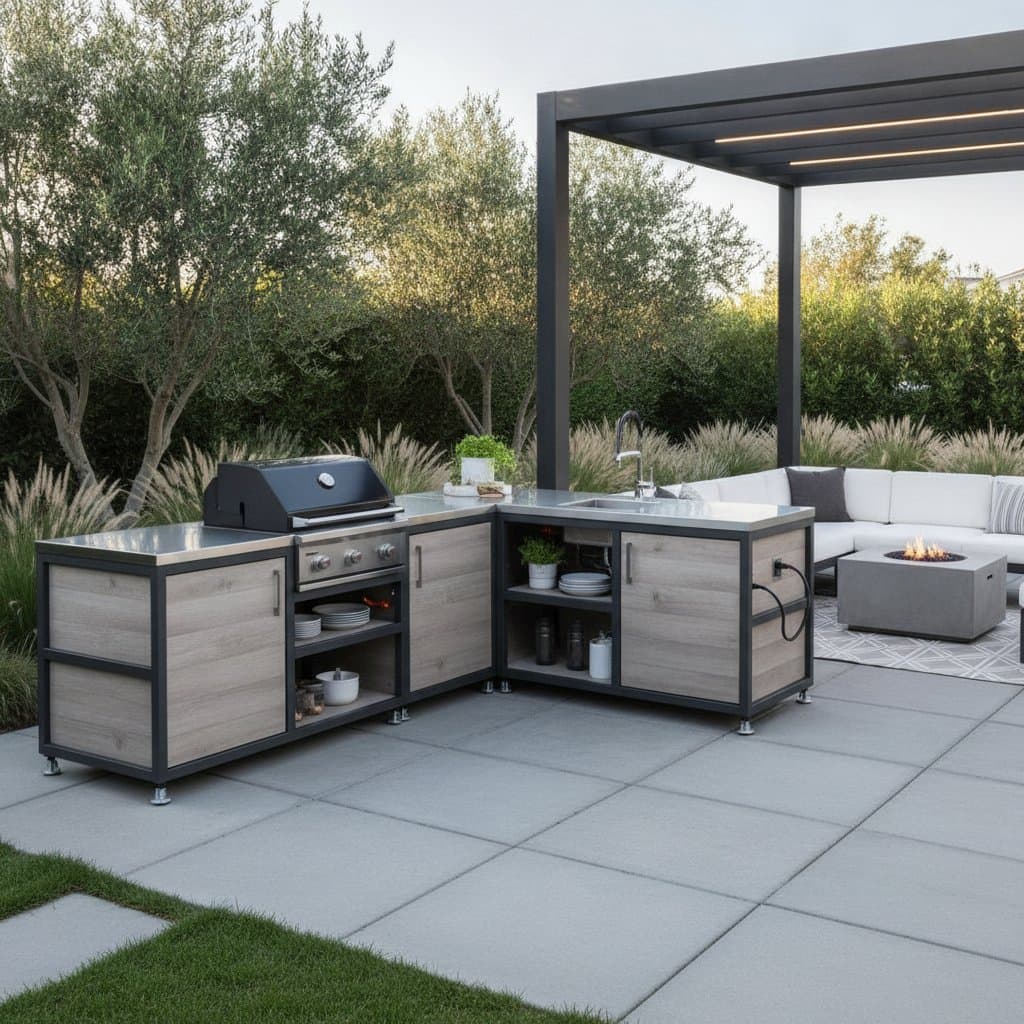
9 Snap-Together Kitchens for Smarter Outdoor Living
Outdoor cooking spaces serve as the center of backyard entertaining. Traditional outdoor kitchens often involve high costs, long timelines, and professional installation. Snap-together modular outdoor kitchens remove these barriers while delivering function and style.
These systems allow homeowners to design, build, and adjust a kitchen that matches their space and daily routines. Components connect quickly without masonry work or extensive cleanup. The following nine approaches show how to create a modular setup that supports regular use and adapts over time.
Streamlined Design and Easy Setup
1. Quick-Connect Frameworks for Instant Assembly
Pre-engineered frames lock together through simple mechanisms. Assembly typically finishes in one afternoon with basic tools. Adjustable legs accommodate uneven patios or decks.
Select powder-coated aluminum or stainless steel frames to resist weather. Budget between 1500 and 4000 dollars for most layouts.
2. Weather-Resistant Material Selection
Frames and panels must withstand moisture, sunlight, and temperature shifts. Composite surfaces and sealed metals reduce maintenance needs. Verify that every component carries an outdoor-use rating before purchase.
3. Integrated Storage Solutions
Base cabinets and drawers attach directly to the frame system. These units keep tools, utensils, and fuel within reach. Choose models with soft-close hardware and ventilation to protect contents.
4. Utility Connection Modules
Quick-connect fittings link gas, water, and electrical lines to the main structure. Position the kitchen near existing outlets to limit extension work. Always engage a licensed technician for final gas and water hookups.
5. Appliance Integration Steps
Grills, refrigerators, and burners mount into designated bays. Confirm clearance requirements for each appliance before final placement. This approach keeps surfaces level and prevents heat damage to adjacent panels.
6. Surface Drainage Planning
Slight slopes and built-in channels direct water away from the cooking area. Level the base during assembly to avoid pooling. Proper drainage protects both the frame and surrounding decking.
Design Options and Customization
7. Configurable Layouts for Every Space
Modular units support L-shaped, straight, or island arrangements. Begin with a compact core and add sections later as needs change. Maintain at least three feet of counter space on each side of the grill for safe movement.
8. Modern Finishes and Lighting Options
Stone-look veneers, wood-grain panels, and integrated LED strips create a finished appearance. Coordinate these elements with nearby furniture for visual unity. Warm white lights improve visibility during evening use while complementing neutral tones.
9. Expandable Add-Ons and Smart Features
Pizza ovens, beverage centers, and fold-out bars attach through the same locking system. Bluetooth lighting controls and additional storage modules expand capability without new construction. Homeowners can update individual sections as preferences evolve.
Planning Advice for a Seamless Build
Measure the available area and map traffic patterns before ordering components. Keep the kitchen near existing utilities to control connection expenses. Sketch the final layout to confirm appliance spacing and seating zones.
Use this checklist during preparation. Confirm surface level and drainage. Compare warranties across material options. Select only units rated for year-round outdoor exposure. Verify all spacing requirements for appliances and storage.
Answers to Common Questions
Most modular kitchens rely on powder-coated metal frames, composite panels, stainless steel, and stone-look surfaces. These materials resist moisture and sunlight. Homeowners with basic tools can complete assembly without specialized training. Simple configurations begin near 2000 dollars, while larger equipped versions reach 10000 dollars or more.
Daily Use and Long-Term Care
Regular surface cleaning and fitting checks keep the kitchen in good condition. Store removable accessories indoors during extended periods of nonuse. The modular format supports rearrangement or component upgrades as outdoor routines change. This flexibility delivers lasting value without repeated construction projects.