
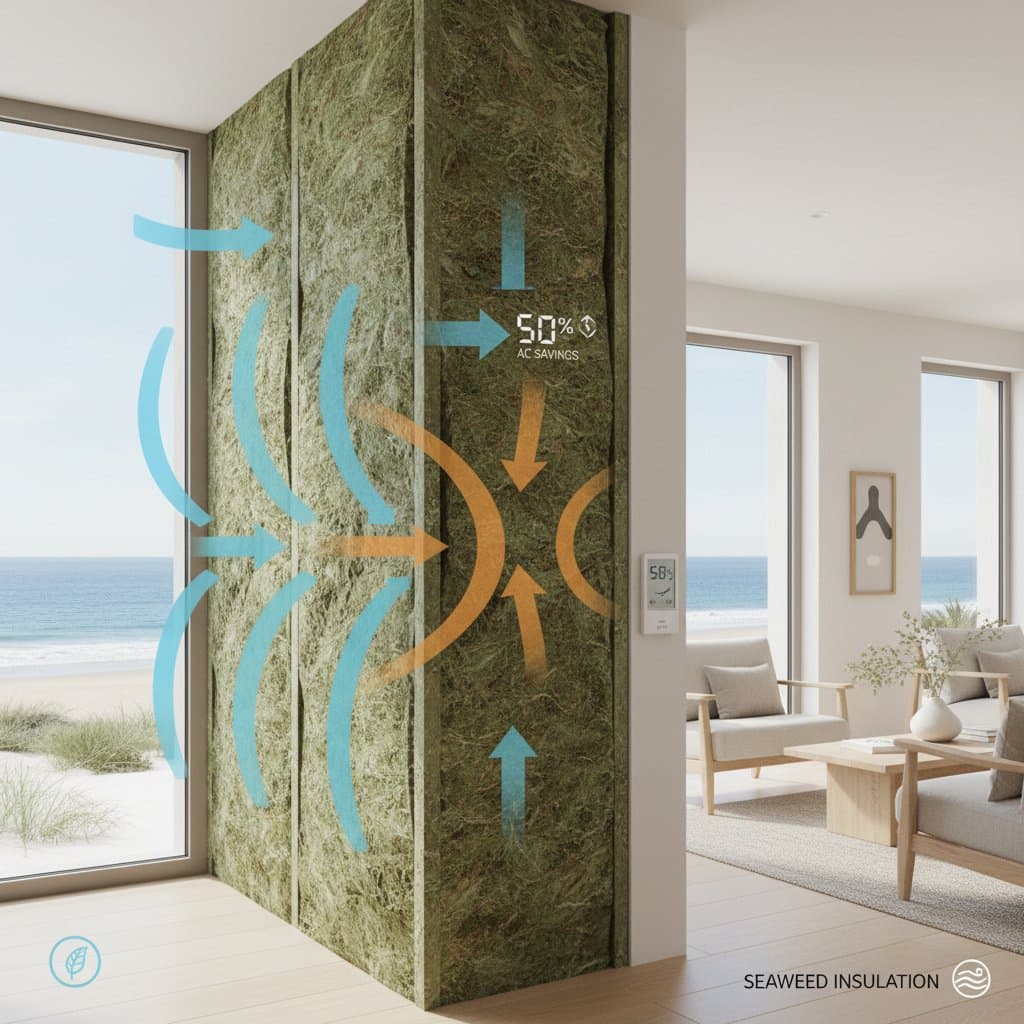
Seaweed Insulation Halves AC Costs for Coastal Homes
Coastal homeowners often face the same frustrating cycle. Summer heat builds, humidity rises, and air conditioners run nonstop. The result is high energy bills and a constant struggle to maintain comfort. A new solution is gaining attention for its ability to keep homes cooler naturally. Seaweed insulation offers a natural, renewable, and highly effective way to stabilize indoor temperatures and cut AC costs by nearly half in coastal climates.
This guide explains exactly how seaweed insulation works, what it costs, and how it compares to traditional materials. You will learn what to expect from installation, how to choose the right contractor, and how to estimate your potential savings.
Average Cost of Seaweed Insulation for Coastal Homes
The average cost of seaweed insulation ranges from $6 to $10 per square foot installed, depending on the type, thickness, and complexity of the project. For a 2,000 square foot home, that equals $12,000 to $20,000 for a complete installation. Although the initial cost is higher than fiberglass or cellulose, the energy savings can reach 40 to 50 percent on cooling expenses.
| Insulation Type | Average Installed Cost per Sq. Ft. | Cooling Cost Reduction | Lifespan | Eco Rating |
|---|---|---|---|---|
| Seaweed | $6 - $10 | 40% - 50% | 75+ years | Excellent |
| Fiberglass | $2 - $4 | 20% - 25% | 20 - 30 years | Moderate |
| Cellulose | $3 - $5 | 25% - 30% | 20 - 25 years | High |
| Spray Foam | $4 - $7 | 30% - 35% | 30 - 40 years | Low |
Seaweed insulation has a much longer life expectancy than most synthetic materials. Its natural resistance to salt air, moisture, and pests makes it ideal for coastal homes that endure frequent humidity and salt exposure.
How Seaweed Insulation Works
Seaweed insulation is made by harvesting and drying natural seaweed, usually kelp or eelgrass, then compressing it into mats or loose-fill forms. Its cellular structure naturally traps air, creating a powerful thermal barrier. The salt and mineral content in seaweed also makes it naturally resistant to fire, mold, and insects.
In coastal areas, this insulation excels because it does not absorb moisture like fiberglass. It regulates humidity levels, keeping indoor air cooler and more comfortable. When installed properly, it stabilizes interior temperatures so the air conditioner runs less frequently.
Cost by Project Type
The total cost of a seaweed insulation project depends on whether you are upgrading an existing home or building new.
| Project Type | Typical Cost Range | Description |
|---|---|---|
| New Construction | $5 - $8 per sq. ft. | Installed during framing, ideal for full coverage. |
| Retrofit Installation | $7 - $10 per sq. ft. | Added to finished walls or attics, requires minor demolition. |
| Partial Upgrade | $4 - $6 per sq. ft. | Used in key heat loss areas like attics or roof decks. |
Retrofit installations cost more because of the additional labor required to open and reseal wall cavities. For coastal homes, focusing on attics and roof decks often delivers the best return on investment since most heat enters through the roof.
Labor Costs
Professional installation labor typically makes up 40 to 50 percent of the total project cost. Installers usually charge $3 to $5 per square foot for labor, depending on accessibility and design complexity.
Labor costs rise for older homes where walls or attics need preparation or existing insulation removal. The material itself is lightweight and easy to handle, so once access is prepared, installation moves quickly.
Factors That Influence Total Cost
Several variables influence the total cost of a seaweed insulation project:
- Home size and layout: Large or irregular spaces require more material and time.
- Access points: Tight attics or complex rooflines increase labor time.
- Climate zone: In very humid regions, additional vapor barriers may be needed.
- Building age: Older homes may need framing repair or air sealing before insulation.
- Material source: Locally sourced seaweed often costs less than imported varieties.
Understanding these factors helps you estimate costs accurately before getting quotes.
How Seaweed Insulation Cuts AC Costs
Seaweed insulation achieves its energy efficiency through its high thermal resistance (R-value) and moisture-regulating properties. The typical R-value of compressed seaweed mats ranges from R-3.5 to R-4.0 per inch, similar to premium cellulose. However, the major advantage lies in its ability to stay dry and breathable.
When humidity rises, seaweed absorbs a small amount of moisture, preventing it from entering the indoor environment. As air dries, the insulation releases that moisture naturally. This process keeps interior humidity in the comfort range, reducing the strain on your AC system.
Homeowners report measurable cooling cost reductions of 40 to 50 percent after switching from fiberglass to seaweed insulation in coastal climates. Over time, that can translate into thousands of dollars saved on electricity bills.
How to Save Money on Seaweed Insulation
You can make seaweed insulation more affordable with the following strategies:
- Target high-impact areas first. Start with attics, ceilings, and upper walls where heat gain is greatest.
- Combine with air sealing. Seal gaps around ducts, vents, and windows before installation to maximize performance.
- Use local materials. Coastal communities often have access to regional seaweed sources that reduce transportation costs.
- Bundle with other energy upgrades. Pair insulation with window upgrades or reflective roofing to qualify for energy rebates.
- Do light prep work yourself. Clearing attic access or removing old insulation can reduce labor hours.
DIY vs. Hiring a Professional: A Cost-Benefit Analysis
Some homeowners may consider installing seaweed insulation themselves. While small attic projects can be handled by experienced DIYers, most installations benefit from professional handling.
| Task | DIY Feasibility | Professional Recommended |
|---|---|---|
| Attic floor insulation | Moderate | Optional |
| Wall cavity insulation | Low | Yes |
| Roof deck insulation | Low | Yes |
| Vapor barrier installation | Moderate | Yes |
| Air sealing and finishing | Low | Yes |
DIY efforts can save $2 to $4 per square foot in labor costs, but errors in vapor control or compression can reduce the insulation's effectiveness. For most homeowners, hiring a certified insulation contractor ensures proper performance and warranty coverage.
Common Mistakes to Avoid
Avoid these costly missteps during your seaweed insulation project:
- Skipping air sealing before installation, which reduces efficiency.
- Compressing the material too tightly, which lowers its R-value.
- Neglecting vapor barriers in humid zones, causing condensation issues.
- Using untested seaweed sources without proper cleaning or drying, which can introduce odor or decay.
- Failing to verify contractor experience with natural insulation products.
Attention to these details ensures maximum comfort and longevity of the insulation.
Frequently Asked Questions About Seaweed Insulation
Does seaweed insulation smell?
Properly processed seaweed insulation has no lingering ocean odor. Any natural scent dissipates within days of installation.
Is seaweed insulation safe for those with allergies?
Yes. It is hypoallergenic, contains no synthetic binders, and does not release harmful particles or fumes.
Does it attract pests?
No. The natural salt and mineral content in seaweed repels insects and rodents.
How long does seaweed insulation last?
Seaweed insulation lasts 75 years or more, far outpacing traditional options due to its resistance to degradation from moisture and pests.
Do I need a vapor barrier?
In highly humid coastal areas, install a vapor barrier to prevent condensation. Consult a local expert to assess your specific needs.
Can seaweed insulation increase home resale value?
Yes, eco-friendly upgrades like seaweed insulation appeal to buyers seeking energy efficiency, potentially boosting resale value by 5 to 10 percent in green-conscious markets.
Ensuring Long-Term Performance
To protect your seaweed insulation investment, inspect it annually for signs of settling or damage, especially after storms. Schedule professional maintenance every five years to verify seals and barriers remain intact. These steps preserve its efficiency, ensuring continued savings and comfort for decades.