
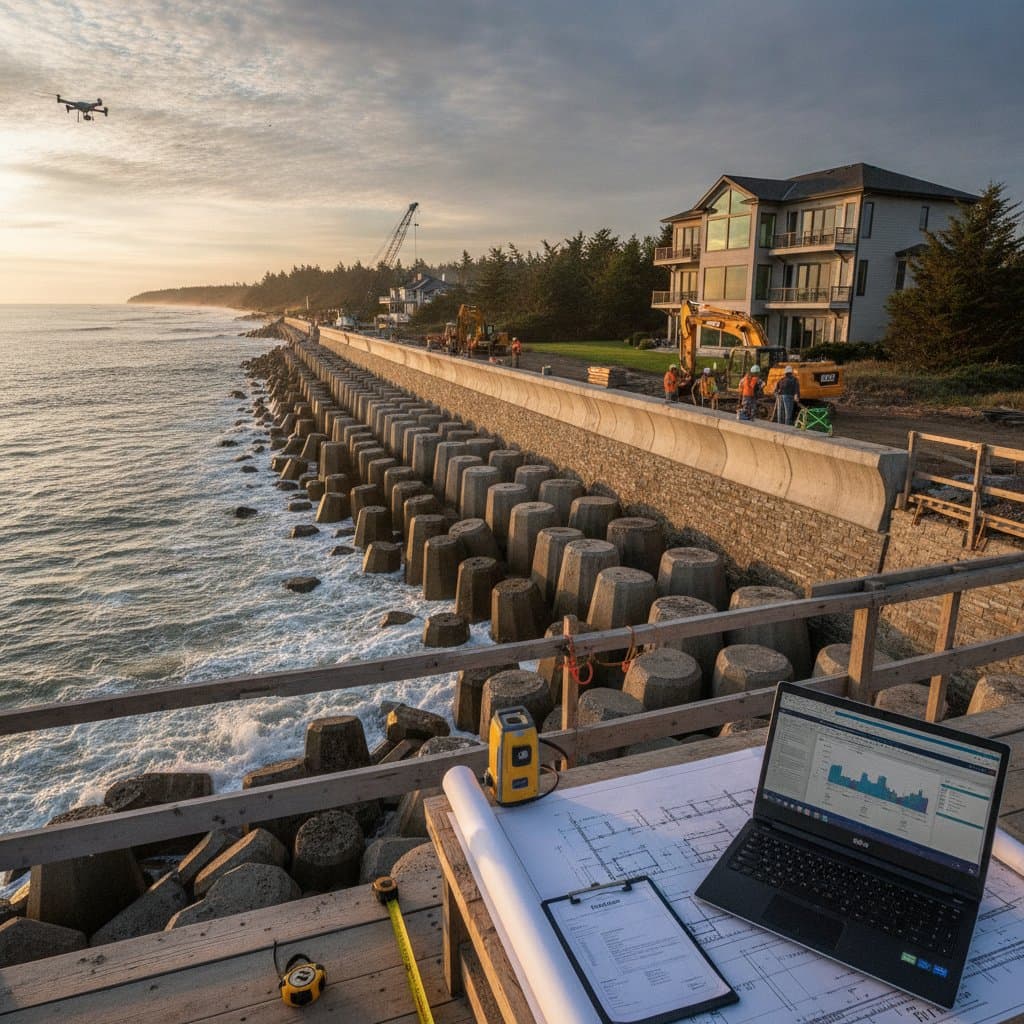
Seawall Remodel Costs Range from $400 to $1,200 Per Linear Foot
Owning coastal property delivers ocean views and direct shoreline access. It also requires ongoing maintenance that inland owners rarely encounter. Seawall remodel expenses average $400 to $1,200 per linear foot. A typical 100 foot frontage therefore requires a total outlay of $40,000 to $120,000, although difficult sites can exceed this range.
San Diego building officials mandate inspections or full remodels whenever erosion or structural decline endangers adjacent land or structures. Homeowners who understand pricing variables, regulatory steps, and maintenance schedules protect both their investment and their compliance standing.
Key Drivers of Seawall Remodel Pricing
Several site specific and material factors determine final project costs.
Material Options
- Vinyl panels install quickly and resist corrosion, yet they provide less rigidity than concrete.
- Concrete withstands heavy wave action and lasts for decades, though placement demands more equipment.
- Steel supplies high tensile strength but requires coatings to slow saltwater corrosion.
- Riprap uses stacked stone to absorb wave energy and blends with natural shorelines.
Site Access and Terrain
Steep bluffs or narrow easements often necessitate cranes or barges. These conditions raise labor expenses by 20 to 40 percent.
Permitting and Engineering
Regulatory review adds $5,000 to $20,000. Coastal commissions, city planning offices, and environmental agencies each require reports and impact assessments.
Labor and Equipment
Marine contractors and heavy machinery represent 40 to 60 percent of total budgets. Strict local codes further elevate hourly rates.
Erosion Extent
Damage that reaches building foundations multiplies repair scope. Early detection through routine checks limits escalation.
Practical Budgeting Steps
- Collect three or more written proposals from licensed marine contractors.
- Request line item estimates that separate materials, labor, and permit fees.
- Hold back 10 to 20 percent of the budget for change orders or additional engineering.
- Schedule work during lower tide windows to reduce equipment standby time.
- Arrange annual inspections to locate cracks or undermining before they expand.
Long Term Value of Seawall Upgrades
A properly rebuilt seawall safeguards land area and supports resale prices.
| Project Type | Average Cost | Estimated ROI | Primary Benefit |
|---|---|---|---|
| Full replacement | $100,000 | 75 percent | Stops land loss and improves safety |
| Partial repair | $30,000 | 65 percent | Adds 10 to 20 years of service life |
| Erosion control upgrades | $20,000 | 60 percent | Lowers future maintenance needs |
Questions Homeowners Frequently Ask
How often should inspections occur?
Every one to two years and after major storms.
Does homeowners insurance cover seawall work?
Standard policies exclude seawall damage, although certain coastal endorsements provide limited assistance.
Can owners perform the work themselves?
Local codes require licensed contractors for structural and permitting reasons.
What occurs if repairs are postponed?
Erosion accelerates, fines may apply, and emergency work costs rise sharply.
How long does a typical project last?
Four to twelve weeks from permit issuance to final inspection.
Protecting Shoreline Assets Over Time
Consistent inspections, timely repairs, and adherence to local rules keep coastal properties secure. These measures preserve land value while meeting environmental standards.