
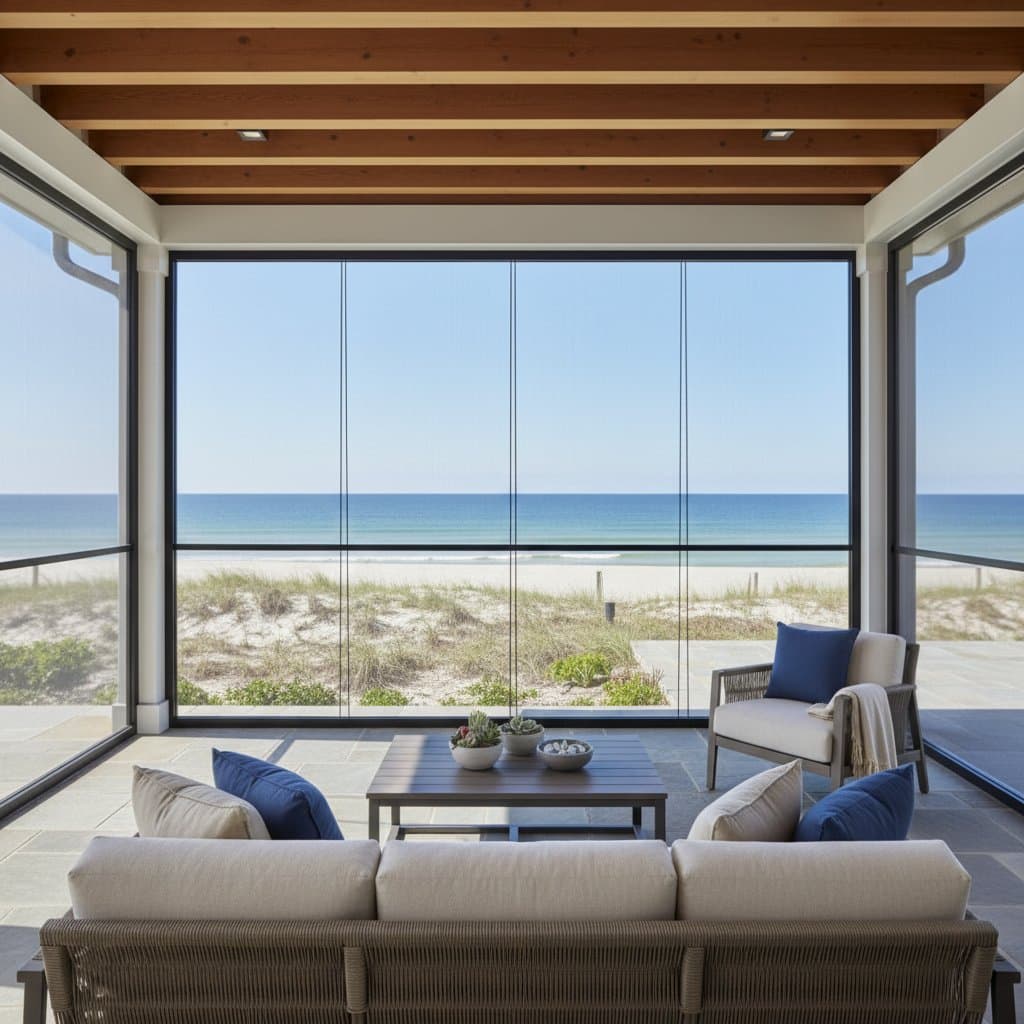
Boost Coastal Porch Value $18K with Retractable Screens
Coastal homes often feature porches that invite relaxation amid ocean views, but elements such as persistent winds, intense sunlight, and invading insects frequently limit their enjoyment. Retractable screens address these challenges effectively by providing a customizable barrier that deploys when needed and retracts to preserve open-air appeal. Homeowners who install premium retractable or motorized systems report property value increases of up to $18,000, as these enhancements create a seamless blend of indoor comfort and outdoor living. This investment not only elevates daily usability but also appeals to prospective buyers seeking protected yet expansive entertainment areas.
Average Cost of Retractable Porch Screens
The expense for installing retractable screens on a coastal porch generally falls between $2,500 and $8,000, influenced by factors like the covered area, selected materials, and whether automation is included. For a typical mid-sized porch or patio, the national average reaches approximately $4,800, covering basic setup and standard features. Motorized versions, which operate via remote control or app integration, command higher prices due to their convenience and sleek integration, often justifying the added cost through easier daily use and enhanced aesthetic value that draws interest from real estate professionals.
Consider the scale of your porch: smaller setups under 200 square feet might stay closer to the lower end, while expansive areas exceeding 400 square feet push toward the upper range. Always factor in coastal-specific needs, such as reinforced framing to withstand salty air, which can slightly elevate the baseline estimate.
| Project Type | Typical Cost Range | Description |
|---|---|---|
| Manual Screens | $2,500 - $4,000 | Hand-operated via pulleys or cranks, best for compact porches with infrequent adjustments |
| Motorized Screens | $4,500 - $8,000 | Powered by electricity with remote or smart home compatibility, ideal for larger or elevated structures |
Cost by Material Type
Selecting the appropriate material directly affects both the initial investment and the long-term reliability of the screens in a marine environment. Coastal conditions demand options that resist rust, fading, and tearing from high humidity and UV exposure. Fiberglass offers an entry-level choice for budget-conscious projects, while premium selections like stainless steel provide superior longevity.
For instance, aluminum mesh strikes a balance by offering strength without excessive weight, making it suitable for porches with overhead beams that require lightweight installations. Solar or UV meshes add an extra layer of protection by filtering harmful rays, which proves invaluable for preserving outdoor furnishings and preventing skin damage during extended lounging sessions.
| Material | Cost per Square Foot | Durability | Maintenance |
|---|---|---|---|
| Fiberglass Mesh | $5 - $8 | Moderate | Easy to clean with mild soap |
| Aluminum Mesh | $8 - $12 | High | Low; occasional lubrication |
| Stainless Steel | $10 - $15 | Very High | Minimal; rinse after storms |
| Solar or UV Mesh | $9 - $13 | High | Moderate; inspect for tears annually |
Stainless steel emerges as the preferred option for harsh coastal settings, as it endures corrosion far better than alternatives. Pair it with UV-resistant coatings to maintain visibility and comfort, ensuring the porch remains a shaded sanctuary even on the sunniest afternoons.
Labor Costs and Installation Factors
Labor constitutes 40 to 50 percent of the overall project budget, with skilled installers billing $65 to $100 per hour based on the job's intricacies. Simple manual setups on accessible porches complete in a day, whereas motorized installations demand additional time for wiring and testing, potentially extending the timeline to two or three days. In coastal regions, expect premiums for weatherproofing measures, such as anchoring screens to resist gusts up to 50 miles per hour.
Professional teams assess site-specific elements like uneven flooring or proximity to saltwater, which may require custom brackets or sealants. These steps ensure the system integrates flawlessly with existing architecture, avoiding future repairs that could diminish the investment's return.
Factors That Influence Total Cost
Several variables determine the final price tag for retractable screens, requiring careful evaluation to align with your budget and needs.
- Porch dimensions and the quantity of panels or openings to enclose
- Choice between manual, motorized, or smart-integrated screen mechanisms
- Grade of materials selected for weather resistance and aesthetic matching
- Necessity of electrical outlets or wiring for automated features
- Regional variations in installer rates and requirements for building permits
- Inclusion of enhancements like integrated lighting or adjustable tension systems
By prioritizing essentials—such as corrosion-proof materials over luxury add-ons—homeowners can optimize costs without sacrificing performance.
Strategies to Reduce Expenses on Retractable Screens
Achieving savings involves strategic planning from the outset, allowing you to secure a high-quality installation without exceeding financial limits.
-
Obtain detailed estimates from a minimum of three certified local contractors to identify competitive pricing and bundled services.
-
Select manual operation for modest porches where automation provides limited daily benefit, redirecting funds to durable materials.
-
Coordinate the screen project with concurrent exterior improvements, such as deck refinishing, to consolidate labor charges.
-
Implement a seasonal maintenance routine, including gentle cleaning and tension checks, to prolong the system's operational life.
-
Choose materials in the mid-tier range that offer robust protection against coastal elements at a fraction of premium costs.
These approaches not only lower upfront outlays but also enhance the overall return on investment through extended durability.
DIY Installation Versus Professional Services
Attempting a do-it-yourself approach suits basic manual screens on small porches, where precise measurements and basic tools suffice for setup. Follow manufacturer guidelines meticulously to secure tracks and meshes evenly, preventing issues like sagging or pest entry points. However, this method demands carpentry skills and time, with risks of voiding warranties if errors occur.
Hiring professionals guarantees adherence to safety standards, especially for elevated or electrically integrated systems. Experts handle permitting, custom fittings, and post-installation adjustments, delivering a result that withstands coastal rigors and bolsters home value. For most homeowners, the assurance of expert workmanship outweighs potential DIY savings.
Frequently Asked Questions About Retractable Porch Screens
Do retractable screens increase home value?
Yes, a professionally installed retractable screen system can elevate resale value by up to $18,000. In coastal markets, where buyers prioritize versatile outdoor spaces, this upgrade signals thoughtful enhancements that expand livable square footage without major renovations.
How long do retractable screens last?
Quality retractable screens endure 10 to 15 years with consistent upkeep. Regular inspections for wear, particularly in mesh edges and roller mechanisms, help identify minor fixes that prevent premature failure in humid environments.
Are retractable screens hurricane-rated?
Certain advanced models feature wind-resistant frames and impact-tested meshes, rated to withstand gusts exceeding 100 miles per hour. Consult local building codes to select options certified for hurricane-prone coastal zones, ensuring compliance and safety.
Can retractable screens block UV rays?
Yes, specialized solar mesh varieties filter up to 90 percent of ultraviolet rays. This protection safeguards interior decor from sun damage and allows for prolonged outdoor time without excessive glare or heat buildup.
Do I need a permit to install them?
Residential installations typically bypass permitting for standard manual systems, but motorized or large-scale projects often require approval. Verify with your local municipality, as coastal regulations may mandate reviews for structural integrity.
Creating a Lasting Coastal Retreat
Retractable screens unlock the full potential of your porch, shielding it from environmental nuisances while preserving panoramic views and natural airflow. This upgrade delivers immediate lifestyle improvements through increased usability and long-term financial gains via heightened property appeal. Select components suited to your locale, enlist skilled installers, and commit to upkeep to enjoy a resilient outdoor haven for years ahead.