
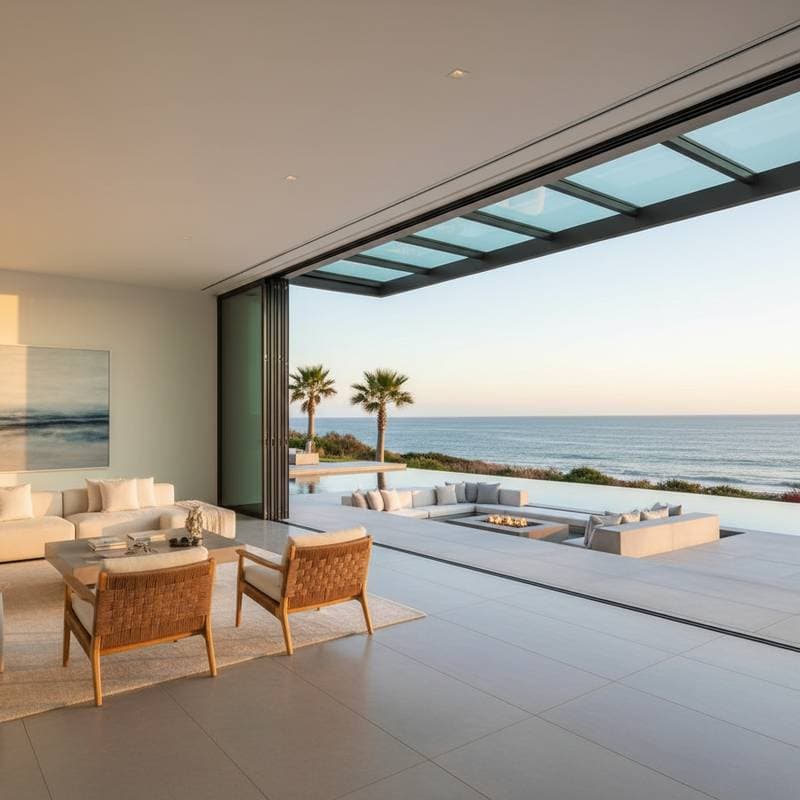
Why Retractable Glass Walls Define 2026 Living
Home design continues to evolve toward open and flexible spaces that integrate indoor and outdoor environments. Retractable glass walls emerge as a prominent innovation in this trend, serving as a defining element in contemporary residences. These systems enable entire walls to retract smoothly, linking living areas directly to patios, gardens, or expansive views. In coastal locations such as San Diego, retractable glass walls facilitate an ideal indoor-outdoor lifestyle that combines natural elegance with luxury and accessibility.
The Appeal of Retractable Glass Walls
Retractable glass walls consist of large, movable panels that fold, slide, or pivot to reveal open sections of a room. This design creates a fluid connection between interior and exterior spaces. When closed, the panels deliver the transparency and thermal performance of advanced glass. When open, they remove physical divisions and convert a standard living room into an airy extension of the outdoors.
Average cost: $900 to $1,400 per linear foot for installation
Common materials: aluminum, wood-clad aluminum, or frameless glass
Popular styles: folding, sliding, pocketing, or pivoting configurations
Image: Modern living room with retractable glass wall opening to a poolside patio
Average Cost and Style Comparison
The price of retractable glass walls varies based on dimensions, materials, and customization levels. The following table details typical cost ranges and characteristics for different system types.
| System Type | Cost Range (per linear foot) | Ideal Use | Key Features |
|---|---|---|---|
| Folding panels | $900 - $1,200 | Patios, living rooms | Bi-fold mechanism, space-efficient stacking |
| Sliding panels | $1,000 - $1,400 | Large openings | Glide along tracks, broad sightlines |
| Pocketing glass | $1,200 - $1,800 | Luxury homes | Panels retract fully into wall pockets |
| Frameless systems | $1,300 - $1,900 | Modern designs | Transparent panels, reduced framing |
Image: Frameless glass wall system overlooking a coastal view
Why Homeowners Value Retractable Glass Walls
Retractable glass walls fundamentally alter the functionality of residential spaces. They introduce abundant natural light into interiors and simplify hosting gatherings. The ability to adjust openness provides seasonal adaptability and enhances overall comfort.
Principal advantages include:
- Expanded usable area: Indoor and outdoor zones combine to support larger social or leisure activities.
- Improved air circulation: Natural breezes flow through, decreasing reliance on mechanical cooling systems.
- Superior visual appeal: Unobstructed views contribute to a sophisticated and contemporary aesthetic.
- Improved energy performance: Features such as double-pane glazing and thermal barriers help regulate indoor temperatures effectively.
- Increased real estate value: Properties equipped with these installations command premium prices owing to their upscale characteristics.
Factors Influencing Installation Costs
Multiple variables determine the total expense of retractable glass walls. Homeowners benefit from evaluating these aspects to establish feasible financial plans prior to undertaking renovations.
1. Material Choices
Aluminum framing withstands harsh weather conditions, proving suitable for seaside environments. Wood-clad aluminum introduces a warmer tone yet demands periodic upkeep. Frameless options maximize visibility but typically incur the greatest expense.
2. Dimensions of the Opening
Wider spans necessitate bespoke engineering, reinforced supports, and thicker glass panels. For instance, a 16-foot aperture might range from $14,000 to $22,000 in total cost. A 25-foot premium setup could surpass $30,000.
3. Installation Demands
Adapting existing structures often elevates labor expenses through required reinforcements. Projects in new builds incorporate these elements more straightforwardly and economically.
4. Glass Specifications
Selections including low-emissivity coatings, colored tints, or impact-resistant laminates affect both efficiency and style. High-performance glass options lower long-term energy expenditures.
Image: Aluminum-framed retractable glass wall in a remodeled kitchen
Strategies for Effective Planning and Budget Management
The addition of retractable glass walls represents a substantial enhancement, requiring meticulous financial preparation for optimal execution.
Recommended budgeting approaches:
- Obtain estimates from several qualified contractors to assess options in materials and guarantees.
- Allocate a reserve fund of 10 to 15 percent to cover unforeseen structural or wiring modifications.
- Ensure seamless flooring continuity across indoor and outdoor areas for a level passageway.
- Investigate potential rebates or regional programs supporting advanced glazing technologies.
- Consider directional exposure, as walls facing west might require additional shading or ultraviolet safeguards.
Design Ideas for Seamless Indoor-Outdoor Integration
Retractable glass walls harmonize with diverse architectural themes, ranging from sleek minimalism to relaxed coastal motifs. They pair effectively with surfaces such as natural stone, timber accents, or textured stucco, suiting various spatial scales.
Versatile implementation ideas:
- Kitchen expansions that connect to al fresco dining zones
- Living areas blending into elevated decks or landscaped terraces
- Primary bedrooms adjoining secluded patios or verandas
- Poolside structures evolving into shaded lounging pavilions
Image: Coastal-style home with retractable glass wall leading to outdoor dining area
Assessing Long-Term Benefits and Return on Investment
Although initial costs prove considerable, retractable glass wall installations yield enduring advantages. Owners generally recover 60 to 80 percent of expenditures via elevated market value and enhanced desirability. Beyond financial returns, these features provide ongoing pleasure through better illumination, ventilation, and spatial versatility.
Comparative analysis of significant home improvements:
| Upgrade Type | Average Cost | Estimated ROI |
|---|---|---|
| Retractable glass wall | $20,000 - $35,000 | 60% - 80% |
| Kitchen renovation | $25,000 - $45,000 | 55% - 75% |
| Bathroom renovation | $10,000 - $20,000 | 50% - 70% |
Frequently Asked Questions About Retractable Glass Walls
How weather-resistant are retractable glass walls? High-end models incorporate robust seals and integrated drainage to resist moisture intrusion and air infiltration effectively.
What maintenance do these systems require? Routine cleaning of tracks and panels suffices, with professional inspections recommended annually to ensure smooth operation and longevity.
Are they suitable for all climates? Yes, when equipped with appropriate glazing and framing, they perform well in diverse conditions, from humid coasts to arid interiors.
How do they impact home energy use? Energy-efficient variants reduce heating and cooling demands by optimizing natural light and airflow, potentially lowering utility costs by 20 to 30 percent.
Embracing Fluid Spaces and Everyday Luxury
Retractable glass walls transform residential experiences by dissolving spatial limits and welcoming natural elements. They foster environments rich in sunlight and fresh air, strengthening ties to surrounding landscapes. Whether framing a seaside panorama or a serene backyard, these installations elevate routine moments into serene escapes, embodying a forward-thinking approach to gracious living.