
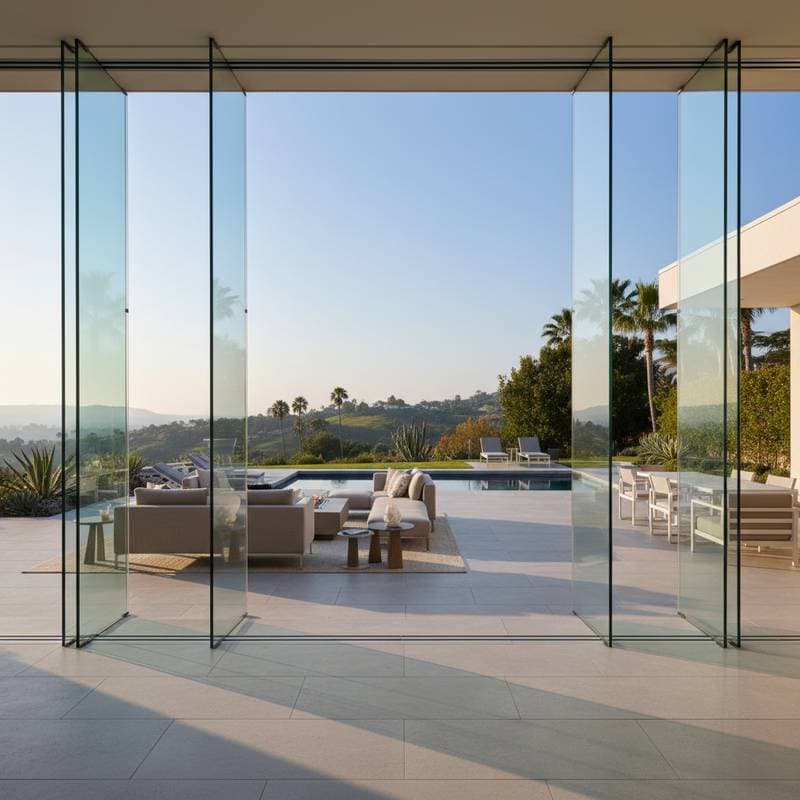
Why retractable glass walls rank as a top patio upgrade for 2026
A coastal breeze moves through the living room when a glass wall slides open and joins indoor comfort to the backyard. Retractable glass walls now define modern California living by turning patios into true extensions of the home. Homeowners seek this upgrade to raise property value, increase natural light, and gain year round use of outdoor space.
This guide explains the appeal of retractable glass walls, outlines typical costs, reviews system types, and compares DIY work with professional installation. It also covers maintenance steps and practical ways to reduce expenses.
Expect to spend between 8000 dollars and 35000 dollars on a complete system. The average project totals around 18000 dollars. The result is a brighter interior that connects directly to the outdoors.
Cost factors
Several elements determine final price. Opening size, glass type, frame material, and site conditions all affect cost. Larger spans require stronger headers and more panels. Low emissivity or triple glazed units raise the total but improve comfort. Coastal locations often need corrosion resistant aluminum or stainless steel frames.
Types and options
Three main systems serve different needs.
Folding glass walls
These suit large openings that demand dramatic indoor outdoor flow. Multiple panels hinge together and stack to one side. They deliver wide ventilation and suit entertaining areas.
- Expands the full wall width
- Produces an open concept feel
- Needs space for stacked panels
Sliding glass walls
These fit sleek designs and tighter budgets. Panels move along tracks and can recess into a pocket. They preserve views while saving floor space.
- Operates smoothly in limited areas
- Supports large glass sheets
- Requires exact track alignment
Pivot glass walls
These create architectural statements for partial openings. Each panel rotates on a central axis. They work best in custom projects where a unique look matters more than maximum width.
- Offers a distinctive appearance
- Costs more than other options
- Limits energy performance on wide spans
DIY versus professional installation
Most retractable systems involve structural work and waterproofing details. Small sliding units may tempt experienced homeowners, yet full size walls usually require licensed help.
DIY work takes two to four days and demands framing tools, a level, and equipment to lift heavy panels. Any misalignment can cause leaks or binding. Professional crews finish in one to three days and manage permits, load calculations, and warranty requirements. Many manufacturers require certified installers to keep coverage intact.
Obtain three detailed bids. Confirm each contractor has completed similar glass wall projects.
Maintenance and lasting value
Routine care keeps systems operating for decades.
- Clean glass every three months with mild soap and water
- Check seals and hardware twice a year for wear
- Apply silicone lubricant to tracks
- Clear drainage channels of debris
Proper upkeep can add five to ten percent to resale value through expanded living space and improved light.
Energy performance and climate considerations
Insulated glass and thermal breaks limit heat transfer. Coastal homes benefit from aluminum frames that resist salt air. Colder regions gain comfort from triple glazing. Most existing homes need only minor header reinforcement.
Planning your installation
Measure the opening, set a firm budget, and consult specialists who focus on retractable walls. Compare system types against your climate and lifestyle goals. A well chosen installation delivers daily comfort and lasting property appeal.