
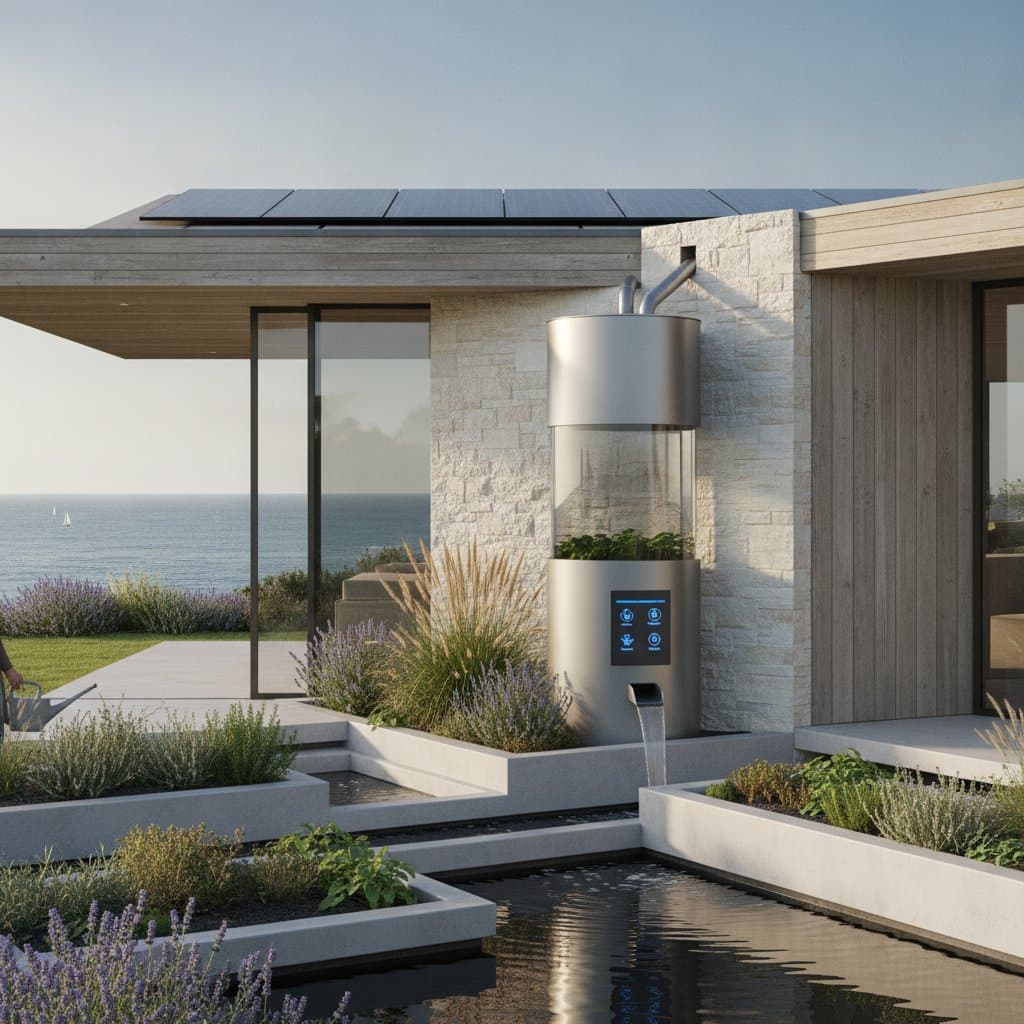
Roof Catchment and Gutter Systems
Effective rainwater collection begins with a well designed roof and gutter setup. Wide gutters installed at a gentle slope channel water efficiently toward downspouts. Gutter guards block leaves and sand that are common in coastal areas.
Position downspouts close to storage tanks to minimize flow distance and evaporation loss. A non toxic roof sealant further improves runoff quality by limiting contamination from salt air and debris.
Selecting Durable Cistern Tanks
Coastal conditions demand tanks made from fiberglass, polyethylene, or concrete. These materials resist corrosion from salt air and humidity. Above ground tanks allow easy access for maintenance while below ground units preserve yard space.
Tank capacity should match roof size and local rainfall patterns. Homeowners typically choose units between 500 and 2000 gallons for residential use. UV resistant coatings and marine grade fittings extend service life in sunny seaside locations.
First Flush Diverters for Improved Water Quality
A first flush diverter removes the initial dirty flow that carries dust and roof residue. Cleaner water then enters the cistern. This simple addition reduces cleaning frequency and protects downstream filters.
Automated Monitoring Systems
Digital sensors track water levels and usage in real time. Mobile apps send alerts for maintenance needs or approaching capacity. Pairing sensors with weather based irrigation controls prevents unnecessary pumping and conserves stored water.
Overflow and Drainage Controls
Reliable overflow pipes direct excess water into rain gardens or bioswales. This protects foundations and reduces erosion risks common near the coast. Gravel trenches further improve drainage while adding visual appeal to the landscape.
Regular Cleaning and Seasonal Care
Inspect gutters, filters, and seals several times each year. Flush diverters after major storms and rinse sediment from tank floors. Following manufacturer schedules for filter replacement keeps water fresh and equipment reliable.
Frequently Asked Questions
How much does a rainwater cistern system cost for a coastal home?
Basic setups begin at a few hundred dollars while larger systems with pumps and underground tanks reach several thousand. Most owners recover costs through reduced municipal water bills.
Can stored rainwater be used for drinking?
Proper filtration and testing make rainwater potable. Coastal residents more often use it for irrigation, toilet flushing, and exterior cleaning.
What maintenance does a rainwater cistern require?
Routine tasks include gutter cleaning, filter flushing, and leak checks. Seasonal inspections before and after rainy periods prevent larger issues.
Do rainwater cisterns work during dry months?
Adequate storage allows use throughout dry spells. Drought tolerant landscaping helps stretch supplies further.
Are there tax incentives or rebates for installing a cistern?
Many coastal communities offer rebates or reduced permit fees for water conservation projects. Local utility programs provide the most current details.
What tank size is best for a typical coastal home?
A 500 to 2000 gallon cistern meets most household and garden needs. Roof area and average rainfall determine the final choice.
Realizing Savings and Sustainability
A properly installed cistern lowers water expenses while easing demand on municipal supplies. Coastal homeowners gain independence from fluctuating utility rates and contribute to regional water resilience.