
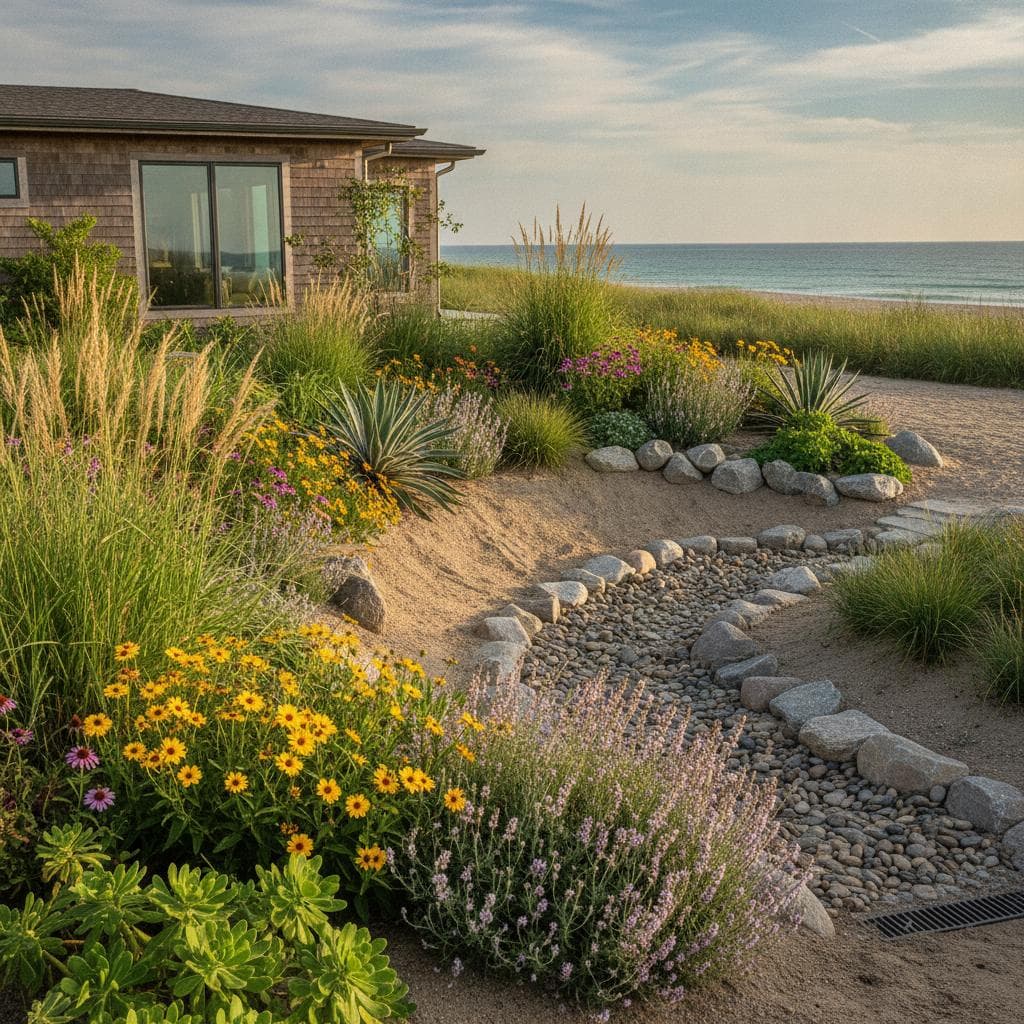
9 Rain Garden Ideas for Coastal Homes to Manage Stormwater Naturally
If you live near the coast, you know how unpredictable heavy rain can be. One moment your yard is dry and peaceful. The next moment it becomes a shallow pond. Managing stormwater on coastal properties can be tricky, especially when sandy soils, salt exposure, and changing water levels come into play.
Rain gardens offer an elegant, eco friendly answer. These shallow, planted depressions capture and filter stormwater runoff from roofs, driveways, and patios. Instead of sending water toward drains or the ocean, rain gardens help it soak into the ground naturally. They also attract pollinators, reduce erosion, and bring lush greenery to your outdoor space.
If you are ready to reduce flooding and enjoy a more sustainable yard, this guide will walk you through practical ways to design and build a rain garden that fits perfectly with coastal living.
Planning and Design Essentials
1. Choose the Right Location for Drainage Control
Start by identifying where water naturally flows during rain. Look for low points in your yard or areas where runoff collects from hard surfaces like patios or driveways. Position your rain garden slightly downhill from these sources but at least a few feet away from your foundation.
A well placed garden prevents puddles from forming in unwanted areas and helps water absorb gradually. Avoid spots with compacted soil or underground utilities.
During a light rain, walk around your property to watch how water moves. The most active flow zones are ideal for rain garden placement.
2. Design for Coastal Conditions
Coastal homes face challenges such as salty air, sandy soil, and high winds. When planning your rain garden, account for these elements by creating gentle slopes and deeper planting zones. A depth of about six inches works well for most residential spaces.
Include areas for overflow in case of heavy storms. A small gravel lined exit channel can guide excess water safely toward a lawn or bioswale.
Use local topography to your advantage by designing a layout that follows natural contours for smoother drainage.
3. Select Native Plants That Thrive in Wet and Dry Cycles
Native plants are the backbone of a successful rain garden. They handle both drought and saturation, making them perfect for coastal climates. Choose species that tolerate occasional salt spray and thrive in sandy or loamy soil.
Excellent options include California lilac for its vibrant blue blooms, deer grass for texture, seaside goldenrod for pollinator appeal, and yarrow for drought resistance. When you blend these with low groundcovers and deep rooted perennials, your garden will stay lush through changing conditions.
Building and Installation Tips
4. Create a Functional Basin
Dig the basin to a depth that allows water to pond briefly without overflowing. The bottom should be flat to encourage even absorption. Line it with a mix of sand, compost, and topsoil to create a well draining base.
If your soil drains poorly, consider adding a gravel layer beneath the soil mix. This improves infiltration and prevents standing water.
5. Add Mulch and Stones for Structure
Mulch and decorative stones keep soil from washing away during storms. Use shredded bark or wood chips around plants to retain moisture and reduce weed growth. Along the edges, incorporate river rocks or cobblestones to define the shape and slow incoming runoff.
This combination creates a natural look while reinforcing the stability of your rain garden. Replace organic mulch every year to maintain effective filtration.
6. Integrate a Bioswale for Extra Capacity
If your property experiences strong flows of stormwater, pair your rain garden with a bioswale. A bioswale is a shallow, vegetated channel that directs runoff toward the garden or another infiltration area.
This feature can handle larger volumes of water and adds a sculptural element to your landscape. Line the bottom with gravel and plant hardy grasses or sedges to filter sediment.
Maintenance and Long Term Care
7. Monitor Water Flow and Drainage
After installation, watch how your rain garden performs during the first few storms. Water should fill the basin, then drain within a day. If it stays longer, you may need to loosen the soil or add more sand for better infiltration.
Remove debris that might block inflow or outflow zones. Keeping the system clear ensures the garden continues to manage water effectively.
8. Maintain Healthy Plant Growth
Healthy plants are vital for filtration and erosion control. Trim dead foliage, replace struggling species, and divide perennials as needed. Avoid using chemical fertilizers or pesticides that could harm beneficial insects or leach into groundwater.
Add a mix of blooming plants for different seasons to keep your garden attractive year round.
9. Refresh Materials and Rebalance Soil
Over time, mulch compacts and soil settles. Refresh the top layer of mulch and add compost each year to maintain nutrient balance. If you notice poor drainage or unhealthy plants, test the soil and adjust the sand to compost ratio.
Regular upkeep keeps your rain garden performing at its best and looking vibrant through every season.
Extra Tips for Coastal Rain Garden Success
- Group plants by water tolerance to simplify maintenance.
- Use berms or small retaining edges to keep runoff directed properly.
- Choose plants with deep roots to stabilize sandy soils.
- Add decorative elements like stepping stones for easy access.
- Check irrigation systems to ensure they do not oversaturate your rain garden.
These small details help your design function efficiently while blending beautifully with your coastal surroundings.
Frequently Asked Questions
How big should a rain garden be?
A good rule is to size your rain garden to about one tenth of the area draining into it. For example, if 500 square feet of roof drains toward the garden, aim for roughly 50 square feet of planting space.
Will a rain garden attract mosquitoes?
No. Properly designed rain gardens drain within a day, which is too short for mosquito breeding. Standing water only becomes an issue when drainage is poor.
Can I build a rain garden myself?
Yes. Many homeowners create rain gardens as DIY projects. For larger or more complex designs, a landscape professional can assist with grading and plant selection.
Do rain gardens work with sandy coastal soil?
Absolutely. Sandy soil drains well, which supports fast infiltration. You may need to add compost to retain nutrients and support plant growth.
What is the difference between a rain garden and a bioswale?
A rain garden captures and absorbs water in one spot, while a bioswale channels it across a longer area. Both manage stormwater naturally, and they often work best when combined.
Sustaining Performance Over Time
Consistent observation and timely adjustments ensure your rain garden continues to protect against flooding while enhancing the natural beauty of your coastal property.