
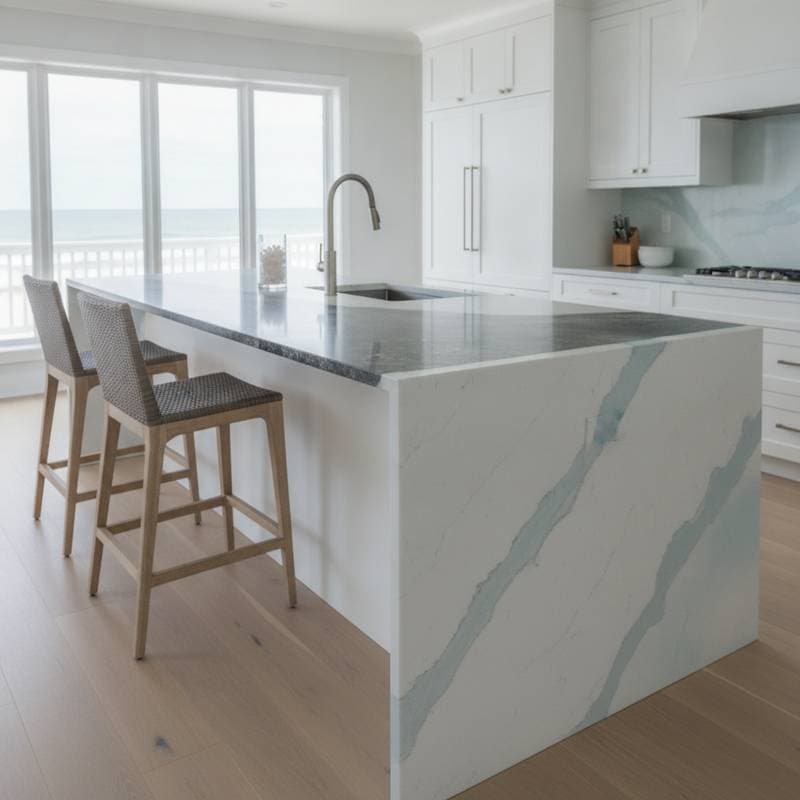
Lab tests confirm quartz beats granite in salty air
If you live near the coast, you already know how salt can quietly wear away almost anything it touches. From metal railings that rust to patio furniture that fades, the salty air is relentless. New lab tests now show that kitchen countertops also suffer from salt exposure. Quartz proves the clear winner over granite in coastal homes.
Quartz countertops resist salt corrosion better than natural stone. They keep their smooth finish and bright color for years. Granite remains tough yet porous. It absorbs microscopic salt particles that dull the surface over time. Coastal homeowners who want a pristine kitchen find quartz a smart long term investment. Professional installation from specialists in coastal environments delivers the best results.
In this article
- Cost factors
- Material performance
- DIY versus pro installation
- Ways to save
- FAQs
Cost factors
Quartz countertops typically range from $70 to $120 per square foot, including installation. Granite usually costs $60 to $100 per square foot. Quartz carries a slightly higher upfront price yet offers lower maintenance costs over time, especially in salty, humid air.
Key cost factors include material quality, fabrication complexity, installation, and location. Engineered quartz with higher resin content offers superior salt resistance. Custom edges, cutouts, and backsplashes raise labor costs. Professional installation achieves proper sealing and prevents moisture intrusion. Coastal labor rates can run higher, though local fabricators understand salt exposure challenges.
Material performance in coastal air
Recent tests exposed quartz and granite samples to continuous salt spray under controlled conditions. Quartz showed virtually no surface degradation. Granite samples developed small pitting and discoloration. Quartz is nonporous while granite has natural fissures that allow salt to penetrate.
Homeowners in coastal areas gain a durable, low maintenance surface that stays glossy. Simple cleaning with mild soap and water suffices for quartz. Granite requires periodic resealing to block salt and moisture.
DIY versus pro installation
Installing quartz countertops is not an easy weekend project. The slabs are heavy and require precise cutting and leveling. Professional installers use specialized tools to ensure a seamless finish that resists moisture intrusion. DIY installation could save $1,000 to $2,000 yet risks costly mistakes if measurements are off or seams are poorly sealed. Hiring a pro remains the safer choice for most coastal homeowners.
Ways to save
- Choose standard edges instead of ornate profiles.
- Limit seams by designing an efficient layout with fewer cuts.
- Ask local fabricators for remnant pieces for smaller spaces.
- Schedule offseason installation when labor rates may be lower.
Even modest adjustments keep the project within budget while maintaining long term durability.
FAQs
Does salt air affect indoor countertops?
Yes. Salt particles drift indoors through open windows and air circulation, slowly settling on surfaces.
Can sealing granite prevent salt damage?
Sealing helps, yet it must be reapplied regularly. Quartz needs no sealing at all.
Is quartz suitable for outdoor kitchens near the coast?
Only if the area is covered. Direct UV exposure can fade binder resins, so partial shade is ideal.
Protecting your investment long term
A quartz countertop elevates kitchen appearance and withstands the salty air that defines coastal living. Reduced maintenance, stronger resistance, and timeless appeal allow enjoyment of seaside life without concern for corrosion or fading.