
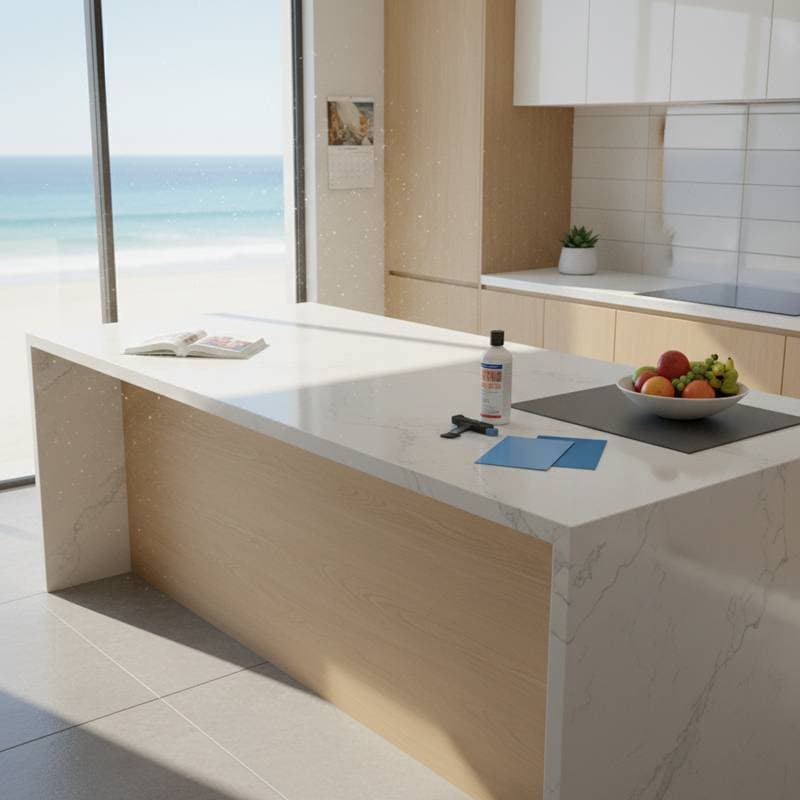
Quartz Counters Fade in Coastal Sun: Smart Fix
Homeowners often select quartz countertops for their enduring sparkle and low-maintenance appeal. However, in coastal areas, afternoon sunlight can create dull spots on these surfaces. Intense UV rays penetrating windows cause gradual discoloration, resulting in uneven tones or a yellowish hue that diminishes the original seamless finish. Fortunately, effective strategies exist to safeguard this investment and prevent further degradation.
This guide examines the reasons behind quartz fading in coastal settings, details associated repair and replacement expenses, and outlines reliable protective techniques. Readers will discover options for both DIY efforts and professional interventions. Most restoration projects fall within a budget of $200 to $1,500, based on the extent of damage and chosen methods. For extensive issues, complete replacement may cost between $3,000 and $7,500 for a standard kitchen setup. Obtain estimates from qualified specialists prior to undertaking significant work.
In this article
Cost factors
Quartz countertops earn praise for their resilience and elegant design, yet prolonged UV exposure can compromise these qualities. Basic repairs for faded areas, such as polishing or applying UV-resistant sealants, range from $200 to $1,500. Resurfacing the entire surface typically costs $2,500 to $4,000, while full replacement in coastal kitchens often totals $5,000 to $7,500, influenced by material grade and installation demands.
Key elements that determine overall expenses include the following:
- Extent of fading: Surface-level discoloration responds well to buffing, whereas deep or irregular fading demands sanding followed by resealing.
- Surface area: Expansive kitchens or exterior counters require additional materials and labor hours.
- Design complexities: Intricate edge treatments and cutouts for sinks or appliances elevate both time and material costs.
- Protective treatments: Advanced UV-blocking products increase initial outlay but enhance durability over time.
- Regional labor rates: Coastal locations experience elevated prices due to high demand and unique environmental challenges.
Why quartz fades
Engineers create quartz countertops by combining crushed natural stone with resin binders, which provide strength and a nonporous barrier. These resins, while robust, prove susceptible to ultraviolet radiation. In coastal regions, relentless sunlight combines with saline air and elevated humidity to hasten resin degradation, manifesting as color loss, yellowing, or irregular dull patches.
Pale quartz varieties show these changes most prominently, as contrasts appear stark against light bases. Exposure intensifies through south- or west-oriented windows, and reflective elements such as ocean views, pools, or sandy beaches amplify indoor light levels. Even interior counters adjacent to expansive glass doors deteriorate more rapidly than those in dimmer spaces.
To illustrate, consider a typical San Diego residence with large bay windows facing the Pacific. Daily UV bombardment over two to three years can shift a pristine white quartz from vibrant to subdued, underscoring the need for proactive measures in sun-drenched locales.
Repair and protection options
Restoration and prevention methods vary according to damage severity. Select approaches that align with the countertop's condition and long-term exposure risks.
1. Surface polishing and resealing
Professionals address light fading by buffing the surface and layering on UV-stable sealants. This method, priced at $200 to $600, revives substantial original luster. Opt for products explicitly marked as UV-resistant to minimize recurrence of yellowing.
2. UV-blocking films or coatings
Window films that absorb ultraviolet rays offer substantial defense against further decline. Professional application runs $5 to $12 per square foot. For enhanced safeguarding, apply countertop-specific UV coatings, particularly on areas exposed to broad window expanses.
3. Partial resurfacing
Localized fading in specific zones benefits from targeted sanding and refinishing by a fabricator. Costs range from $800 to $1,500, scaled to the affected area. Achieve optimal uniformity by extending light resurfacing across the full countertop.
4. Full replacement
Profound resin penetration from severe fading necessitates outright substitution. Although expensive, this presents an opportunity to select quartz engineered for superior UV tolerance or transition to alternatives like granite, which withstands solar intensity more effectively.
Photo: Joe Hendricks / Getty Images
DIY vs pro solutions
Homeowners may attempt basic remedies, such as polishing compounds or self-adhered UV films, provided they proceed methodically. Routine cleaning and upkeep suit DIY approaches, but comprehensive restoration demands expert handling. Professionals employ specialized equipment for balanced color restoration and flawless sealant application, avoiding imperfections like streaks.
DIY advantages:
- Reduced financial outlay
- Swift outcomes for superficial concerns
- Selection of preferred materials
Professional advantages:
- Consistent coloration throughout the surface
- Utilization of industrial-strength supplies
- Guarantees on service quality
For prominent features like kitchen islands, engage certified fabricators to secure a cohesive, enduring result.
Ways to save
Budget-conscious repairs remain achievable through strategic planning. Implement these tactics to optimize value:
- Incorporate window films at installation. Early protection curtails future upkeep expenses.
- Select UV-enhanced quartz. Certain manufacturers integrate sunlight-resistant resins; inquire about performance specifications from installers.
- Employ shades or drapes. Partial coverage during midday sun preserves surface integrity.
- Maintain with care. Clean using mild, pH-neutral solutions to prevent reactions that accelerate degradation, and dry thoroughly after use.
- Integrate with broader projects. Pair quartz treatments with cabinet refinishing or wall updates to consolidate labor fees.
Additional savings arise from preventive habits, such as repositioning reflective items or adding overhangs to diffuse direct light. These steps extend countertop lifespan without substantial added costs.
FAQs
Can quartz be restored once it fades?
Mild cases yield to polishing and resealing for effective revival. Extensive discoloration often requires expert resurfacing or outright replacement.
Does every quartz brand fade in sunlight?
Resin components in all quartz react to UV light, though advanced formulations resist better. No variant fully escapes degradation in persistent coastal exposure.
Are outdoor quartz counters a bad idea?
Quartz suits interior use primarily; exterior applications risk rapid breakdown from sun and moisture. Granite or porcelain slabs serve as superior outdoor choices.
How quickly does fading occur in coastal areas?
Visible changes emerge within one to three years under direct, daily UV assault, accelerating with unmitigated window exposure.
Protecting Quartz for Lasting Coastal Appeal
Coastal living delivers breathtaking vistas and abundant daylight, yet these assets challenge interior materials like quartz. Proactive steps, from UV films to routine sealing, preserve vibrancy and uphold property worth. Invest in these measures to ensure countertops endure the sun's rigors while enhancing daily enjoyment.