
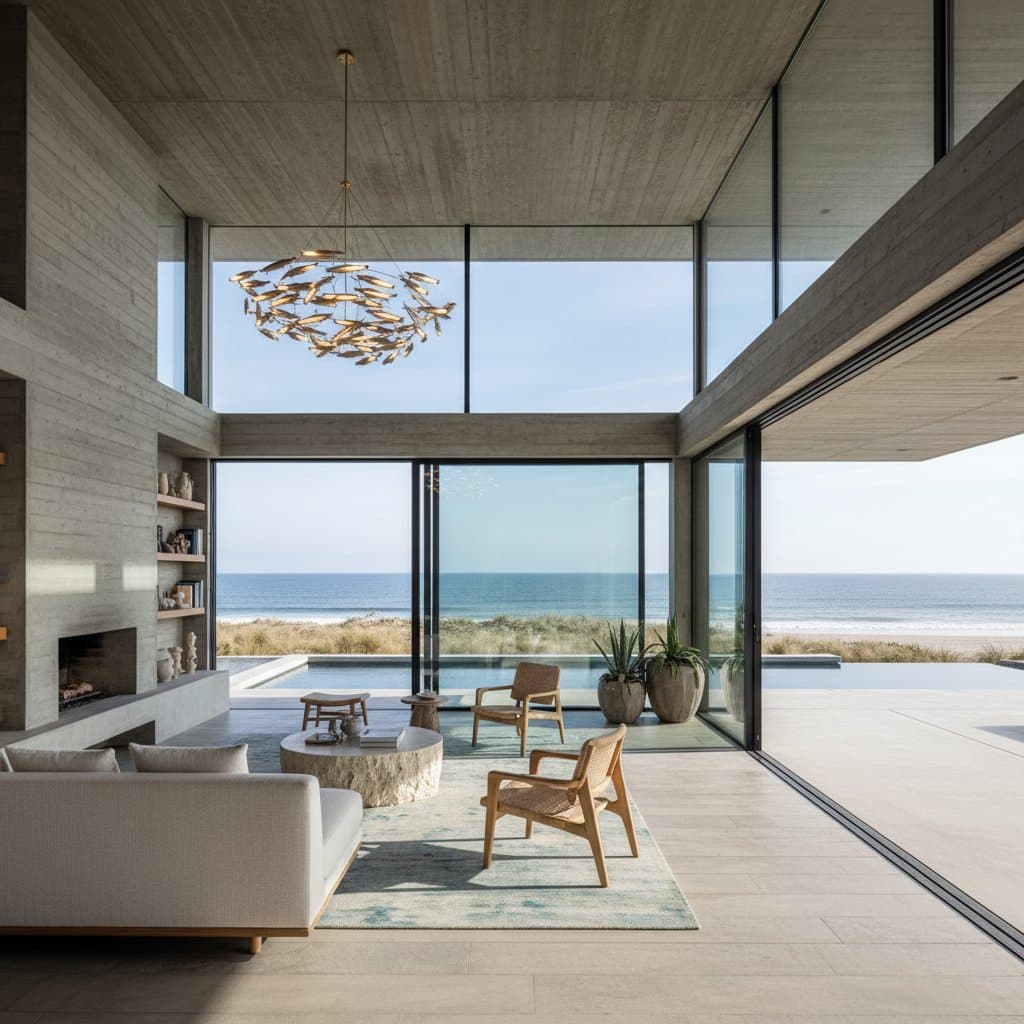
The Resurgence of Concrete Beach Homes
Concrete beach homes draw from Brutalist principles to offer resilient coastal residences. This architectural style, once associated with urban rigidity, now adapts to seaside environments with a focus on sustainability and visual appeal. In 2026, these homes emerge as a practical choice for regions like San Diego, where ocean exposure demands materials that withstand salt, wind, and humidity.
Designers emphasize concrete's thermal mass, which stabilizes indoor temperatures and reduces reliance on artificial climate control. Paired with strategic site planning, these builds minimize environmental impact while maximizing aesthetic impact. Homeowners gain structures that endure for generations, reflecting a shift toward thoughtful, long-lasting coastal development.
Challenges in Building Concrete Coastal Homes
Constructing concrete beach homes presents specific hurdles due to the material's demands and environmental factors. These challenges influence budgets and timelines, yet informed planning mitigates many issues.
- Custom Formwork: Achieving distinctive textures, such as board-formed patterns mimicking ocean waves, necessitates bespoke molds crafted from wood or steel. This customization elevates material costs by 15 to 25 percent compared to standard pours.
- Finishing Choices: Incorporating premium glazing for panoramic views, advanced insulation layers, and interior finishes like polished stone can inflate completion budgets significantly. High-end options often double the allocation for surface treatments.
- Labor Market: Demand for expert concrete specialists surges in coastal areas, driving up hourly rates. Skilled workers versed in marine-grade reinforcements command premiums, especially during peak building seasons.
Addressing these early through detailed blueprints and vendor partnerships streamlines the process. Concrete's longevity justifies initial investments, as maintenance costs remain low over decades.
How to Save Money on a Concrete Coastal Build
Strategic choices during design and construction phases control expenses without sacrificing quality. Focus on efficiency in materials and methods to align with budget goals.
- Simplify the Geometry: Opt for straightforward rectilinear shapes over complex curves. This approach cuts formwork requirements by up to 30 percent and simplifies labor scheduling.
- Use Modular Formwork: Employ reusable panels that adapt across foundation, walls, and roofs. Such systems reduce material waste and procurement needs, yielding savings of 10 to 15 percent.
- Opt for Exposed Interiors: Preserve the raw concrete finish in living spaces to bypass drywall installation and painting. This technique highlights the material's natural patina while trimming finishing expenses by 20 percent.
- Select Efficient Windows: Choose standard-sized, double-glazed units certified for coastal climates. These maintain insulation value and views at a fraction of custom fabrication costs.
- Incorporate Passive Design: Position openings to capture prevailing breezes and sunlight, minimizing HVAC demands. Features like overhangs for shade further enhance efficiency without added mechanical systems.
Implementing these strategies typically lowers overall costs by 10 to 20 percent. Consult local codes to ensure compliance while optimizing savings.
DIY vs. Hiring a Professional
Homeowners with construction experience may tackle select finishing tasks, but core concrete work demands expert oversight. Structural integrity hinges on precise execution, where errors prove costly to correct.
The formwork assembly, reinforcement placement, and pouring sequence require engineering knowledge to prevent defects like fissures or load failures. Curing periods, often spanning weeks, demand controlled conditions to achieve uniform strength. Professionals navigate these complexities, ensuring adherence to seismic and coastal regulations.
DIY-Suitable Tasks:
- Applying interior paints or sealants to exposed surfaces.
- Developing surrounding landscapes with native plants.
- Mounting cabinetry, fixtures, or lighting elements.
Professional-Only Tasks:
- Erecting and securing structural formwork.
- Installing rebar grids and executing concrete pours.
- Applying specialized waterproofing to exterior faces.
Engage an architect specializing in Brutalist residential projects to harmonize robustness with livability. This collaboration refines details, allowing concrete to convey texture and form without overwhelming the space.
Design Trends Defining the Revival
Contemporary Brutalism evolves beyond stark minimalism, fostering harmony with coastal ecosystems. Designers soften concrete's inherent solidity through thoughtful integrations that enhance warmth and functionality.
These trends reflect a broader movement toward eco-conscious architecture, where material authenticity meets modern needs. Homeowners select elements that personalize the build while advancing sustainability.
- Indoor-Outdoor Continuity: Install expansive sliding glass systems that dissolve boundaries between interiors and oceanfront patios. This setup promotes ventilation and extends usable space year-round.
- Minimal Ornamentation: Rely on precise lines and unadorned surfaces to emphasize concrete's purity. Subtle reveals and joints add depth without superfluous detailing.
- Natural Integration: Pair concrete with reclaimed wood accents, local stone features, or vertical gardens. These additions introduce organic textures that temper the material's austerity.
- Sculptural Lighting: Embed linear LEDs or cove fixtures to accentuate shadows and highlights on walls. This illumination transforms surfaces into dynamic art during evenings.
- Sustainable Systems: Embed photovoltaic arrays into roofs, collect rainwater via integrated channels, and use high-R-value insulations. These features boost self-sufficiency and appeal to environmentally aware buyers.
Such innovations position concrete beach homes as forward-thinking options. They balance visual drama with practical benefits, appealing to those seeking distinctive coastal retreats.
Frequently Asked Questions About Concrete Coastal Homes
Do concrete homes resist salt and humidity better than wood or steel?
Concrete excels in corrosive environments, resisting salt spray and moisture penetration that degrade wood and untreated steel. Its dense composition forms a protective barrier, though embedded steel needs epoxy coating for longevity. This durability suits oceanfront sites, extending the structure's service life beyond traditional alternatives.
Are brutalist homes energy efficient?
Concrete's high thermal mass absorbs and releases heat gradually, stabilizing indoor climates and cutting energy use for heating or cooling. Pair this with cross-ventilation strategies and low-emissivity glass for optimal performance. Many designs achieve certifications for green building, yielding annual savings on utility bills.
Can I add color or texture to concrete surfaces?
Concrete accommodates customization through methods like acid etching for subtle roughness or integral pigments for earthy hues. Board-forming imprints wood grain patterns, while polishing yields smooth, reflective finishes. These techniques infuse personality, adapting the material to varied aesthetic preferences.
Do concrete homes require special maintenance?
Routine care suffices for concrete structures, with periodic sealing every three to five years to repel stains and water. Gentle cleaning using non-abrasive solutions preserves appearance without aggressive measures. Unlike wood, it avoids rot or pest issues, simplifying upkeep in humid zones.
Will a concrete beach home increase property value?
Durable concrete constructions appreciate steadily, attracting buyers who value resilience and efficiency. Their unique designs stand out in resale markets, often commanding premiums over conventional builds. Long-term energy savings and minimal repairs further enhance investment returns.
How long does it take to build a concrete home?
Project duration depends on scale, typically ranging from six to twelve months for a single-family residence. Formwork and curing extend timelines by two to four weeks versus framed wood homes. Experienced teams with phased planning maintain schedules, delivering completed homes on target.
Realizing Lasting Value in Coastal Concrete Design
Concrete beach homes deliver enduring benefits through their blend of strength, efficiency, and style. Owners enjoy reduced operational costs and heightened resilience against environmental stresses. As 2026 approaches, these structures redefine seaside living, offering a legacy of sustainable elegance for future generations.