
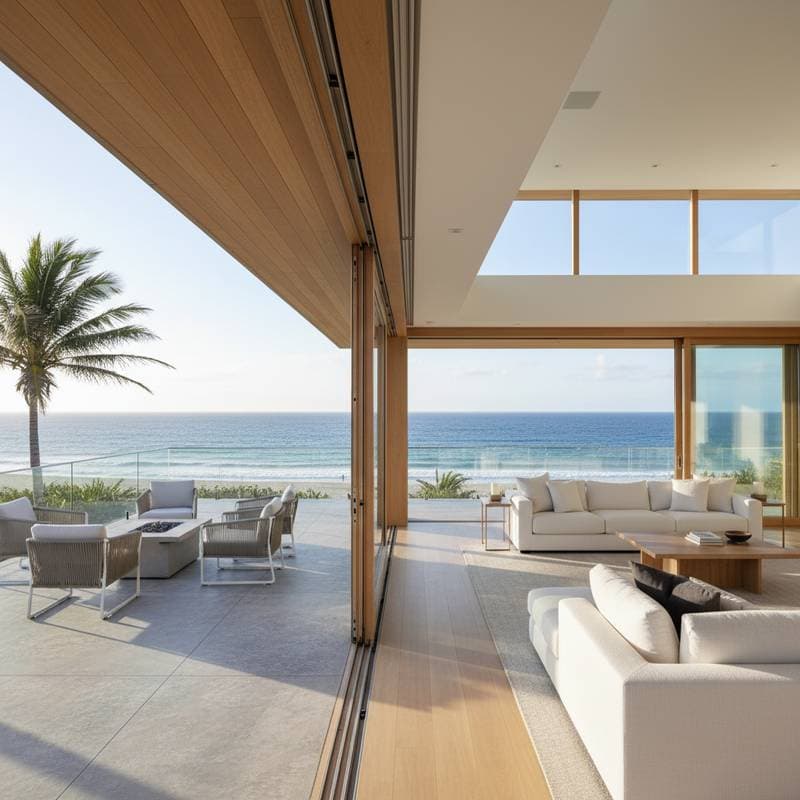
Pocket Sliding Walls Transform Coastal Patios Into Open Retreats
If you live near the coast, you know how appealing it is to open your home to ocean breezes and panoramic views. The sound of waves, the salt in the air, and the natural light create a sense of calm that is hard to replicate indoors. Traditional walls and doors often block that connection.
Pocket sliding walls solve this problem. These disappearing wall systems glide into concealed pockets so entire walls vanish from sight. They have become a favorite choice for coastal patios because they blend interior comfort with outdoor beauty in an effortless way.
Here are nine reasons these sleek designs are trending for coastal patios.
[Image: Wide-open coastal patio with pocket sliding glass walls fully retracted]
Seamless Indoor-Outdoor Living
Expands Living Space Instantly
Pocket sliding walls create the illusion of a larger home by removing barriers between interior and exterior areas. When open, they merge your living room or kitchen with the patio so guests move freely between spaces. This fluid connection makes smaller homes feel more spacious.
Match flooring materials between the interior and patio for a continuous look. Using the same tile or wood tone enhances the feeling of one unified space.
Enhances Natural Light and Views
Large glass panels flood your home with sunlight and eliminate the visual divide between you and the coastline. Whether you look out at the ocean or a landscaped yard, the uninterrupted view brings the outdoors into daily life. Even when closed, these walls maintain a bright, airy environment.
Blurs the Line Between Shelter and Nature
Pocket sliding walls let you enjoy the outdoors without giving up comfort. You can hear the surf and feel the coastal breeze while staying sheltered from direct sun or light rain. The design invites nature inside while maintaining control and protection.
[Image: Close-up of pocket wall track system disappearing into the frame]
Functional Design and Modern Appeal
Creates a Clean, Minimal Look
Modern architecture celebrates simplicity, and pocket sliding walls fit that aesthetic. When open, the panels vanish entirely into the wall cavity and leave no bulky frames in sight. The result is a crisp, uncluttered look that complements both contemporary and coastal styles.
Installing pocket systems requires precise framing and alignment, so experienced contractors should handle the work.
Boosts Property Value
Homes that emphasize open layouts and seamless outdoor access attract buyers seeking resort-style living. Pocket sliding walls enhance beauty and signal premium design along with energy-efficient construction. This combination can increase a coastal property value while improving daily enjoyment.
Typical installations range from around $8,000 to $20,000 depending on size, materials, and glass type.
Offers Customization and Flexibility
Pocket sliding systems come in various configurations. You can choose single-track systems for smaller spaces or multi-panel setups that span entire walls. Material options include aluminum, vinyl, or wood-clad frames, and you can select from clear, tinted, or low-emissivity glass.
For coastal environments, choose corrosion-resistant hardware and marine-grade finishes to prevent salt damage over time.
[Image: Custom multi-panel pocket wall open to a modern patio with ocean view]
Comfort, Energy, and Maintenance Benefits
Improves Energy Efficiency
Advanced pocket wall systems include insulated glass and thermal breaks that help maintain indoor comfort. When closed, they seal tightly to prevent drafts and reduce energy loss. Natural ventilation when open also lowers dependence on mechanical systems.
Energy-efficient glass upgrades generally add around $1,000 to $2,500 to total installation costs.
Simplifies Maintenance and Cleaning
Compared with traditional patio doors, pocket sliding walls have fewer visible components and smooth tracks that are easy to maintain. Most systems feature removable panels for cleaning, and the glass can be treated with coatings that repel salt spray.
To keep everything running smoothly, vacuum or brush tracks regularly to remove sand or debris, lubricate rollers with silicone spray twice a year, and rinse exterior glass with fresh water to minimize salt buildup.
Withstands Coastal Conditions
Coastal air can be tough on building materials, yet pocket sliding walls are designed to handle it. Many systems include reinforced frames and weather-resistant seals that perform well in humid or salty environments. High-quality models can withstand strong winds while maintaining smooth operation.
When selecting a system, ask for performance ratings for water resistance, air infiltration, and structural load capacity.
[Image: Coastal home exterior with closed pocket sliding glass wall showing weather-sealed frame]
Planning Your Pocket Sliding Wall Installation
Before starting your project, consider these important planning points. Consult a structural engineer if your wall will replace a load-bearing section. Plan early in a remodel since pocket cavities must be built into the framing. Check local building codes for wind-load requirements near the coast. Consider privacy solutions such as retractable screens or motorized shades. Think about furniture placement so open walls maintain clear flow to the patio.
[Image: Design plan showing pocket wall integration with coastal patio layout]
Frequently Asked Questions
How much space do pocket sliding walls require?
They need a wall cavity large enough to house the panels completely. On average, you will need wall depth equal to the panel thickness times the number of panels.
Are pocket sliding walls safe and secure?
Yes. Modern systems include multi-point locking hardware and laminated safety glass that meet security standards while maintaining visibility.
Do they work in all climates?
While especially popular in coastal settings, pocket sliding walls perform well in most climates. Proper insulation and seals make them adaptable to both warm and cool regions.
Can existing homes be retrofitted with pocket walls?
Yes, but it can be complex. Retrofitting often requires framing modifications and structural reinforcement, so professional installation is recommended.
What maintenance do they need over time?
Regular cleaning of tracks, lubrication, and inspection of seals keep them operating smoothly. In coastal areas, periodic rinsing to remove salt residue helps extend their lifespan.
Selecting Materials for Long-Term Coastal Performance
Choose frames and hardware rated for marine exposure to ensure durability against salt and humidity. Review product specifications for wind and water resistance before purchase. Work with installers familiar with coastal building requirements to achieve reliable results.