
Oyster Reefs: Natural Shields for Coastal Erosion
Imagine standing on a quiet shoreline where gentle waves meet the land. Now picture that same coast after a storm, with sand washed away and property lines shrinking. Coastal erosion threatens many communities, yet nature provides a proven solution beneath the waves. Oyster reefs serve as essential marine habitats and effective natural barriers that safeguard coastlines from erosion.
Highlights
- Oyster reefs function as living seawalls, reducing wave energy and stabilizing shorelines.
- They foster biodiversity by offering habitats for fish, crabs, and various marine species.
- Restoration initiatives lower flooding risks and enhance water quality.
- In contrast to concrete seawalls, oyster reefs expand and adjust to environmental shifts.
- Local groups can engage in reef restoration efforts to promote enduring coastal resilience.
What Are Oyster Reefs?
Oyster reefs develop as successive generations of oysters accumulate, forming compact, rock-like formations in coastal areas. These structures often extend for miles, creating barriers that dampen wave action and capture sediments. Through this accumulation, shorelines gain strength and experience less erosion over time.
Oysters function as filter feeders, purifying water during their growth. Each oyster filters up to 50 gallons of water daily, extracting surplus nutrients and boosting clarity. Consequently, reefs deliver both protective and regenerative advantages, fostering cleaner and more robust ecosystems.
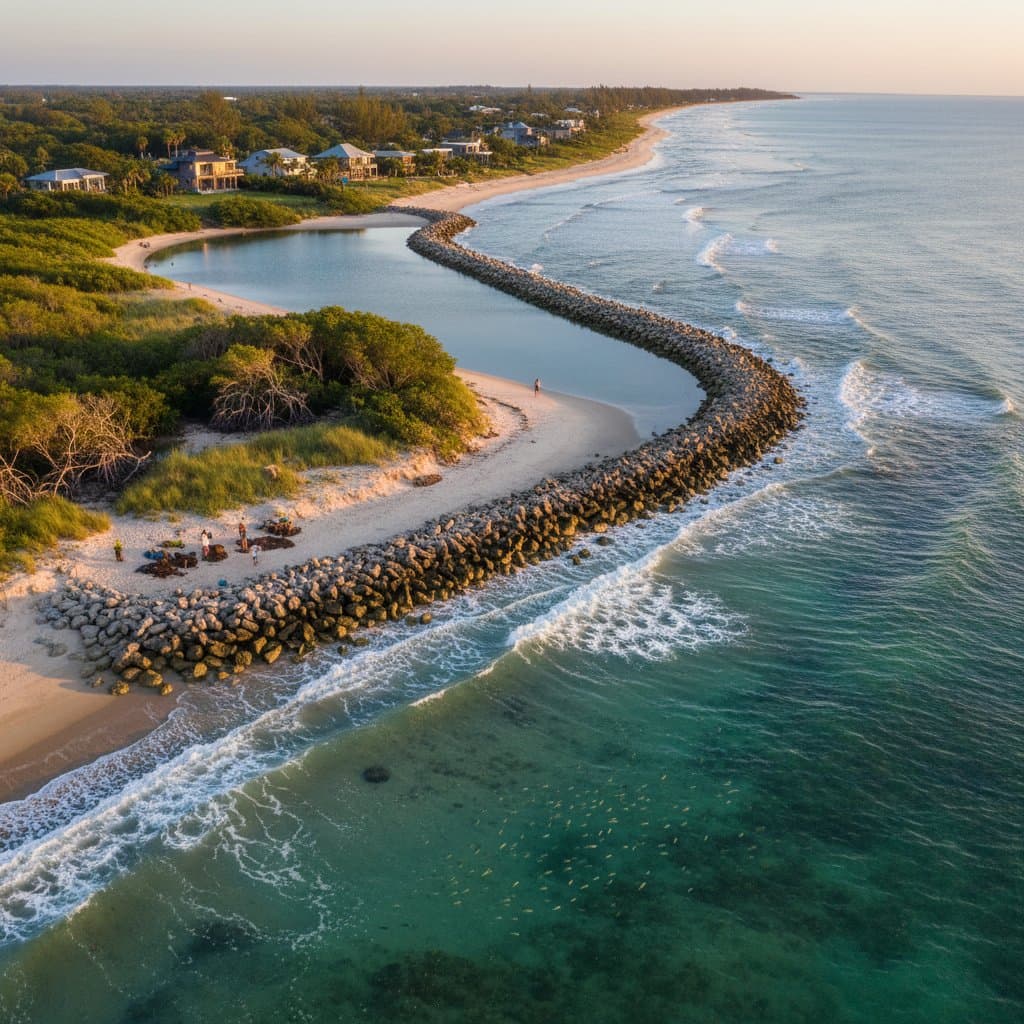
Photo: A thriving oyster reef along a calm coastal bay, with seabirds resting on top.
How Oyster Reefs Reduce Coastal Erosion
An average oyster reef diminishes wave energy by as much as 90 percent before waves contact the shore. This buffering action prevents sand displacement, property harm, and habitat loss. The reef operates similarly to a speed bump, moderating wave intensity to allow sediment deposition instead of dispersal.
The Mechanics of Protection
- Wave Dissipation: Incoming waves encounter the reef, where their energy dissipates and fragments.
- Sediment Stabilization: Tranquil conditions behind the reef enable sand and silt to accumulate, restoring beaches and marshes.
- Habitat Creation: The reef bolsters growth of vegetation such as seagrass and marsh plants, which secure the soil.
- Elevation Growth: Oyster reproduction elevates the reef structure, aligning with rising sea levels.
Tip: Place oyster reefs adjacent to at-risk shorelines to shield natural areas and infrastructure without depending on man-made seawalls.
Comparing Oyster Reefs and Traditional Seawalls
| Feature | Oyster Reefs | Concrete Seawalls |
|---|---|---|
| Wave Absorption | High; naturally attenuates force | Low; reflects waves, leading to scouring |
| Maintenance | Self-sustaining with minimal intervention | Demands frequent repairs and evaluations |
| Biodiversity | Enhances marine populations | Interferes with local ecosystems |
| Longevity | Expands progressively | Deteriorates over years |
| Cost | Typically more economical long-term | Involves substantial upfront and recurring expenses |
While traditional seawalls shield assets, they frequently exacerbate erosion in adjacent zones. Oyster reefs integrate seamlessly with the surroundings, delivering protection that strengthens with maturation.
Photo: A side-by-side view of a natural oyster reef compared to a concrete seawall during low tide.
Benefits Beyond Erosion Control
Oyster reefs extend their value far past wave defense. They yield extensive environmental and economic gains, positioning them as prudent choices for coastal regions.
- Water Filtration: Purified waters enhance appeal for tourism and leisure activities.
- Fish Habitat: Reefs establish nurseries for species targeted in commercial and sport fishing.
- Carbon Storage: Robust reefs capture carbon dioxide, aiding efforts against climate change through sequestration equivalent to small forests.
- Flood Mitigation: By lowering wave heights, reefs curb inland flooding during severe weather.
- Community Engagement: Restoration activities unite volunteers, educational institutions, and environmental organizations, building local stewardship.
Photo: Volunteers installing oyster shells along a shoreline as part of a reef restoration project.
Steps for Community-Led Oyster Reef Restoration
Restoring oyster reefs involves collaborative action toward a common objective. Communities can initiate projects by following these structured steps.
- Assess Local Conditions: Evaluate potential sites based on water circulation, salinity levels, and substrate suitability, often with input from marine biologists.
- Source Materials: Gather recycled oyster shells from restaurants or use eco-compatible alternatives like ceramic tiles designed for reef building.
- Plant or Seed Oysters: Deploy juvenile oysters, or spat, onto prepared bases; aim for densities of 100 to 200 spat per square meter for optimal coverage.
- Monitor Growth: Employ community-based science tools, such as underwater cameras or sampling kits, to observe development and adjust as needed.
- Protect the Area: Enforce no-harvest zones and advocate for policies that prevent pollution, ensuring the reef reaches maturity within 2 to 5 years.
Tip: Explore funding through coastal resilience grants from organizations like the National Oceanic and Atmospheric Administration or partner with groups such as the Oyster Recovery Partnership for technical support.
Sustaining Oyster Reefs for Lasting Coastal Defense
Established oyster reefs demand little ongoing care. They self-perpetuate and reinforce themselves, forming increasingly formidable barriers against erosion. Property owners, environmental advocates, and municipal authorities contribute by facilitating regular assessments and preserving surrounding ecosystems.
Protecting shorelines through oyster reefs enlists natural processes to maintain safety and vitality. These ecosystems not only fortify coasts but also enrich waters and support diverse life forms. For residents near bays or advocates of sustainable practices, oyster reefs represent an enduring strategy to preserve shorelines against future challenges.