
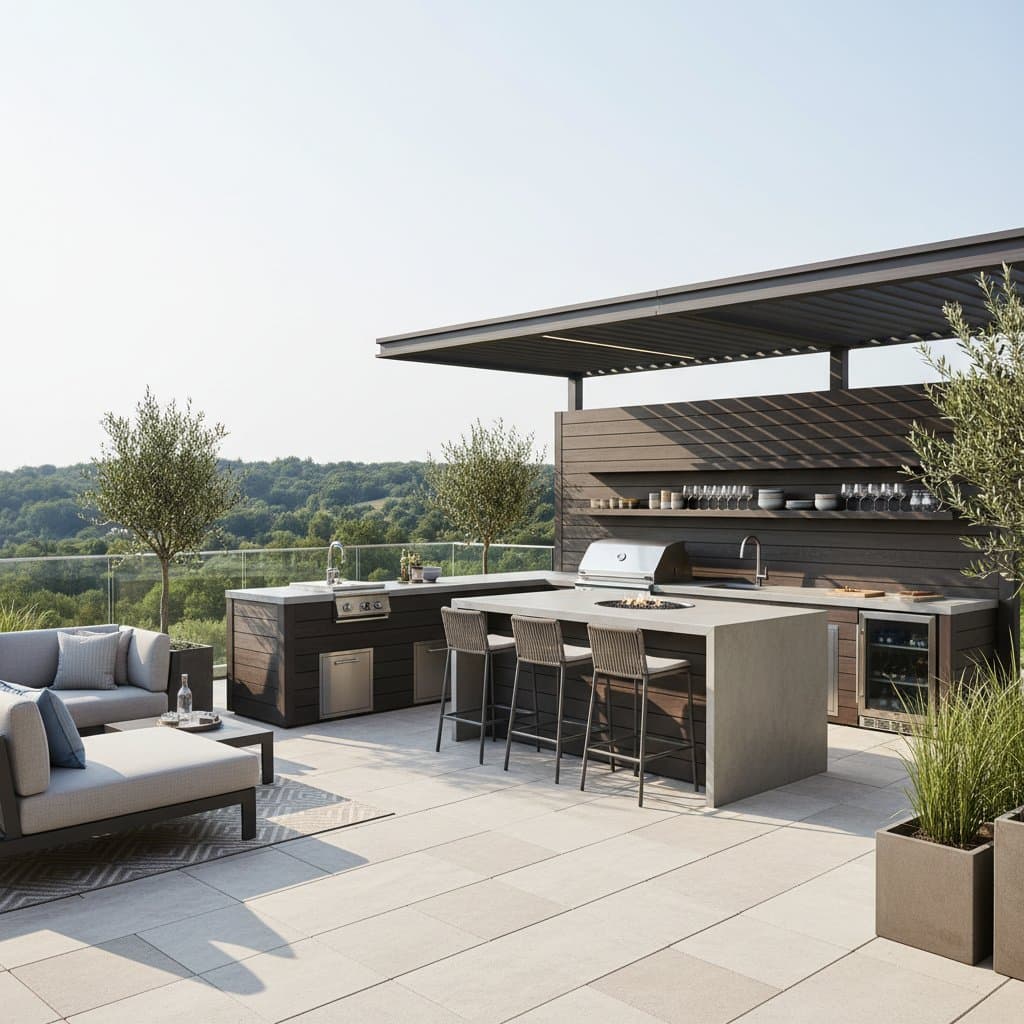
Modular Outdoor Kitchens: Flexible Future of Outdoor Entertaining
Creating the perfect outdoor entertaining space begins with a kitchen that adapts to your lifestyle. Modular outdoor kitchens have emerged as the preferred option for homeowners seeking a stylish, functional, and customizable setup without the constraints of traditional built-in designs. To elevate backyard gatherings, consider the features these kitchens provide, their pricing structure, and effective planning strategies for informed decisions.
Average Cost of a Modular Outdoor Kitchen
The average cost of a modular outdoor kitchen falls between $8,000 and $25,000. Smaller setups begin at approximately $5,000, while premium configurations can exceed $40,000. This broad spectrum arises from the inherent flexibility of modular systems, which allow for initial simple installations that expand over time or comprehensive builds from the outset.
| Kitchen Size | Typical Components | Average Cost Range |
|---|---|---|
| Compact (grill island) | Grill, counter space, storage | $5,000 - $10,000 |
| Mid-range | Grill, sink, refrigerator, prep area | $10,000 - $20,000 |
| Luxury | Multiple cooktops, bar seating, pizza oven, storage modules | $20,000 - $40,000+ |
These estimates encompass materials and labor. Actual expenses vary based on layout choices, material selections, appliance standards, and installation demands.
Cost by Material Type
Material choices significantly shape the appearance, durability, and expense of an outdoor kitchen. Each type affects maintenance requirements, lifespan, and visual impact.
| Material | Average Cost per Linear Foot | Durability | Maintenance | Aesthetic Appeal |
|---|---|---|---|---|
| Stainless Steel | $600 - $1,200 | Excellent | Low | Modern and sleek |
| Concrete | $400 - $900 | High | Moderate | Industrial and sturdy |
| Stone Veneer | $500 - $1,000 | High | Moderate | Natural and timeless |
| Powder-Coated Aluminum | $350 - $800 | Good | Very Low | Contemporary and lightweight |
| Tile Finish | $300 - $600 | Fair | High | Customizable color options |
In coastal or humid environments, stainless steel and powder-coated aluminum excel due to their resistance to corrosion. Stone veneer offers enduring elegance, though it benefits from annual sealing to maintain integrity.
Labor Costs and Installation Overview
Labor accounts for 20 to 40 percent of the total project expense. Professional installation fees range from $1,500 to $8,000, influenced by the intricacies of plumbing, electrical, and gas integrations. Modular systems prove more economical than custom masonry alternatives, as prefabricated units assemble on-site, minimizing labor time and construction interruptions.
Projects involving utility connections, such as gas or water lines, incur extra costs for permits and inspections. Verify these requirements prior to finalizing agreements with installers to avoid surprises.
Factors That Influence the Total Cost
Multiple elements can adjust the final investment upward or downward:
- Size and Layout: Additional modules elevate material and labor expenditures.
- Appliance Quality: High-end models may double costs relative to standard options.
- Utility Connections: Plumbing, drainage, and electrical extensions introduce substantial fees.
- Material Selection: Resilient, weatherproof options demand higher initial outlays but lower long-term upkeep.
- Site Preparation: Tasks like leveling ground, adding decking, or laying pavers become necessary in uneven areas.
- Location: Regions near water often necessitate specialized, corrosion-resistant materials.
- Permits and Inspections: Compliance with local codes impacts both schedule and finances.
How to Save Money on a Modular Outdoor Kitchen
Strategic planning enables an impressive installation while controlling expenses. Follow these approaches:
- Start Small and Expand: Initiate with core elements, such as a grill island and preparation surface, then incorporate sinks, refrigerators, or bar areas progressively.
- Select Mid-Grade Appliances: Prioritize robust construction and comprehensive warranties over premium labels.
- Handle Safe DIY Assembly: Numerous units facilitate straightforward setup after professional utility installation.
- Purchase During Off-Season: Suppliers frequently reduce prices on materials and appliances outside high-demand periods.
- Leverage Existing Surfaces: Utilize pre-existing decks or patios to bypass foundational modifications, provided the area remains level and secure.
- Mix Material Types: Apply stone veneer to prominent sections and budget-friendly alternatives to concealed zones.
DIY vs. Hiring a Professional
Modular designs support partial DIY efforts, yet certain elements demand expert intervention for safety and compliance.
| Task | DIY Friendly | Professional Required |
|---|---|---|
| Assembling Cabinets | Yes | No |
| Connecting Gas Line | No | Yes |
| Installing Grill or Appliances | Partial | Yes |
| Running Electrical Wiring | No | Yes |
| Sealing Countertops | Yes | No |
| Final Utility Inspection | No | Yes |
Self-assembly reduces expenses and allows layout customization. Licensed specialists must manage gas, plumbing, and electrical components to adhere to safety regulations.
Common Mistakes to Avoid
Steering clear of frequent errors preserves timelines and budgets:
- Overlooking Drainage: Accumulated water harms cabinets and surfaces; incorporate proper grading and channels.
- Selecting Inadequate Materials: Indoor-rated products degrade rapidly in outdoor conditions; opt for UV- and moisture-resistant varieties.
- Neglecting Utility Forethought: Unplanned electrical or gas provisions result in expensive adjustments; map requirements early.
- Cramming the Design: Allocate ample room for circulation and seating to enhance usability.
- Forgetting Protection Elements: Integrate shade structures or covers to shield appliances and users from harsh weather.
Frequently Asked Questions About Modular Outdoor Kitchens
Do I Need a Permit for a Modular Outdoor Kitchen?
Permits become necessary for installations involving electrical, plumbing, or gas elements. Basic grill islands lacking utilities often bypass this step, but consult local authorities to confirm regulations.
How Long Does Installation Take?
Completion typically spans one to three weeks, from unit delivery to final touches. Factors like site readiness, utility integrations, and weather influence the duration.
What Adds the Most Value to an Outdoor Kitchen?
Investments in superior appliances, resilient countertops, and efficient layouts boost functionality and property appeal. Integrated grills paired with comfortable seating yield strong returns.
Can I Relocate a Modular Outdoor Kitchen Later?
Modular components disassemble easily for reconfiguration. This adaptability supports moves or expansions as outdoor needs change.
What Maintenance Does a Modular Outdoor Kitchen Require?
Routine cleaning and checks suffice for most setups. Clean stainless steel with mild, non-abrasive solutions; seal stone annually; and protect appliances with covers during idle periods.
Are Modular Outdoor Kitchens Weatherproof?
Engineered for exterior exposure, these kitchens last longer with added safeguards. Employ covers, roofs, or pergolas to mitigate rain and sunlight effects on components.
How Do I Choose the Right Layout?
Assess available space, traffic flow, and cooking habits to select a configuration. Position the grill centrally for accessibility, ensure counter space aligns with meal preparation needs, and integrate seating for social interaction. Sketch multiple options or consult designers to visualize ergonomics and aesthetics.
Steps to Plan Your Ideal Outdoor Kitchen
Begin by evaluating your backyard dimensions and usage patterns. Select modules that match your entertaining style, from casual barbecues to elaborate dinners. Budget for essentials first, then layer enhancements. Engage professionals for utilities while personalizing assembly. This methodical approach delivers a seamless, enduring outdoor hub that enhances daily life and gatherings.