
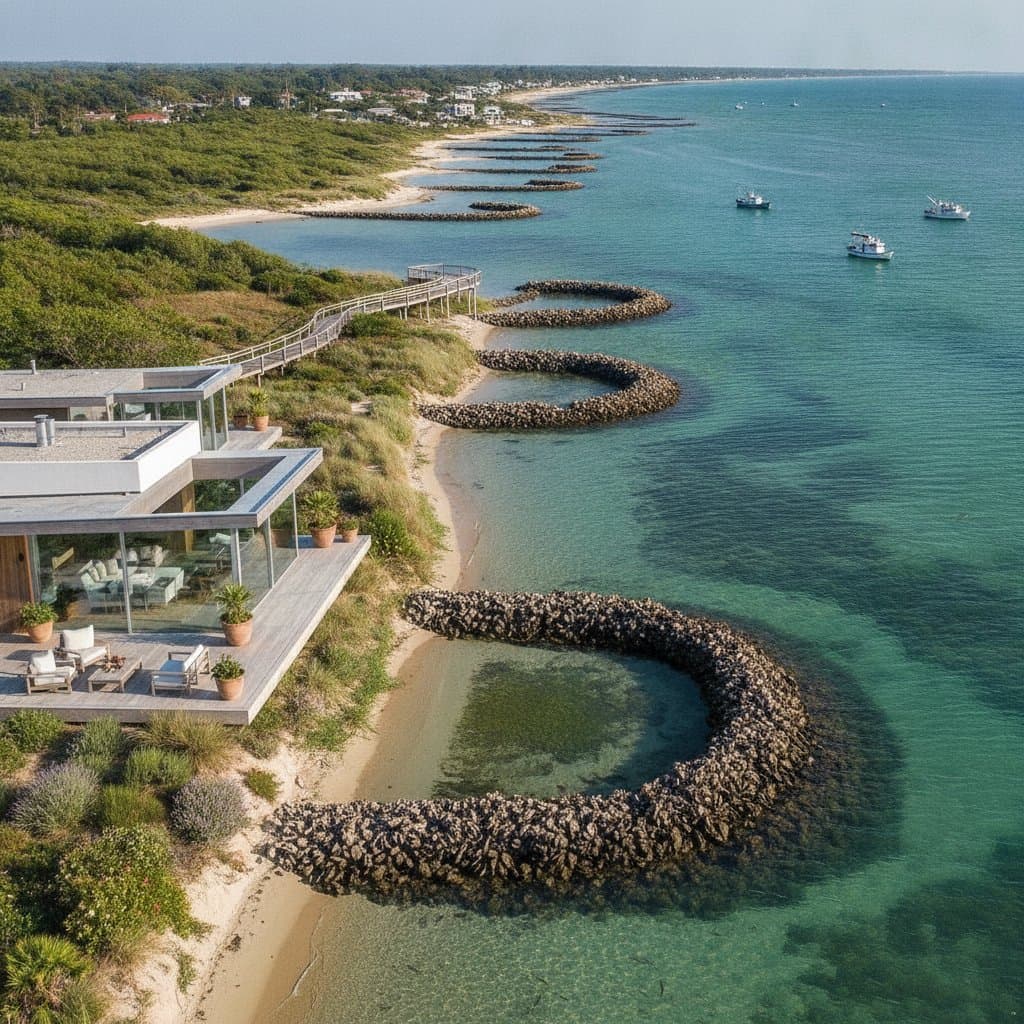
9 Oyster Reef Solutions for Protecting Coastal Properties from Erosion
Coastal living offers beautiful views, fresh air, and the soothing rhythm of the tides. Yet shoreline erosion can quietly consume beaches, marshes, and waterfront yards. Property owners often seek ways to protect their land without installing bulky concrete barriers.
Oyster reefs provide an effective and natural answer. These structures strengthen coastal resilience and restore marine ecosystems at the same time. Oysters filter water, attract diverse aquatic life, and reduce wave energy through physical barriers. They function as living seawalls that grow stronger over time.
This article presents nine practical approaches to using oyster reefs for shoreline defense. Readers will learn how the reefs work, how to establish or support them, and what advantages they deliver.
Building and Supporting Living Seawalls
Oyster Reef Restoration Projects
Many coastal communities now adopt oyster restoration as a sustainable erosion solution. These projects place recycled shells, limestone, or similar substrate in the water so oyster larvae can attach and grow. The reef develops naturally over time.
Participation ranges from volunteering in local shell recycling programs to sponsoring a restoration site near a property. These efforts protect land while improving water quality and supporting fisheries.
Use locally sourced oyster shells to maintain ecological balance and reduce transportation expenses.
Hybrid Living Shorelines
A hybrid living shoreline combines natural and engineered elements. An oyster reef can be paired with low-profile rock sills or biodegradable fiber mats. This method supplies the stability of traditional structures along with the ecological benefits of natural habitats.
Such systems manage moderate wave action and foster biodiversity. They blend into the coastal setting without obstructing views.
Typical costs range from 100 to 300 dollars per linear foot depending on materials and design.
Oyster-Friendly Dock and Seawall Designs
Existing seawalls or docks can be retrofitted to support oyster growth. Special oyster pods or textured wall panels encourage larvae to settle and form colonies. Growing oysters create rough surfaces that absorb wave energy and filter water.
These retrofits often require minimal construction. They suit property owners who want low-maintenance improvements to shoreline resilience.
Select materials with varied surfaces and crevices because oyster larvae prefer uneven textures for attachment.
Planning and Maintenance Insights
Long-Term Care and Monitoring
Oyster reefs largely sustain themselves once established, yet regular monitoring supports continued success. Periodic checks confirm oyster growth, assess sediment buildup, and detect damage from storms or boat traffic.
Simple maintenance actions include avoiding dredging near the reef, replenishing substrate when areas become sparse, and partnering with conservation groups for assessments.
Keep a log of reef conditions and wildlife sightings to track progress and guide future work.
Frequently Asked Questions
What makes oyster reefs better than traditional seawalls?
Oyster reefs are living structures that grow stronger over time. They filter water, support marine life, and adapt to changing tides. Traditional seawalls can deteriorate, reflect wave energy, and cause erosion elsewhere.
How long does it take for an oyster reef to become effective?
A reef typically begins providing erosion control within a few months as oysters settle and form clusters. Full ecological benefits develop over several growth cycles.
Can oyster reefs survive strong storms?
Mature reefs withstand strong wave action. Their irregular shape and dense structure distribute energy evenly. Damaged sections rebuild through ongoing oyster recruitment.
Do oyster reefs attract unwanted pests or odors?
Healthy reefs produce no strong odors. They operate as self-cleaning systems. Issues arise only when water quality is extremely poor or dead shells remain exposed above the tide line.
Integrating Oyster Reefs into Coastal Properties
Oyster reefs deliver more than erosion control. They restore balance to coastal environments. Participation in a community project or creation of a small reef near a property contributes to a healthier shoreline. Each shell placed in the water represents an investment in long-term coastal resilience.