
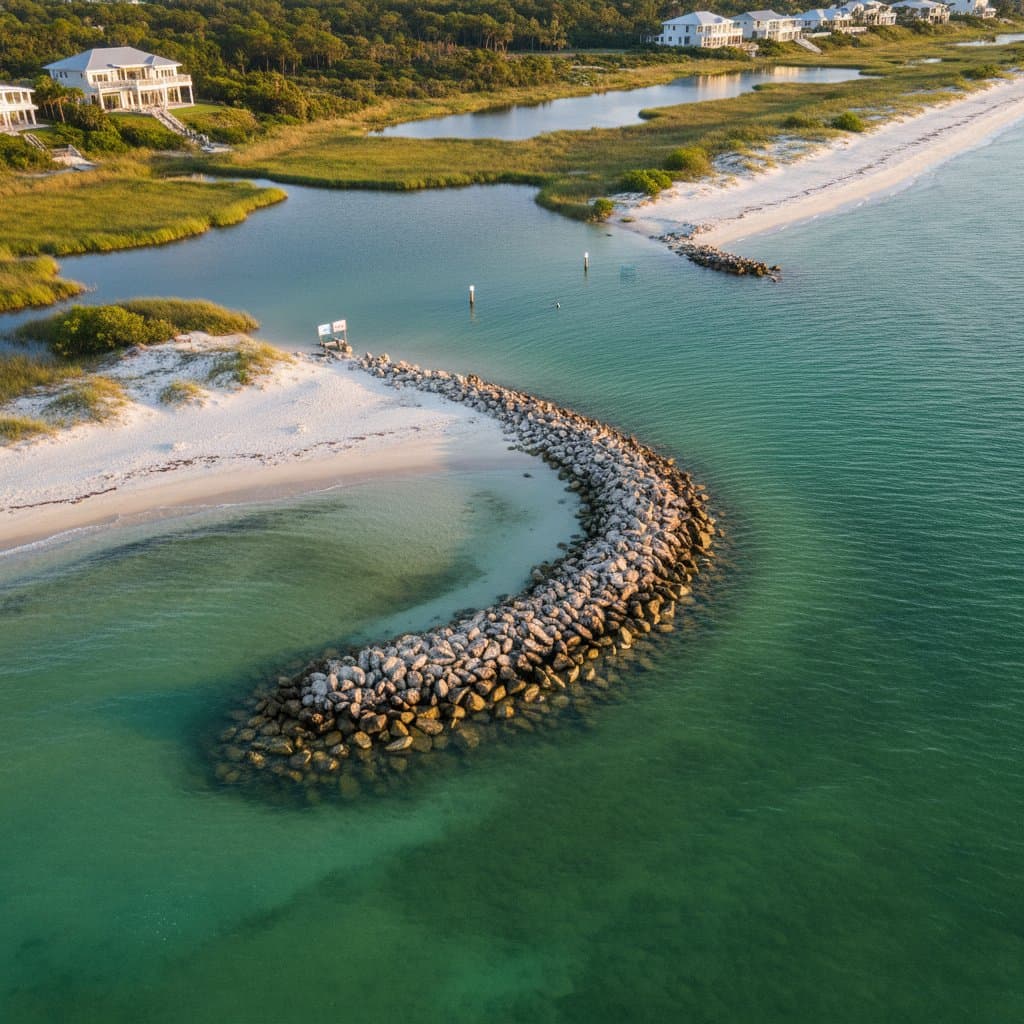
Oyster Reefs: Natural Barriers for Coastal Protection
Coastal homeowners often confront the persistent challenge of erosion, where rising seas, intense storms, and shifting sands gradually undermine shorelines. These forces threaten property values and structural integrity along vulnerable coastlines. Oyster reefs emerge as an effective, sustainable countermeasure, functioning as living structures that attenuate wave impact while fostering ecological recovery.
Oyster reefs consist of layered oyster shells that create porous barriers. Waves lose energy as they pass through the structure, depositing sediment that rebuilds the shore. In addition to erosion control, these reefs support biodiversity by offering shelter and breeding grounds for fish, shellfish, and other organisms. Homeowners benefit from a solution that integrates seamlessly with the natural landscape, avoiding the visual and environmental drawbacks of rigid infrastructure like seawalls.
This article examines the mechanics of oyster reefs, associated costs, available configurations, and implementation strategies. Readers gain insights into selecting appropriate options, managing expenses, and achieving optimal outcomes through professional or self-directed efforts.
Article Overview
- Cost considerations
- Reef types and selections
- Self-directed versus expert installation
- Expense reduction tactics
- Frequently asked questions
Cost Factors
The expense of establishing an oyster reef varies based on several elements, including project scale, location, and materials selected. For a typical residential shoreline segment of 100 linear feet, initial installation ranges from $10,000 to $30,000. This figure accounts for materials, labor, and permitting fees, which can increase in regions with strict environmental regulations or high tidal activity.
Material choices influence costs significantly. Recycled oyster shells prove more affordable than engineered modules, while site preparation adds to the total if dredging or anchoring proves necessary. Long-term maintenance remains minimal, often limited to annual inspections costing $500 to $2,000, far below the upkeep demands of traditional barriers. Factors such as water depth and wave exposure also affect pricing, with deeper or more turbulent sites requiring reinforced designs.
Homeowners should request detailed quotes that itemize these components. Local incentives, such as grants from environmental agencies, frequently offset 20 to 50 percent of expenses, making oyster reefs a financially viable option over time.
Types and Options
Selecting the right oyster reef type depends on site conditions, budget, and environmental goals. Each configuration offers distinct advantages in erosion mitigation and habitat enhancement.
Recycled Shell Reefs
These structures utilize cleaned oyster shells placed in mesh bags or wire baskets, secured along the shoreline. Over months, juvenile oysters settle on the shells, expanding the reef organically.
Ideal for: Calm, shallow waters adjacent to residential areas.
Advantages: Economical at $5 to $15 per linear foot, visually harmonious with natural surroundings, and straightforward to deploy.
Disadvantages: Development of full density requires one to two years, and periodic shell additions may prove necessary.
Photo: Thomas Barwick / Getty Images
Concrete Reef Modules
These prefabricated units, shaped as domes or interlocking blocks, establish immediate stability. Oysters and algae colonize the surfaces rapidly, enhancing functionality.
Ideal for: Sites with moderate to high wave action or swift currents.
Advantages: Provide instant protection, withstand harsh conditions for decades, and support diverse marine growth.
Disadvantages: Involve higher upfront costs of $20 to $40 per linear foot and demand heavy equipment for positioning.
Photo: Hal Bergman Photography / Getty Images
Hybrid Living Shorelines
This approach integrates oyster reefs with native plants such as cordgrass or mangroves. The combination dampens waves while roots stabilize soil and capture suspended particles.
Ideal for: Moderate erosion zones requiring both hydrodynamic buffering and land accretion.
Advantages: Enhance filtration of pollutants, promote varied wildlife habitats, and contribute to broader ecosystem resilience.
Disadvantages: Demand precise engineering and botanical knowledge to ensure plant survival rates exceed 80 percent.
Photo: David Sacks / Getty Images
DIY Versus Professional Installation
Homeowners weigh self-managed projects against expert involvement based on scale, expertise, and risk tolerance. Small-scale efforts suit motivated individuals with basic tools, while larger installations benefit from specialized knowledge.
For DIY approaches, begin with a site survey to measure shoreline length and assess water flow. Acquire permits from local authorities, then assemble shell bags or modules following guidelines from conservation resources. This method suits reefs under 50 linear feet, with costs limited to materials at $2,000 to $5,000. Success hinges on proper anchoring to prevent displacement during storms.
Professional installation ensures compliance and durability, particularly in complex environments. Certified marine contractors use sonar mapping and hydraulic modeling to optimize placement. Expect timelines of two to four weeks for projects over 100 linear feet, with total costs including design fees. Engage firms experienced in living shorelines to maximize rebate eligibility and performance.
Regardless of method, monitor the reef quarterly in the first year to address any settling or biofouling issues.
Expense Reduction Strategies
Implementing cost-effective practices allows property owners to secure robust protection without excessive outlay.
-
Collaborate with conservation organizations. Programs from groups like the Nature Conservancy provide matching funds or labor for approved initiatives, potentially halving expenses.
-
Source recycled oyster shells locally. Partnerships with seafood processors yield free or low-cost supplies, reducing material budgets by up to 70 percent.
-
Adopt phased development. Construct initial segments to test efficacy, then expand incrementally over two to three years to manage cash flow.
-
Integrate complementary techniques. Supplement reefs with bioengineered plantings to achieve comprehensive coverage at 30 to 50 percent lower total cost.
-
Apply for regional grants. Initiatives from state environmental departments or federal programs like the National Coastal Resilience Fund cover installation and monitoring phases.
Ecological and Property Advantages
Oyster reefs deliver multifaceted benefits that extend beyond erosion control. A single adult oyster processes 50 gallons of water each day, removing nutrients and sediments to clarify coastal waters. Clusters of reefs amplify this effect, benefiting nearby properties through reduced turbidity and fewer algal blooms.
These structures create microhabitats that attract juvenile fish, crustaceans, and shorebirds, elevating local biodiversity. Unlike impervious seawalls, which reflect waves and exacerbate down-coast erosion, oyster reefs dissipate energy across a broad front, preserving adjacent beaches. Property owners enjoy enhanced aesthetics, as the reefs evolve into textured, green-edged features that complement scenic views.
Over five to ten years, mature reefs often generate positive returns through avoided repair costs and increased ecological services, such as natural pest control from resident species.
Frequently Asked Questions
How long does an oyster reef take to establish?
Initial structures offer protection immediately, but full ecological maturity develops in one to three years as oysters proliferate.
Do oyster reefs work in all coastal areas?
They perform best in temperate to subtropical waters with suitable salinity. Consult local experts for site-specific viability.
What maintenance do they require?
Routine checks for structural integrity and debris removal suffice, typically once or twice annually.
Can oyster reefs replace traditional seawalls?
In many cases, yes, especially for low to moderate energy shores. Hybrids often provide superior long-term results.
Implementing Your Shoreline Solution
Begin the process with a professional assessment of your property's erosion risks, including soil analysis and hydrodynamic modeling. This evaluation identifies the most suitable reef type and scale.
Solicit bids from vetted contractors specializing in ecological engineering. Inquire about integration with existing features and access to funding sources. With a customized plan in place, proceed to permitting and construction.
Upon completion, observe the reef's integration with the environment. Track sediment buildup and marine activity to confirm effectiveness. This investment not only fortifies your shoreline but also contributes to a healthier coastal ecosystem for future generations.