
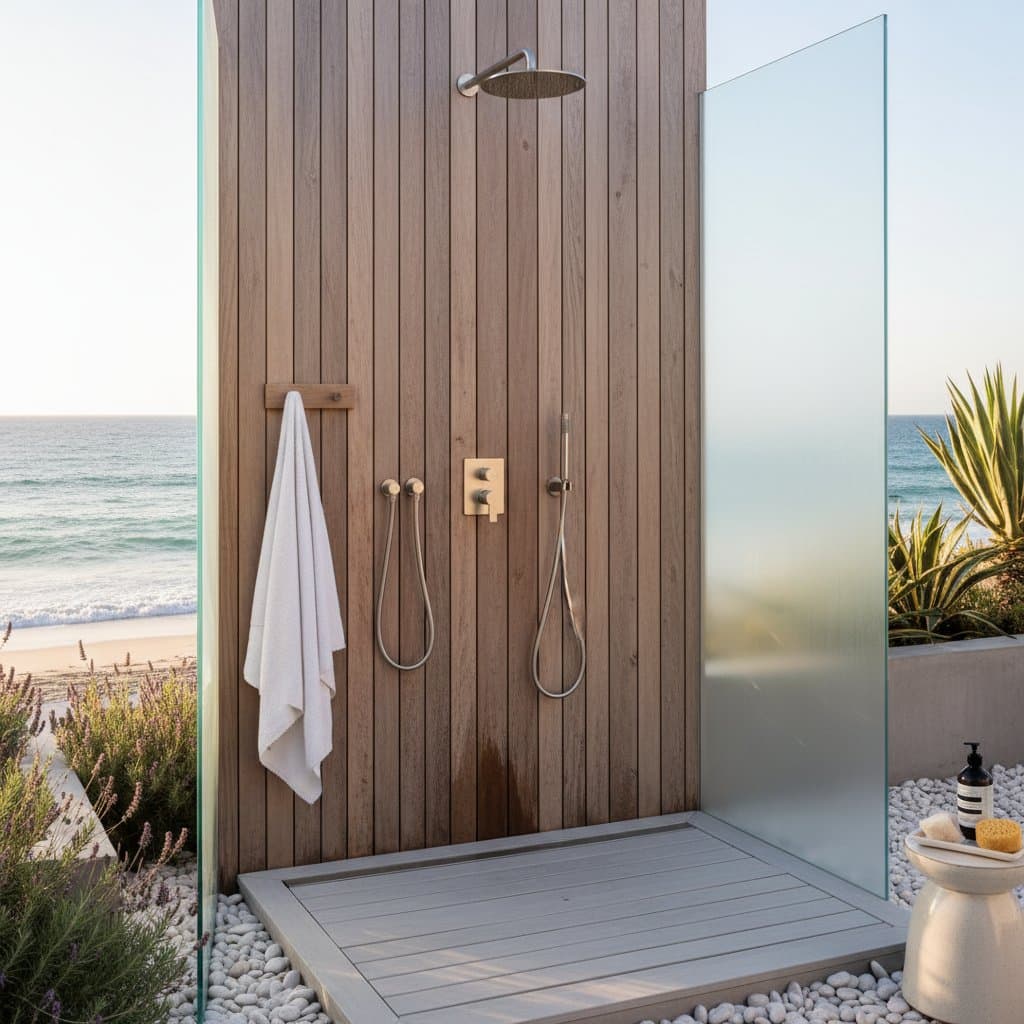
Coastal Remodels: Outdoor Showers Save 60% Over Full Baths
A coastal home remodel emphasizes the integration of comfort, functionality, and the inherent beauty of seaside environments. Homeowners often view the ability to rinse sandy feet or saltwater from a beach day as vital as enjoying a scenic vista. While adding such convenience through a full indoor bathroom proves expensive, outdoor showers provide both utility and aesthetic appeal at significantly lower expense. Experts in coastal remodeling indicate that an outdoor shower costs up to 60 percent less than a traditional full bathroom.
This guide explores the reasons outdoor showers represent a wise choice for beachfront properties, key considerations for their design, and strategies to control expenses while preserving style and longevity.
Why Outdoor Showers Suit Coastal Homes
Practical Advantages for Beachfront Living
Outdoor showers extend beyond mere indulgence; they address core needs in seaside settings. Salt, sand, and sunscreen accumulate rapidly, and outdoor rinsing prevents these elements from entering the home, thereby safeguarding interior surfaces from abrasion and humidity-related harm.
Additional advantages encompass:
- Convenience for visitors arriving from the beach or swimming pool.
- Decreased strain on indoor plumbing systems and surface treatments.
- Efficient rinsing for pets and children after outdoor activities.
- Enhanced marketability for properties used as vacation rentals or prepared for sale.
Financial Advantages Relative to Complete Bathrooms
Constructing a full bathroom demands intricate plumbing, ventilation, waterproofing, and finishing elements. Data from national sources reveal that remodeling a standard full bathroom typically ranges from the mid-20,000s to over 50,000 dollars, influenced by dimensions and material choices. By comparison, a durable outdoor shower might require only 2,000 to 5,000 dollars, varying with personalization and site specifics.
Even incorporating upscale options such as teak benches or stainless steel controls, savings approach 60 percent when contrasted with an indoor bathroom addition.
Simplified Setup and Upkeep
Outdoor showers frequently link to pre-existing water supplies, reducing the need for extensive labor and regulatory approvals. Freestanding or partially screened models facilitate quicker assembly and demand fewer resources. Ongoing maintenance proves straightforward, as these installations avoid elements like grout lines, interior coatings, or exhaust mechanisms.
Designing Your Outdoor Shower
Selecting an Optimal Position
Choose a location that balances seclusion with accessibility. Suitable sites include:
- Positions adjacent to rear decks or patios.
- Areas close to swimming pools or pathways leading to the beach.
- Spots near utility rooms or entryways for changing.
Selecting the Appropriate Shower Configuration
Three primary configurations merit consideration:
- Freestanding Models: These suit versatile positioning and mount easily on decks or stable concrete foundations.
- Wall-Attached Units: Secured to the house facade, they offer efficiency and represent the most economical choice.
- Screened Enclosures: These incorporate wooden lattices, bamboo partitions, or opaque glazing for seclusion, evoking a resort atmosphere.
Integrating Seclusion and Utility Features
Seclusion remains essential in open-air settings. Employ trellis work, dense vegetation, or removable fabric panels to establish boundaries while permitting ventilation. Add storage solutions such as wall-mounted pegs or integrated seating for towels and accessories. In regions with cooler weather or for extended use, integrate solar warming systems or protected piping to maintain usability.
Managing Budget and Expenses
Typical Expenditure Levels
Expenses for outdoor showers fluctuate based on scope:
- Elementary Cold-Water Systems: Range from 500 to 2,000 dollars.
- Intermediate Options featuring hot and cold mixing, runoff management, and screening: Span 3,000 to 7,000 dollars.
- High-End Builds with natural stone flooring, premium controls, and embedded amenities: Reach 8,000 to 15,000 dollars.
Elements Affecting Total Cost
Several variables impact the final price:
- Distance of water sourcing from primary lines.
- Choices in materials for platforms, barriers, and hardware.
- Configuration of runoff solutions, including permeable fills or infiltration pits.
- Specialized additions like integrated storage, illumination, or ergonomic features.
Strategies to Minimize Expenses
- Leverage nearby exterior faucets to repurpose plumbing infrastructure.
- Select durable synthetic composites over natural timber to cut long-term care costs.
- Maintain an open design to limit framing and enclosure expenses.
- Utilize basic surface drainage methods, such as sloped gravel, where regulations permit.
Ensuring Safety and Longevity
Mitigating Moisture Risks and Growth
Outdoor environments still necessitate vigilant water control. Direct runoff away from foundations using graded surfaces. Apply rust-proof connectors and apply protective coatings to timber elements yearly to avert deterioration.
Routine Upkeep Schedule
- Flush the area regularly to eliminate salt buildup.
- Examine controls and connections for signs of wear or seepage.
- Empty water lines ahead of potential frost if located in temperate zones.
- Refresh seals on timber or synthetic components according to manufacturer guidelines.
Promoting Extended Service Life
Quality components extend operational duration substantially. Opt for stainless steel, brass, or saltwater-rated fittings, which resist corrosion effectively in marine proximity.
Frequently Asked Questions
What Is the Cost to Construct an Outdoor Shower?
Expenditures vary from 500 dollars for simple installations to more than 10,000 dollars for elaborate versions. Generally, outdoor showers incur about 60 percent less expense than equivalent indoor facilities.
Do Outdoor Showers Require Building Permits?
Local authorities often mandate approvals when connections involve household water or waste systems. Consult applicable regulations prior to commencing work.
Is Hot Water Feasible in an Outdoor Shower?
Connections to existing hot supplies or dedicated on-demand heaters make this possible. Such enhancements improve usability but elevate installation demands and price.
Which Materials Excel in Outdoor Shower Applications?
Redwood, teak, stainless steel, and engineered deck surfaces withstand coastal exposure effectively. Steer clear of raw lumber or ordinary metals prone to oxidation or breakdown.
How Should Water Runoff Be Handled in an Outdoor Shower?
Common methods include aggregate layers, absorption trenches, or ties to established sewer lines. Selection hinges on jurisdictional rules and ground composition.
Does Maintenance for Outdoor Showers Present Challenges?
Care involves routine cleaning, hardware inspections, and periodic resealing. Proper attention ensures decades of reliable performance with limited intervention.
Does an Outdoor Shower Enhance Property Value?
It may not elevate formal assessments as markedly as an indoor addition, yet it bolsters desirability and practicality, particularly for coastal residences and short-term lets.
Realizing the Benefits of Your Outdoor Addition
An outdoor shower merges utility with serene enjoyment, capturing the essence of relaxed seaside existence. Achieving up to 60 percent savings relative to a complete bathroom allows investment in a enhancement that elevates routine experiences without fiscal strain.