
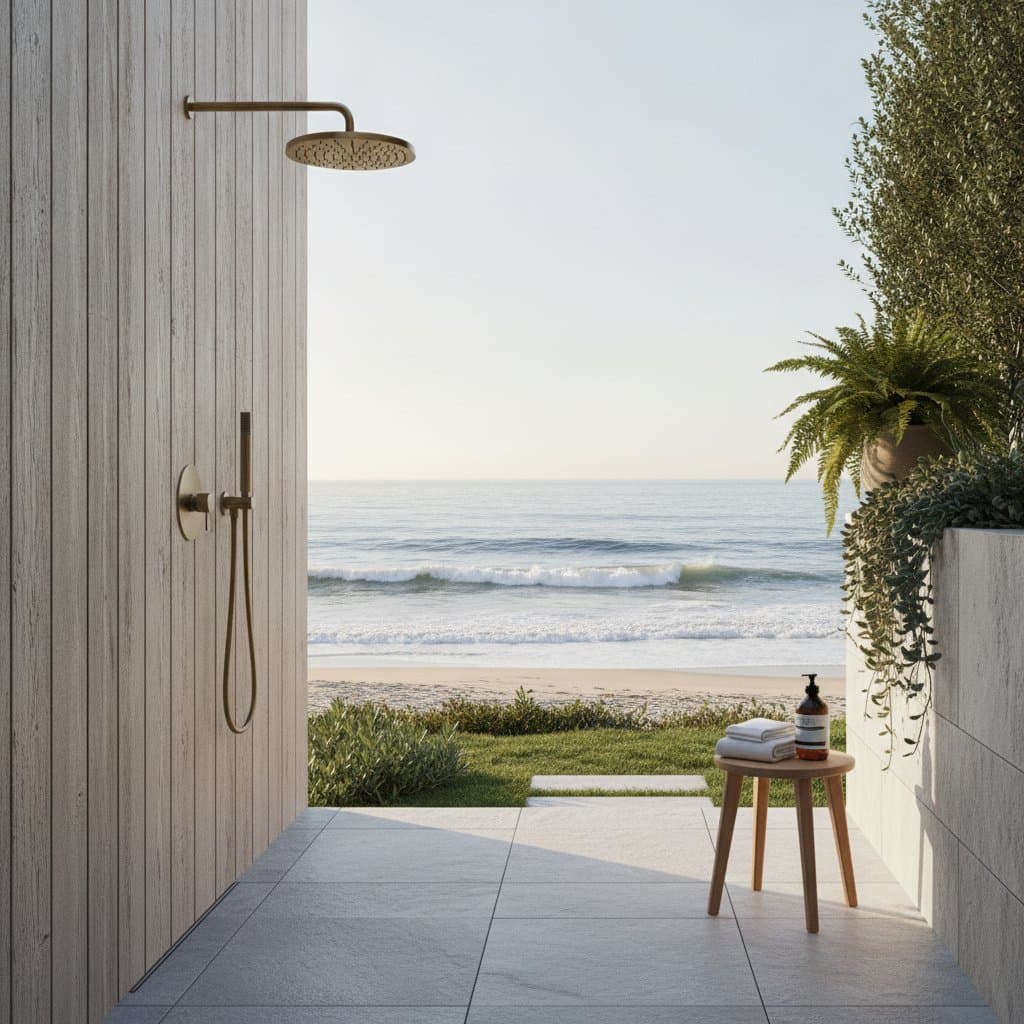
9 Outdoor Shower Ideas Coastal Buyers Love for Luxury and Lifestyle
If you live near the coast, you already know how good it feels to rinse off the salt and sand after a day at the beach. Outdoor showers rank among the most desired features for coastal homes. They blend practicality with luxury and create a resort style atmosphere.
Many coastal buyers now view outdoor showers as essential. They value the convenience and relaxation these spaces provide. Adding or upgrading an outdoor shower can distinguish a property during remodeling or a new home search.
This guide presents design ideas, layout options, and planning tips to build a coastal shower that remains both practical and indulgent.
Functional and Stylish Design Ideas
1. Private Spa Retreat
Outdoor showers can serve as more than quick rinse stations. Add privacy walls made from wood slats, stone, or frosted glass to form an open air spa. Select natural materials such as teak or bamboo that suit the coastal setting.
Install a rainfall showerhead to produce a soothing experience similar to a natural downpour.
2. Beachside Rinse Station
For homes near the water, a simple rinse station near the entry keeps sand and salt outside. Choose durable fixtures made from stainless steel or marine grade hardware that resist corrosion.
Position the station by the garage or side entrance so guests can rinse before entering. Include hooks for towels and wetsuits to maintain organization.
3. Tropical Garden Escape
Surround the outdoor shower with lush greenery to improve privacy and atmosphere. Ferns, palms, or succulents produce a calming environment suited to coastal living.
Lay stone pathways and add soft lighting to guide guests through the garden. This approach suits homes that seek a natural, organic appearance.
4. Minimalist Modern Look
For a clean modern style, select sleek lines and neutral tones. Concrete or composite decking forms a polished base while a matte black shower fixture provides contrast.
Keep accessories minimal. A single bench or small niche for soap often suffices. This style works well for smaller patios or courtyards where simplicity expands the sense of space.
Materials and Finishing Touches
5. Durable Coastal Materials
Coastal air challenges materials, so durability remains critical. Strong options include teak wood for natural moisture resistance, stainless steel for rust free fixtures, natural stone for slip resistant flooring, and composite decking for low maintenance.
Combine these materials to extend the life of the shower and preserve its appearance. Apply a sealant each year to protect wood surfaces from salt and moisture.
6. Creative Drainage Solutions
Effective drainage maintains cleanliness and safety. Gravel beds, slatted floors, or discreet trench drains perform well on coastal properties.
A simple gravel base often suffices when the home sits on sand. For tiled or raised decks, connect a hidden drain to the main system. Position the shower slightly away from plants that prefer dry soil.
7. Artistic Tile Accents
Colorful or patterned tile can turn a basic outdoor shower into a focal point. Choose designs inspired by ocean hues, sea glass, or natural textures.
Place tile mosaics behind the showerhead or along a half wall to add visual interest and protect surfaces. Select non slip finishes for safety.
Luxury Features and Comfort Upgrades
8. Dual Showerheads for Couples
Install dual showerheads to add a romantic or family friendly touch. Each head can feature its own temperature control for individual comfort.
This arrangement creates a resort like feel and improves function when multiple people return from the beach together.
9. Heated Water and Lighting
An outdoor shower should remain inviting at any hour. Add a hot water line and subtle lighting to extend use beyond warm afternoons.
Install LED strip lights along the base or soft sconces on nearby walls. These upgrades improve ambiance and safety. Solar powered lighting offers an eco friendly option that lowers energy costs.
Planning Advice for Coastal Homeowners
Review local codes for plumbing and drainage requirements before construction. Select a sheltered location that offers privacy from neighbors. Use weather resistant materials suited to salty air and humidity. Incorporate storage for towels, soaps, and swim gear.
A basic rinse station may cost between 800 and 1500 dollars. Luxury setups with stonework and heating can reach 5000 dollars or more.
Frequently Asked Questions
Do outdoor showers add value to a coastal home?
Yes. Buyers often regard them as both a convenience and a luxury feature, especially in beach communities. They can increase appeal and resale potential.
What materials last longest in coastal conditions?
Stainless steel, teak, and composite materials handle moisture and salt exposure best. Natural stone also serves as a strong choice for flooring.
How much privacy do I need?
That depends on property layout. Use fencing, lattice, or plant barriers to create privacy while preserving an open air feel.
Can I install an outdoor shower myself?
DIY installation works for basic cold water systems. For heated water or built in drainage, hire a licensed plumber for safety and reliability.
How do I maintain an outdoor shower?
Rinse fixtures regularly with fresh water. Clean tile or wood surfaces monthly. Reseal wood annually to prevent weather damage.
Daily Enjoyment of an Outdoor Shower
Once complete, an outdoor shower integrates into daily routines. Morning rinses in fresh air or evening washes under the stars feel refreshing and peaceful. The sound of water, the scent of salt, and the feel of natural materials connect residents with coastal living each day.
Whether the space is compact or expansive, an outdoor shower delivers ease and luxury that matches the coastal lifestyle. With thoughtful design, it becomes more than a convenience.