
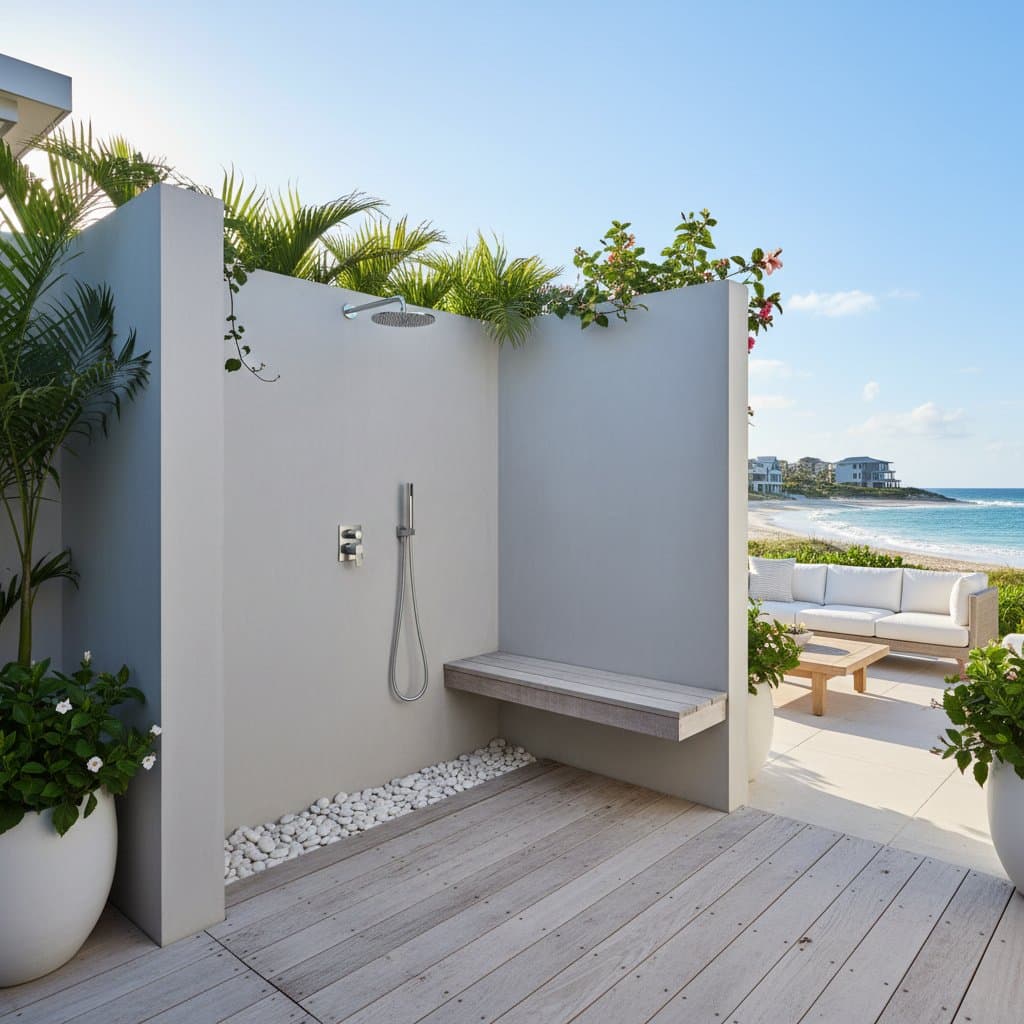
Why Outdoor Showers Will Dominate Coastal Homes in 2026
Coastal living has always celebrated the connection between indoor comfort and outdoor freedom. As design priorities shift toward health, sustainability, and lifestyle value, outdoor showers emerge as one of the most desirable features for coastal homes. These installations extend beyond a simple rinse-off spot for sandy feet; they represent a design statement that blends relaxation, function, and luxury.
For those planning a coastal remodel or constructing a new beachside home, this guide details why outdoor showers gain prominence in coastal properties, the associated costs, and key considerations for installation.
Average Cost of an Outdoor Shower
An outdoor shower typically costs between $1,200 and $8,000, depending on materials, plumbing complexity, and design elements. The national average reaches approximately $3,500 for a mid-range installation, which encompasses rough plumbing and finishing work.
| Type of Outdoor Shower | Average Cost Range | Typical Features |
|---|---|---|
| Basic cold-water setup | $500 to $1,200 | Simple hose connection, wall mount |
| Mid-range plumbed shower | $2,500 to $4,000 | Hot and cold water, drainage, privacy enclosure |
| Luxury spa-style shower | $5,000 to $8,000+ | Custom stonework, multiple spray heads, lighting, and built-in seating |
For coastal homeowners, this investment proves practical and enhances resale value. Outdoor showers often recoup over 60 percent of their cost in added property value, particularly when integrated into a well-designed patio or pool area.
Cost by Size and Scope
The size and scope of the project directly affect overall costs. Compact setups under 25 square feet range from $1,000 to $2,000 and suit small patios or backyards. Mid-range designs spanning 25 to 50 square feet cost $2,000 to $4,500 and incorporate privacy walls, drainage, and plumbing.
Expansive spa zones exceeding 50 square feet fall between $5,000 and $8,000 or more, often featuring natural stone, rain heads, and integrated landscaping. If the home already includes an outdoor water line, total costs may decrease by 10 to 20 percent due to reduced plumbing requirements.
Cost by Material
Material selection defines both cost and character, with coastal climates demanding options that resist salt, moisture, and UV exposure. The following table compares common materials.
| Material | Cost per sq. ft. | Durability | Maintenance Level | Aesthetic Appeal |
|---|---|---|---|---|
| Pressure-treated wood | $10 to $15 | Moderate | High | Traditional, rustic |
| Cedar or teak | $15 to $25 | Excellent | Moderate | Warm, natural wood tone |
| Composite decking panels | $12 to $20 | High | Low | Contemporary, uniform look |
| Concrete or stone | $25 to $40 | Very high | Low | Spa-like, timeless |
| Stainless steel fixtures | $200 to $600 per set | Excellent | Low | Sleek, modern |
Teak and stone lead trends for coastal properties, as they age gracefully and endure salt air. Homeowners frequently pair stainless steel fixtures with stone or concrete walls to achieve a clean, modern aesthetic suited to humid environments.
Labor Costs Explained
Labor constitutes 40 to 60 percent of the total cost for an outdoor shower. The typical breakdown includes plumbing at $600 to $1,200 for running hot and cold water lines, drainage installation at $300 to $800 for new systems, and carpentry or masonry work at $500 to $2,000 based on materials.
Electrical work, if optional for lighting or heating, adds $200 to $600. A licensed plumber remains essential for connections to the home water supply. Projects involving hot water or drainage into sewer or graywater systems must adhere to local building codes.
Factors That Influence Total Cost
Multiple variables shape the final price of an outdoor shower. Proximity to existing plumbing reduces expenses through shorter distances. The type of water supply, whether cold-only or hot and cold, impacts budgeting.
Drainage methods, such as direct to ground, dry well, or sewer connection, vary in complexity. Privacy features like screens, fences, or enclosed stalls add to the total. Material choices, custom details such as benches, lighting, or shelving, permit requirements, and labor availability during peak seasons all contribute.
A detailed plan prior to construction helps avoid overruns and ensures the shower aligns with functional and aesthetic objectives.
Why Outdoor Showers Are Booming in Coastal Design
The popularity of outdoor showers stems from more than mere convenience. Homeowners redefine coastal living by emphasizing wellness, sustainability, and seamless design flow.
- Connection to nature: These showers provide a spa-like experience infused with ocean breezes and natural light.
- Practicality: They prevent sand, salt, and chlorine from entering the home, safeguarding interior surfaces.
- Sustainability: Designs often feature reclaimed water systems or solar-heated lines.
- Aesthetic appeal: Natural materials allow showers to integrate smoothly with surrounding landscapes.
- Lifestyle value: They expand usable living areas and promote year-round outdoor activities.
Coastal residents seek spaces that feel open, organic, and restorative, qualities that outdoor showers embody effectively.
How to Save Money on an Outdoor Shower
Creating an impressive outdoor shower need not strain the budget. Position the shower near an existing outdoor spigot or bathroom wall to utilize current water lines and minimize new plumbing expenses.
Select pressure-treated lumber or composite panels for durable, cost-effective options. Embrace simple designs by forgoing built-in benches or elaborate stonework. Implement a gravity drain where property conditions permit, avoiding intricate plumbing setups.
Construct the enclosure personally or use prefabricated panels. Purchase fixtures in bundled kits, which include valves, heads, and hardware at reduced rates. Such approaches enable a mid-range design to offer comparable comfort and appeal to luxury versions at about half the cost.
DIY vs. Hiring a Professional
The choice between DIY construction and professional services hinges on skill level and project complexity.
| Task | DIY Feasibility | Professional Recommended |
|---|---|---|
| Connecting garden hose or cold-water line | Yes | No |
| Installing hot/cold plumbing | No | Yes |
| Building wooden enclosure | Yes | Optional |
| Pouring concrete pad or stonework | Moderate | Yes |
| Adding lighting or electrical heating | No | Yes |
| Designing drainage to sewer system | No | Yes |
Individuals with basic carpentry skills can complete a simple cold-water setup over a weekend. Projects requiring electrical connections or integrated plumbing demand licensed professionals to mitigate risks of leaks and safety hazards.
Common Mistakes to Avoid
Small oversights can lead to ongoing maintenance challenges. Confirm local permit and inspection requirements before commencing work.
Plan drainage thoroughly to prevent standing water from harming nearby landscaping or decking. Avoid untreated wood, which succumbs quickly to coastal humidity-induced rot and mold. Favor simplicity in design for longevity and visual effectiveness.
Incorporate adequate privacy screening, even for ocean-view locations. Prepare for winter by insulating pipes or adding shut-off valves in areas prone to occasional freezes. Addressing these elements maintains control over costs and upkeep.
Frequently Asked Questions About Outdoor Showers
Do I need a permit to install an outdoor shower?
Permit needs differ by location. Basic cold-water setups often require none, but connections to household plumbing or drainage typically do. Consult the local building department prior to starting.
How long does it take to install an outdoor shower?
Simple cold-water models finish in one day. Complex installations with drainage, stonework, or lighting span three to seven days, influenced by labor schedules and material arrivals.
What materials hold up best in coastal environments?
Cedar, teak, stainless steel, and natural stone excel near the ocean. These options resist salt corrosion, moisture, and UV exposure more effectively than untreated wood or inferior metals.
Can I connect an outdoor shower to a solar water heater?
Yes, coastal homeowners commonly integrate solar-heated lines to lower energy consumption. Initial installation costs more, yet long-term utility savings offset the expense.
Will an outdoor shower add value to my home?
Yes, especially in coastal markets. Buyers view outdoor showers as premium features that enhance pools, decks, and beach access, thereby elevating property appeal and resale value.
How do I maintain an outdoor shower?
Rinse fixtures with fresh water each week, clean drains regularly, and seal wood surfaces yearly. In cold-prone areas, shut off and drain the system during winter months.
Where should I place my outdoor shower?
Locate it near beach or pool entry points, ensuring privacy from neighbors. A spot with partial sun exposure aids quick drying and mildew prevention.
Implementing Your Outdoor Shower: Key Steps Forward
To integrate an outdoor shower into your coastal home, start by assessing site suitability and budget constraints. Consult local professionals for code compliance and material sourcing. With thoughtful execution, this feature elevates daily routines into restorative experiences, enhancing both property value and enjoyment of seaside living.