
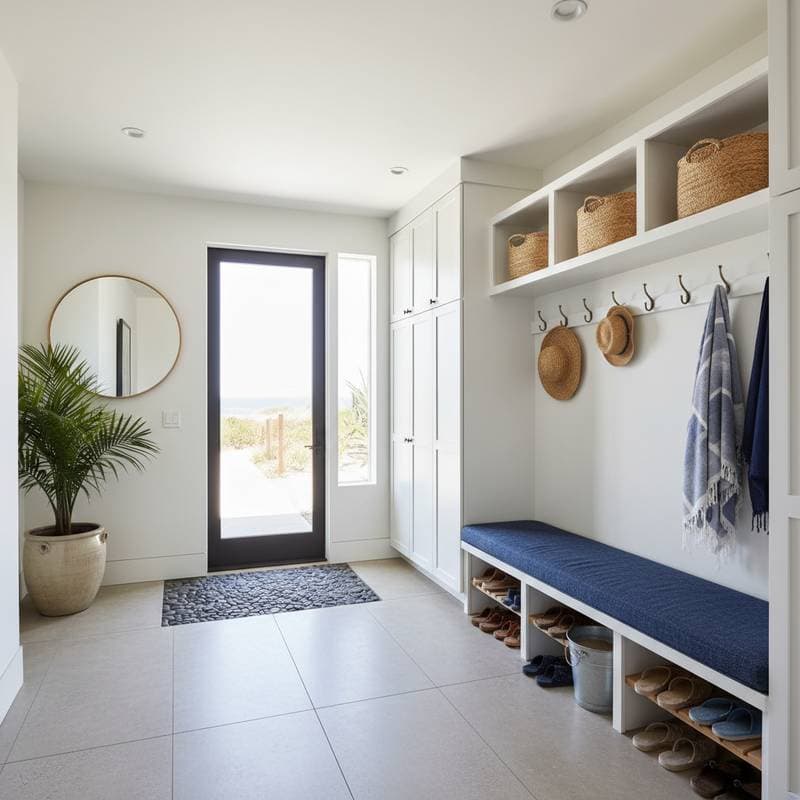
Open Mudrooms: Sand-Free Solution for Coastal Homes
Imagine returning from a beach outing with sand-covered feet, damp towels in hand, and the family pet shaking off saltwater at the entrance. This scene captures the essence of coastal living, yet it often leads to constant cleaning. An open mudroom serves as an effective buffer, confining sand and moisture to an outdoor transition area.
This design integrates practical utility with seaside aesthetics, offering a spacious entry that enhances cleanliness and organization. Homeowners in regions such as San Diego benefit greatly, as it maintains a tidy interior while embracing the relaxed vibe of beach proximity.
What Is an Open Mudroom?
An open mudroom functions as a partially enclosed or fully open entry space dedicated to shedding outdoor debris like sand, wet equipment, and beach items. Distinct from fully walled mudrooms, this version promotes ventilation and daylight, which suits humid coastal environments. It enables quick decontamination before entering the main home.
Key features include:
- Durable flooring options that resist water and abrasion
- Built-in storage solutions such as hooks and benches for gear management
- Weather-resistant materials that withstand salt exposure and humidity
- Low-maintenance surfaces suitable for sweeping or rinsing
Overall, an open mudroom facilitates a smooth shift from outdoor activities to indoor comfort without tracking in coastal elements.
Designing the Perfect Open Mudroom
Developing an open mudroom requires thoughtful planning rather than extensive construction. Homeowners can repurpose existing outdoor areas like patios or porches to achieve functionality and visual appeal.
Step 1: Choose the Right Location
Select a position adjacent to the primary access point for beach returns, such as a rear or side door connected to the yard or an exterior rinse area. This placement streamlines the process of unloading items.
Ideal locations include:
- Covered patios or connecting walkways
- Screened porches featuring open sides
- Garage adjacencies with direct outdoor entry
Pairing the mudroom with an existing outdoor shower establishes an efficient workflow for washing and storing.
Step 2: Select Durable Flooring
Flooring forms the core of an effective mudroom, demanding resilience against frequent moisture and grit. Opt for materials that repel water and simplify maintenance over absorbent alternatives.
| Flooring Type | Pros | Cons |
|---|---|---|
| Porcelain Tile | Highly water-resistant, simple to clean | Potential slipperiness when wet |
| Composite Decking | Minimal upkeep, robust construction | Higher initial expense than tile |
| Sealed Concrete | Sturdy with an industrial aesthetic | Risk of cracking without proper sealing |
| Natural Stone | Elegant appearance, enduring quality | Needs periodic sealing for protection |
Consider dark or textured grout lines to minimize the visibility of residual sand during routine cleanings.
Step 3: Incorporate Smart Storage
Effective storage prevents disarray and supports daily use. Prioritize solutions that organize items efficiently while allowing for quick access.
Practical ideas include:
- Wall-mounted hooks for securing towels, hats, and bags
- Elevated shoe racks or gravel-filled trays to contain falling sand
- Benches with integrated drawers for concealed storage
- Wall-mounted shelves for items like lotions, eyewear, and compact accessories
In compact areas, emphasize vertical elements such as tiered shelving or pegboards to accommodate larger pieces like folding chairs or pet leads.
Keeping It Truly Sand-Free
Optimal performance relies on complementary habits and features beyond the basic structure. Implement these strategies to maximize the mudroom's effectiveness.
Install a Rinse Station
Position a basic outdoor shower or foot-washing setup beside the mudroom to remove sand prior to entry. Incorporate a flexible hose attachment over perforated grating to direct water flow and prevent pooling.
Use Washable Rugs
Deploy machine-washable mats or runners within the entry threshold. These capture any escaped particles and refresh easily after outings.
Choose Open Storage
Favor open shelving and ventilated containers for damp articles to promote air circulation and deter mold growth. This approach ensures items dry thoroughly between uses.
Maintain Regular Cleaning
Conduct weekly sweeps or rinses based on traffic levels. Prompt attention to debris avoids surface damage and maintains drainage efficiency.
Cost Breakdown: Budgeting for Your Open Mudroom
Expenses for an open mudroom depend on scale, selected materials, and adaptation versus new construction.
| Project Type | Estimated Cost Range |
|---|---|
| Basic DIY installation (hooks, bench, mat) | $300 - $800 |
| Moderate enclosure with added storage | $1,500 - $3,500 |
| Full custom build including utilities | $4,000 - $7,500 |
These figures provide a starting point; leveraging pre-existing covered spaces often reduces overall outlay.
Frequently Asked Questions
How big should an open mudroom be?
A compact 4-by-6-foot area suffices for most needs. Design it to accommodate seating, shoe removal, and hanging without congestion.
What materials are best for coastal conditions?
Prioritize moisture-repellent choices like ceramic tiles, synthetic composites, corrosion-proof fixtures, and preserved lumber. Steer clear of raw metals or absorbent textiles.
Can I add an open mudroom to an existing porch?
Yes, partial barriers, storage units, and resilient surfacing can convert porch sections effectively.
How do I keep sand from blowing in?
Incorporate breeze-blocking screens, extended rooflines, or adjacent foliage to limit airborne entry while preserving ventilation.
Is an open mudroom suitable for all climates?
It excels in temperate coastal settings with mild weather, though adaptations like added enclosures make it viable in varied conditions.
Integrating the Mudroom into Daily Coastal Routines
An open mudroom elevates everyday beach interactions by simplifying cleanup and storage. It fosters a seamless connection between outdoor adventures and home sanctuary.
With this setup, coastal residents gain a reliable ally against sand intrusion, enhancing both convenience and enjoyment of seaside life.