
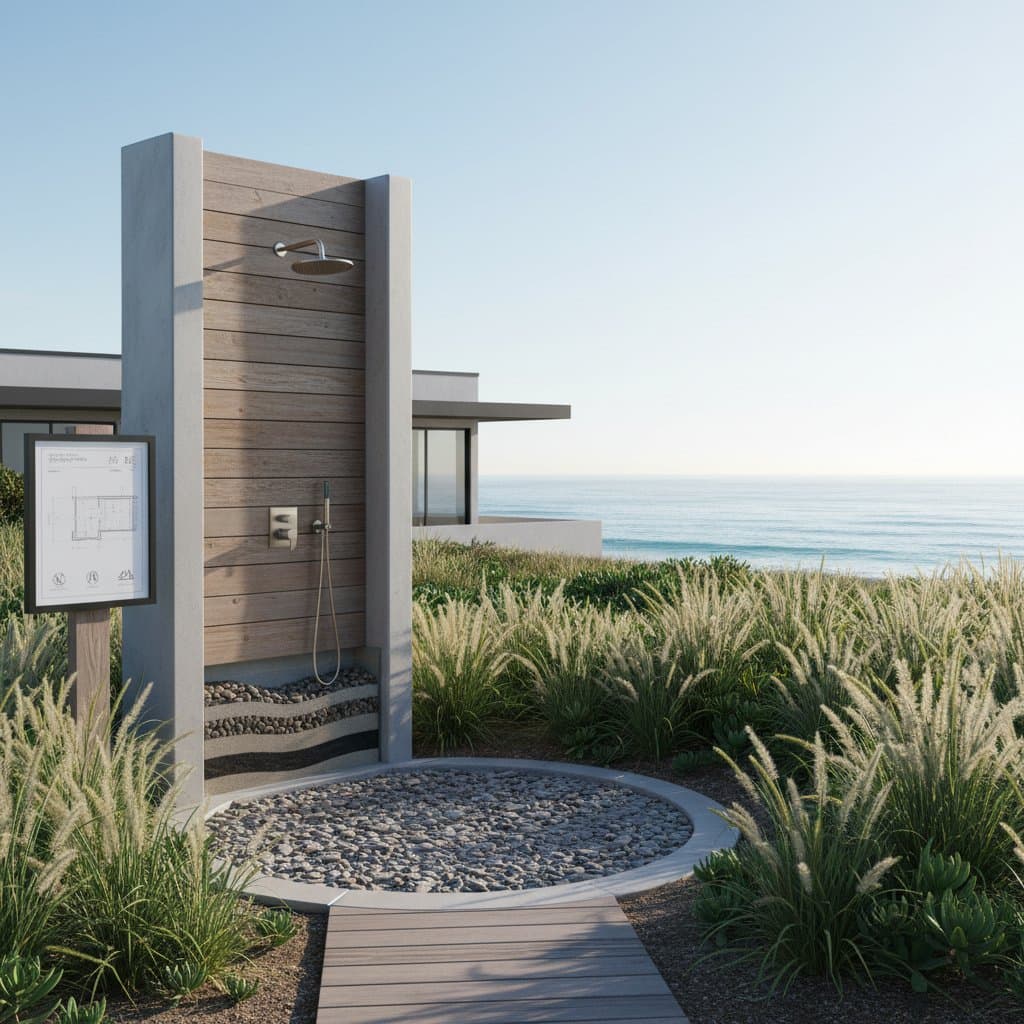
Homeowners along the coast have always enjoyed the convenience and charm of outdoor showers. Whether it is rinsing off after a beach day or creating a spa-like retreat in the backyard, these features add both function and style. With upcoming updates to coastal building codes, however, installing or upgrading an outdoor shower requires more careful planning. The 2026 coastal rules introduce new standards for permitting, drainage, materials, and environmental protection, which reshape how coastal property owners approach outdoor water installations.
This guide explains the new regulations in detail, outlines their effects on remodels or new constructions, and offers steps to maintain compliance while managing budgets and timelines effectively.
Key Changes in the 2026 Coastal Codes for Outdoor Showers
These regulatory updates prioritize coastal ecosystem protection, water efficiency improvements, and enhanced property safety. Homeowners must prepare for the following significant modifications.
1. Enhanced Drainage and Runoff Standards
Outdoor showers now demand approved drainage systems that redirect gray water away from storm drains and sensitive habitats. Key requirements include no direct discharge onto sand, soil, or vegetation in restricted zones, along with mandatory permeable drain beds, dry wells, or gray water systems. Compliance proof through inspection remains essential before final permit approval.
For typical homes, these systems increase installation costs by $500 to $1,500. Proper implementation prevents erosion and protects local waterways from contaminants.
2. Required Corrosion-Resistant Materials
To endure saline air and high humidity, the rules mandate marine-grade materials for all fixtures and fasteners. Suitable options encompass stainless steel, brass, and composite decking. Inspectors will reject galvanized steel and untreated wood in coastal exposure zones.
Material expenses rise by 10% to 20%, varying with selections. These durable choices minimize long-term repairs and maintenance in harsh environments.
3. Updated Permit and Zoning Processes
While some permitting elements simplify, environmental oversight intensifies under the new rules. Homeowners submit a site drainage plan to verify gray water containment, confirm setback adherence from dunes, bluffs, or protected vegetation, and secure a coastal development permit for permanent setups linked to household plumbing.
Temporary or portable showers qualify for permit exemptions provided they satisfy runoff and location standards. Early application accelerates approvals and avoids delays.
4. Water Efficiency Mandates
All outdoor showers incorporate low-flow fixtures rated under 2.0 gallons per minute. Hot water systems feature automatic shutoff valves to curb waste. These measures ensure regulatory adherence and cut annual water consumption by 15% to 25%.
Selecting certified fixtures during planning integrates efficiency without sacrificing performance. Such upgrades align with broader conservation goals in water-scarce coastal areas.
5. Accessibility and Safety Improvements
New guidelines emphasize slip-resistant surfaces, handheld sprayers, and barrier-free access. Showers on decks or platforms above 18 inches require non-slip flooring and secure railings.
These enhancements reduce injury risks and promote inclusive design. Contractors familiar with code specifics deliver installations that balance safety with aesthetic appeal.
Labor Costs and Contractor Considerations
Professional labor constitutes 40% to 50% of overall project expenses. In coastal areas, licensed plumbers bill $90 to $150 per hour, whereas general contractors managing framing, decking, and finishes charge $70 to $120 per hour.
Permitting and inspection tasks incur additional $300 to $700 in fees. Elevated rates reflect high demand and the need for expertise in drainage and environmental compliance. Engaging certified professionals safeguards against violations and ensures quality workmanship.
Strategies to Control Costs on Compliant Outdoor Showers
Smart decisions in design and materials help homeowners adhere to budgets effectively.
- Leverage existing plumbing lines by positioning the shower near an outdoor spigot or pool setup, which cuts trenching and piping expenses.
- Select prefabricated enclosures, as factory panels prove more economical than custom wood or masonry builds.
- Invest in mid-range durable materials like composite decking and stainless fixtures for longevity with reduced upkeep.
- Perform basic site preparation independently, such as clearing vegetation or laying a gravel base, to save on labor charges.
- Combine permits with concurrent projects like decks or landscapes to optimize inspection fees.
- Incorporate water-saving fixtures that fulfill flow requirements and lower future utility bills.
These approaches maintain functionality while navigating regulatory demands.
Pitfalls to Sidestep in Outdoor Shower Projects
Careful planning averts expensive revisions and failed inspections.
- Omit no drainage plan, as every project demands documented runoff management.
- Steer clear of non-approved materials, since untreated wood and steel deteriorate rapidly in coastal conditions.
- Adhere to setbacks to avoid penalties near bluffs or dunes.
- Account for extended permit timelines in coastal areas.
- Favor straightforward designs that meet codes without excess complexity or maintenance.
Addressing these issues upfront streamlines the process and yields reliable results.
Frequently Asked Questions on Coastal Outdoor Showers
Does a coastal outdoor shower require a permit?
Yes. Permanent installations connected to home plumbing or situated in regulated coastal zones necessitate a coastal development permit. Temporary or freestanding units gain exemptions if they comply with drainage and setback rules.
Is beach runoff water permissible for outdoor showers?
No. The regulations ban untreated or reclaimed beach water for personal use unless processed through approved filtration. Connections must link to potable sources or certified gray water systems.
How much time does a compliant installation take?
Basic cold-water setups with standard drainage finish in two to four days post-permit. Elaborate versions with hot water, stone bases, or custom enclosures span one to two weeks, subject to labor schedules.
Which materials endure best in coastal settings?
Stainless steel, brass, composite decking, and sealed stone provide superior corrosion resistance and durability. Untreated wood and aluminum fixtures fail quickly in salty atmospheres.
Do the rules impact existing outdoor showers?
Structures falling short on drainage or materials may require updates during major repairs or replacements. Proactive maintenance and voluntary improvements mitigate future compliance challenges.
Can an outdoor shower operate without main plumbing?
Yes. Portable or gravity-fed systems work if they meet runoff and setback criteria. They serve as cost-effective options for seasonal applications with limited permitting.
How do these regulations influence property value?
Positively. Compliant, thoughtfully designed showers boost buyer interest in coastal lifestyle amenities. Adherence to codes preserves value, minimizes liabilities, and supports smooth resales.
Steps to Launch Your Compliant Coastal Shower Project
Navigating the 2026 coastal rules involves thorough preparation for a secure, sustainable outcome. Collaborate with licensed experts and prioritize approved materials to realize a feature that elevates daily life.
Emphasize effective drainage, resilient construction, and complete permitting. These elements secure project success, avert inspection hurdles, and deliver enduring comfort alongside environmental stewardship.