
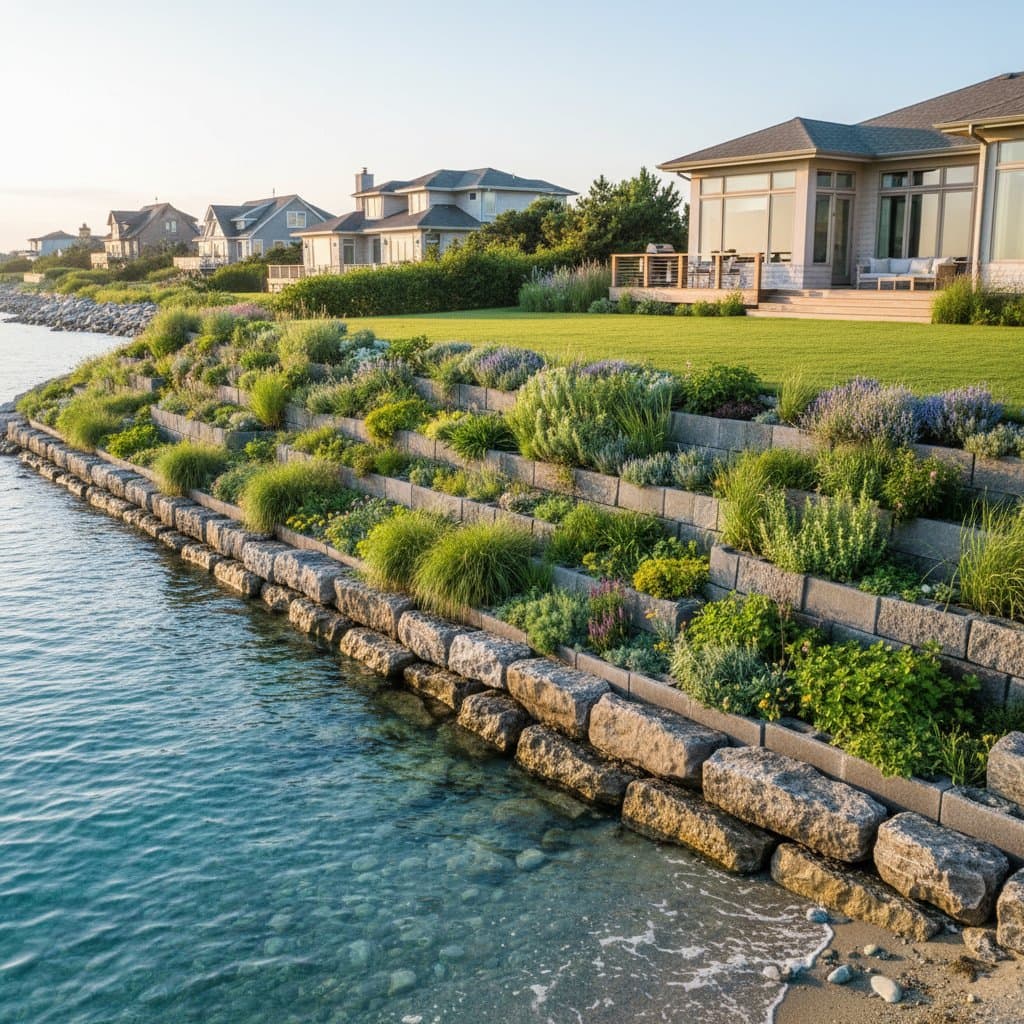
Bioengineered Seawalls Save $50,000 on Coastal Erosion
Coastal property owners face constant challenges from saltwater intrusion, severe storms, and escalating sea levels that erode shorelines and endanger structural foundations along with landscaped areas. Conventional concrete seawalls served as the primary defense in the past, yet these structures frequently involve substantial expenses, ecological harm, and ongoing maintenance demands. Bioengineered seawalls now provide an intelligent, sustainable option that enables property owners to reduce installation and upkeep costs by up to $50,000.
This comprehensive guide details the mechanics of bioengineered seawalls, explores their role in revolutionizing coastal erosion management, and outlines essential considerations for integrating one into a specific property.
Understanding Bioengineered Seawalls
Bioengineered seawalls merge organic elements and live vegetation with engineered supports to secure shorelines effectively. Rather than depending exclusively on concrete, these installations incorporate vegetation, specialized soils, and geotextile fabrics that capture wave impacts and foster the growth of diverse marine organisms.
Key Differences from Traditional Seawalls
Standard seawalls function as impenetrable barriers that redirect wave forces, which can accelerate erosion along their foundations over time. Bioengineered alternatives dissipate wave energy across multiple layers of foliage and permeable substances. This method safeguards the shoreline, enhances water clarity, and cultivates environments conducive to fish populations and shellfish communities.
Essential Materials
Effective bioengineered seawalls typically feature the following components:
- Salt-resistant native plants and grasses that anchor deeply into the substrate
- Biodegradable coconut coir logs or erosion-control mats to secure initial soil placement
- Layers of permeable gravel or sand to facilitate drainage and energy absorption
- Recycled plastics or composites for durable, non-intrusive reinforcement
These elements collaborate to form an adaptive barrier that gains resilience as vegetation matures, in contrast to materials that deteriorate with exposure.
Cost Analysis and Savings Opportunities
The economic advantages of bioengineered seawalls stem from streamlined installation processes and minimized ongoing expenses. Costs fluctuate according to site-specific factors such as regional pricing, ground composition, and project scale, yet most property owners achieve savings of up to $50,000 relative to conventional builds.
Factors Driving Lower Costs
-
Reduced Reliance on Concrete and Machinery
Bioengineered designs demand minimal heavy-duty materials, which lowers procurement and deployment expenditures significantly. -
Streamlined Regulatory Approval
Projects that promote habitat preservation encounter fewer bureaucratic obstacles, thereby decreasing associated administrative fees and timelines. -
Diminished Upkeep Requirements
Established vegetation naturally reinforces soil integrity, eliminating the need for frequent interventions and material renewals.
Project expenses differ based on unique shoreline characteristics, prevailing wage rates, and jurisdictional rules. Property owners should secure several detailed quotes and consult certified experts prior to finalizing any plan.
Ecological and Visual Advantages
Bioengineered seawalls deliver profound environmental and aesthetic enhancements that surpass the capabilities of rigid, conventional barriers.
Fostering Marine Habitats
Integrated plant life in these seawalls purifies stormwater runoff, elevates water purity levels, and establishes refuges for aquatic species. Such installations contribute to biodiversity recovery and lessen the overall ecological impact of shoreline defense initiatives.
Elevating Property Aesthetics
A stark concrete barrier often appears utilitarian and disruptive to natural surroundings. Bioengineered seawalls, however, integrate seamlessly with the environment, forming verdant borders that amplify visual allure and harmonize with seaside landscaping. Property owners frequently report that this organic aesthetic enriches recreational areas and elevates market value.
Planning and Installation Process
The deployment of a bioengineered seawall demands meticulous preparation and collaboration with qualified professionals. Adhere to these structured steps for optimal outcomes:
-
Conduct a Thorough Site Evaluation
Engage a coastal engineer or specialized landscape architect to analyze sediment composition, prevailing wave patterns, and terrain stability. -
Secure Required Authorizations
Initiate discussions with regional environmental authorities and coastal oversight bodies promptly. Compliance with varying local statutes avoids project interruptions. -
Identify Appropriate Components
Opt for indigenous flora adapted to saline conditions and regional weather patterns. Contractors can suggest varieties with robust root systems for rapid establishment. -
Oversee Construction Phases
Monitor installation to ensure layers integrate correctly, with initial planting schedules aligned to seasonal conditions for best survival rates.
Frequently Asked Questions
What Durability Can Property Owners Expect from a Bioengineered Seawall?
With appropriate engineering and periodic care, these structures endure for multiple decades. Vegetation development progressively bolsters protective capacity.
Does Installation Involve Ongoing Irrigation Needs?
Irrigation proves unnecessary after initial rooting. Plants draw sustenance from ambient precipitation and tidal influences, though supplemental moisture aids early development.
How Do These Seawalls Perform During Intense Weather Events?
Properly constructed versions withstand severe storms effectively. Their stratified composition absorbs and disperses wave forces, mitigating collapse risks compared to inflexible designs.
Are Bioengineered Seawalls Viable for Every Coastal Site?
These solutions suit locations with moderate hydrodynamic forces and adequate space for growth. Sites with extreme wave exposure benefit from hybrid approaches blending organic and reinforced features.
When Does Stabilization Become Evident?
Visible improvements emerge within months as root networks expand. Seasonal progression yields incrementally stronger defenses.
Do These Installations Draw Unwanted Fauna?
They primarily invite advantageous marine and riparian organisms. Strategic species selection and routine trimming avert excessive proliferation or invasive presence.
Can Bioengineered Seawalls Boost Real Estate Value?
Affirmative. Enhanced visual appeal, eco-conscious design, and cost efficiencies often translate to premium pricing and buyer interest.
Ensuring Long-Term Performance
Sustaining a bioengineered seawall involves straightforward, periodic actions to preserve its efficacy and appearance. Inspect the site biannually for signs of sediment shifts or plant stress, and remove any debris that could impede growth. Prune overgrown foliage selectively to maintain balance, and replenish eroded areas with compatible soils or additional plantings as needed. These measures not only extend the structure's lifespan but also maximize its contributions to shoreline health and property enjoyment. By committing to this routine, owners secure enduring protection against erosion while nurturing a vibrant coastal ecosystem.