
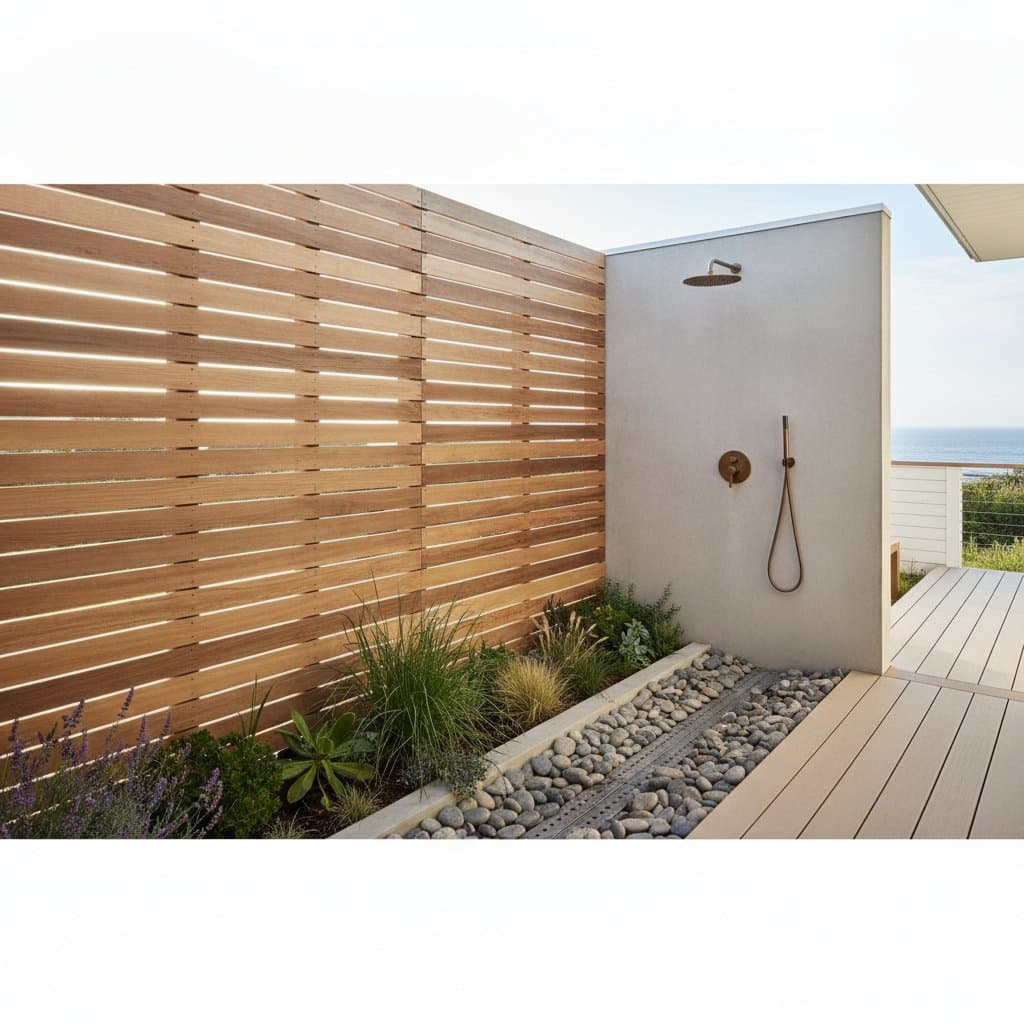
2026 Outdoor Shower Rules Shift Privacy and Drainage Needs
Imagine rinsing off after a beach day with warm sun on your shoulders and salty sand washing away in your private outdoor shower. For many coastal homeowners that quick rinse serves as both a luxury and a necessity. New building code updates are changing what that setup should look like, especially around privacy, drainage, and environmental protection. Whether you already have an outdoor shower or plan to build one soon, these requirements will influence design choices, materials, and water management.
This guide explains what the new outdoor shower rules mean for homeowners, how to design a compliant and stylish setup, and when to bring in a professional. Expect cost breakdowns, design ideas, and smart ways to stay within code while keeping your backyard sanctuary beautiful.
Expect to budget between 1500 and 8000 dollars for a compliant outdoor shower installation. Costs rise when adding privacy walls, custom drainage, or graywater systems. For complex setups obtain quotes from top rated professionals familiar with local coastal regulations.
Cost Factors for Compliant Outdoor Showers
Outdoor showers vary widely in price depending on materials, water connections, and design complexity. A simple cold water rinse station might run between 1500 and 2500 dollars. A fully enclosed hot and cold setup with proper drainage can cost between 5000 and 8000 dollars.
Here is a closer look at what drives the cost.
- Plumbing and water connections. Running hot and cold lines can add between 800 and 2000 dollars depending on distance from your main supply.
- Drainage systems. A code compliant graywater or french drain system often adds between 600 and 1500 dollars.
- Privacy structure. Fencing, walls, or full enclosures can range from 700 to 3000 dollars depending on materials like cedar, PVC, or composite.
- Permitting. Some municipalities require permits for showers with plumbing, which may cost between 100 and 500 dollars.
- Labor. Professional installation typically adds between 1500 and 3000 dollars especially when cutting into existing plumbing or waterproofing nearby structures.
The average cost for a complete code compliant setup falls around 4500 dollars though coastal properties with strict runoff controls can easily exceed that amount.
Drainage and Privacy Requirements
The biggest shift in outdoor shower regulations centers on how water drains and how privacy is maintained. Coastal areas are especially strict due to stormwater management and environmental protection goals.
Drainage Systems
Outdoor shower water is classified as graywater meaning it contains soap, shampoo, and trace contaminants. You can no longer allow it to run freely into soil or storm drains.
Approved systems include the following options.
- Graywater capture and reuse. Collects water for subsurface irrigation through approved filtration systems.
- French drains. Uses gravel trenches to disperse water underground away from foundations and storm drains.
- Dry wells. A contained pit that slowly releases water into surrounding soil layers.
Each setup must prevent runoff onto adjacent properties or public pathways. If your property sits near coastal bluffs or wetlands expect stricter inspection and permitting.
Privacy Standards
New standards require that outdoor showers provide visual screening from neighboring properties and public views. This can be achieved through fencing, lattice panels, or native shrubs.
- Minimum enclosure height typically reaches six feet.
- Material durability must withstand constant moisture.
- Ventilation is required to reduce mold and mildew.
These rules are designed to balance personal comfort with neighborhood aesthetics and safety.
Strategies to Reduce Expenses
Outdoor showers can be both eco friendly and budget friendly if planned wisely. Try these cost saving strategies.
- Use existing plumbing. Install your shower near an outdoor spigot or bathroom wall to minimize pipe runs.
- Choose gravel or stone bases. These are less expensive than poured concrete and often meet drainage requirements.
- Go modular. Prefabricated shower kits save design time and labor costs.
- Reuse materials. Salvaged wood or leftover decking can make stylish privacy walls when properly sealed.
- DIY finishing touches. Build your own enclosure or add decorative surfboard hooks and towel racks to personalize the space.
By combining professional plumbing with DIY finishing you can keep your total cost closer to between 2500 and 4000 dollars.
Frequent Design Errors to Avoid
- Ignoring slope. Drainage bases should slope at least one inch per foot toward the drain.
- Improper materials. Untreated wood can rot quickly in coastal humidity.
- Poor ventilation. Fully enclosed showers need vent panels to prevent trapped moisture.
- No containment. Soapy runoff can damage nearby plants or attract pests.
Frequently Asked Questions
Do I need a permit for an outdoor shower?
If your shower connects to your home plumbing or includes permanent drainage you likely need a permit. Temporary hose connected showers usually do not but always confirm with your local building department.
Can outdoor shower water be reused for irrigation?
Yes but only with a proper graywater system that filters and directs water below the soil surface. Direct sprinkling or runoff is prohibited near coastal zones.
What materials work best for privacy walls?
Cedar, teak, composite, and PVC panels handle moisture well. Avoid untreated wood or metal that can corrode.
How can I prevent slippery floors?
Use textured surfaces such as stone pavers or slatted wood decking. Avoid smooth tiles that become slick when wet.
Can I install a hot water line myself?
Running a hot water line requires plumbing experience and often a permit. It is best left to a licensed professional to avoid leaks and ensure code compliance.
Implementing Your Outdoor Shower
With the new outdoor shower regulations you can still enjoy that breezy coastal rinse but it takes smarter planning. Start by choosing a safe location with natural drainage then decide whether to build a simple rinse station or a fully enclosed spa style retreat.
Gather quotes from licensed professionals for plumbing and drainage work and handle the decorative details yourself if you enjoy DIY projects. By combining compliant design with creative materials you will end up with a space that is practical, private, and environmentally responsible.
Your outdoor shower can be more than a rinse station. It can become a seamless extension of your coastal lifestyle that meets modern regulations while letting you enjoy the freedom of the open air right in your own backyard.