
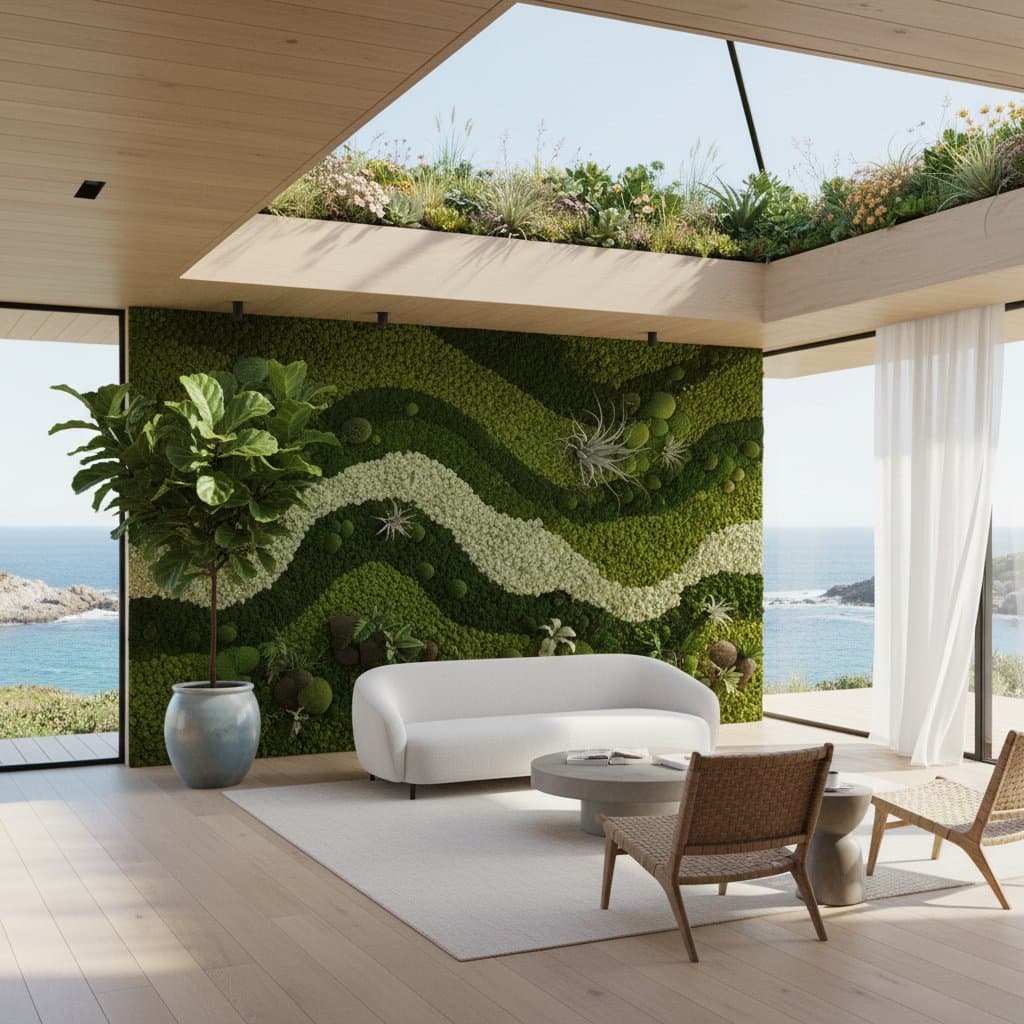
Moss Walls and Living Roofs Reduce Coastal Home Temperatures by 15 Degrees
Imagine entering a coastal residence where the air feels refreshingly cool and serene, even during the peak of a warm afternoon. Such an experience often stems from the integration of moss walls or living roofs. These features serve as effective natural insulators, capable of lowering indoor temperatures in coastal homes by as much as 15 degrees. Homeowners gain reduced reliance on air conditioning, improved indoor air quality, and a seamless incorporation of natural elements into their living areas.
Homes equipped with these systems foster an environment where architecture harmonizes with the natural surroundings.
Understanding Moss Walls and Living Roofs
Moss walls consist of vertical displays featuring preserved or living moss affixed to panels or frames, suitable for both interior and exterior applications. These installations require no soil, drawing essential moisture and nutrients directly from the ambient air, which suits the high-humidity conditions prevalent in coastal regions.
Living roofs, alternatively referred to as green roofs, involve vegetated coverings on rooftops. Configurations vary from basic mats of low-maintenance sedum to elaborate setups incorporating soil layers, drainage systems, and automated irrigation. The vegetation provides thermal insulation, moderating heat in summer months and retaining warmth during cooler seasons.
Photo: A seaside residence featuring a verdant rooftop garden with ocean views.
Advantages for Coastal Properties
Coastal climates offer optimal conditions for moss walls and living roofs, thanks to consistent humidity and temperate weather that support the growth of moss, succulents, and indigenous grasses. In contrast, arid interior zones demand additional watering to sustain these features. Along the coast, environmental factors minimize maintenance efforts.
These installations also mitigate challenges posed by intense solar exposure and saline air. By absorbing sunlight and acting as barriers, they safeguard exterior surfaces from ultraviolet degradation and salt-induced corrosion.
Strengthening Ties to the Natural World
Residing near the coast inherently deepens one's bond with the environment. Incorporating living walls or roofs amplifies this connection. Upon returning from an outdoor excursion on a sunny day, residents experience cooler, quieter interiors with enhanced freshness in the air.
Essential Installation Guidance for Homeowners
Implementing moss walls or living roofs demands careful preparation, including assessments of structural integrity and waterproofing. Professional expertise ensures long-term success.
Moss Wall Considerations
- Select a north- or east-facing exterior wall to optimize natural light exposure, or position indoors near ample illumination sources.
- Implement moisture management strategies to avoid mold development.
- Opt for preserved moss varieties to eliminate ongoing care requirements.
- Incorporate LED grow lights for indoor setups lacking sufficient daylight.
Living Roof Essentials
- Engage a structural engineer to evaluate the roof's capacity to support added weight.
- Layer root barriers, drainage systems, and waterproof membranes for protection.
- Choose low-profile, resilient plants like sedum or local succulents that thrive with minimal water.
- Integrate an irrigation setup to address occasional dry intervals.
Tip: Consult certified specialists in green roofing. Faulty setups risk water infiltration or vegetation decline, undermining the ecological objectives.
Financial and Energy Efficiency Gains
The appeal extends beyond aesthetics to tangible economic advantages. Natural cooling diminishes air conditioning demands, yielding substantial reductions in utility expenses. Additionally, living roofs prolong the durability of roofing components by deflecting harmful UV radiation and temperature fluctuations.
Cost Estimates
| Project Type | Cost per Square Foot | Influencing Elements |
|---|---|---|
| Preserved Moss Wall | $15 - $30 | Dimensions, mounting method, lighting |
| Living Moss Wall | $25 - $45 | Watering setup, moss selection, surface preparation |
| Living Roof | $20 - $40 | Roofing style, drainage complexity, soil thickness |
Initial investments appear considerable, yet returns materialize through diminished energy consumption, lowered upkeep needs, and elevated real estate appeal. Many owners recover costs within several years.
Contributions to Sustainability and Local Ecosystems
These architectural elements bolster regional biodiversity. Living roofs draw in pollinators such as bees and butterflies, while moss walls capture airborne particulates and carbon dioxide. Collectively, they lessen a property's environmental impact and foster habitats for insects and birds.
In shoreline areas, such systems aid in stormwater control. Vegetation intercepts rainfall, slowing its descent and absorption, which curbs soil erosion and safeguards vulnerable coastal zones. Properties adjacent to beaches thus play a role in broader conservation initiatives.
Addressing Potential Obstacles
Every renovation carries potential complications, and green installations prove no different. The following outlines frequent concerns alongside effective countermeasures.
| Issue | Resolution Strategy |
|---|---|
| Indoor Humidity Buildup | Employ preserved moss or add vapor barriers. |
| Structural Load Constraints | Utilize lightweight, prefabricated green roof modules. |
| Vegetation Die-Off in Droughts | Install precise drip irrigation and select hardy plants. |
| Impact from Saline Breezes | Prioritize salt-resistant native species. |
Tip: Factor in prevailing coastal winds. Anchor vegetation and frameworks securely to withstand gusts and storms.
Frequently Asked Questions
Do moss walls invite insect infestations?
Typically not. Preserved versions lack soil and standing water, deterring pests. Live installations might draw occasional gnats if excessively damp, though adequate airflow mitigates this risk.
What level of upkeep do living roofs require?
Routine checks every three months suffice, supplemented by selective watering. Established plantings demand little intervention thereafter.
Is a DIY moss wall feasible?
Compact preserved panels suit personal projects. Larger or living configurations benefit from expert involvement to guarantee stability and longevity.
Do living roofs compromise building safety?
Not when properly assessed. Roof evaluations and reinforcements, conducted by engineers, confirm adequate support prior to proceeding.
Can moss walls endure arid conditions?
Preserved types require no hydration at all. Living moss benefits from periodic misting in low-moisture locales to maintain vitality.
Realizing the Full Benefits of Green Integration
As the installations mature, benefits extend far beyond fiscal savings. Interiors gain a vibrant, nurturing quality. The subtle coastal sounds complement the tranquil essence of incorporated flora.
Such enhancements underscore how eco-conscious design merges functionality with elegance. Begin modestly with a moss frame or pursue a comprehensive rooftop transformation; either path yields enhanced livability, well-being, and environmental harmony.