
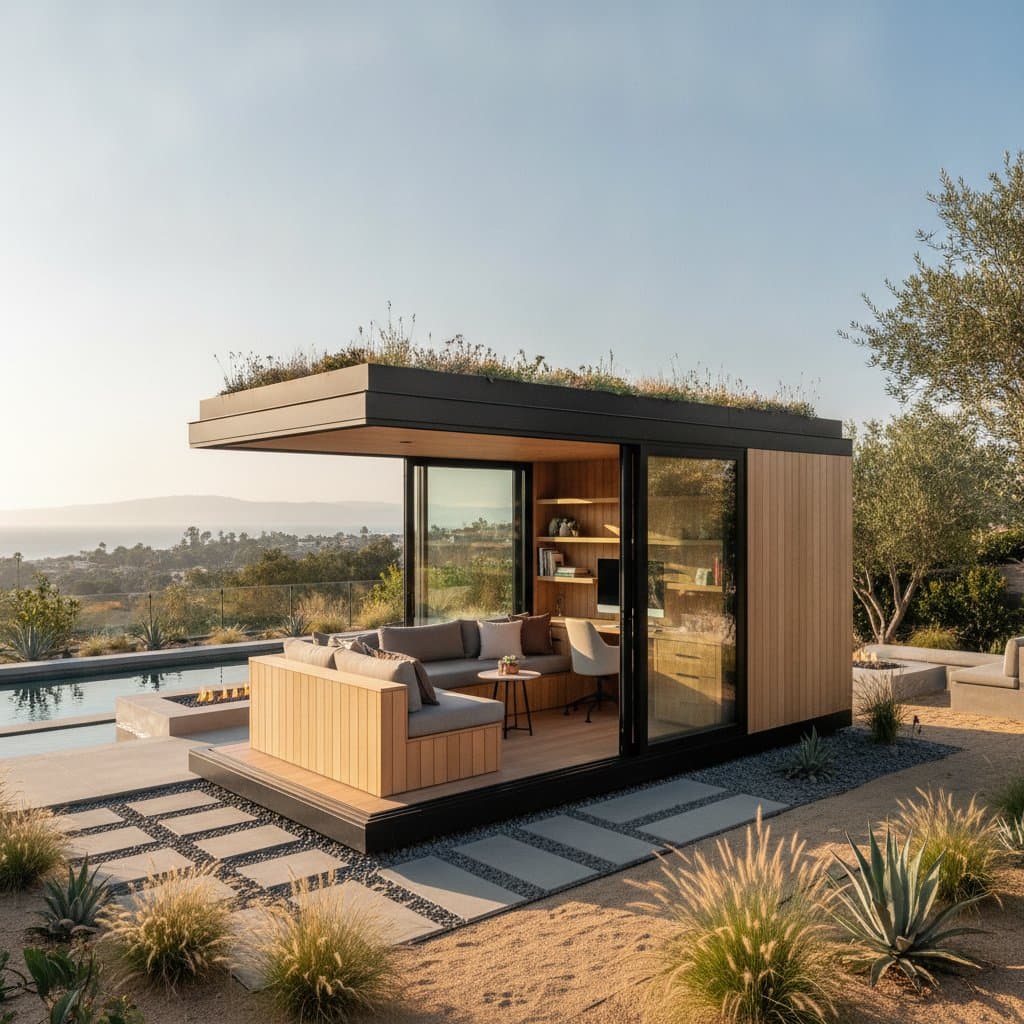
The 2026 Trend: Modular Outdoor Rooms for Any Backyard
Modular outdoor rooms offer a practical way to expand living space without traditional construction delays. These prefabricated structures deliver style and function for uses ranging from garden offices to open lounges. Homeowners gain flexibility that permanent builds cannot match.
There is no place like home, especially when the home extends into a smart outdoor haven.
What Are Modular Outdoor Rooms?
A modular outdoor room is a prefabricated structure built off site and delivered ready for assembly or full installation. It functions as a compact living area, yoga space, or workspace while combining visual appeal with practical use. The design emphasizes adaptability for changing needs.
These rooms avoid extensive demolition or prolonged building phases. They rest on basic foundations that reduce site disruption and material waste.
Key Benefits at a Glance
- Installation completes in days or weeks rather than months.
- Overall costs remain lower than conventional additions.
- Units can be relocated or reconfigured as requirements change.
- Permit processes involve fewer steps than full scale projects.
- Materials and construction methods support stronger environmental performance.
Cost Breakdown: What to Expect
Prices vary by size, materials, and added features. Small office pods between 80 and 120 square feet typically range from 10000 to 25000 dollars. Mid size studios of 150 to 250 square feet fall between 25000 and 50000 dollars. Larger multi use spaces exceeding 300 square feet start at 50000 dollars and reach up to 90000 dollars.
Several elements affect final pricing. Material choices such as wood siding or composite panels influence both cost and upkeep. Utility additions for power, plumbing, or climate control increase totals. Custom elements like built in storage or integrated technology add premiums. Foundation options range from lower cost pier systems to more involved concrete pads.
Plan for an extra 15 to 20 percent above the base estimate to cover site preparation or delivery adjustments.
Installation: Step-by-Step Overview
- Select a level area with proper drainage and access.
- Choose a model sized for the intended purpose.
- Confirm local requirements for accessory structures.
- Prepare a pier or slab foundation.
- Receive and position the unit with minimal on site work.
- Connect any required utilities such as electricity or internet.
- Add weather resistant furnishings and surrounding plantings.
Style Meets Function: San Diego Inspiration
San Diego climate supports year round use of modular rooms. Coastal locations benefit from aluminum frames and fiber cement siding that resist salt exposure. Inland sites pair well with wood finishes that provide warmth against the landscape.
Glass walls capture natural light for morning work sessions. Shaded lounge configurations extend indoor seating into garden settings. The result integrates with the local preference for indoor outdoor living.
Frequently Asked Questions
How long does installation take?
Most units reach completion within several days after site preparation. Larger or highly customized models may require up to a few weeks.
Do I need a building permit?
Many smaller units fall below permit thresholds, yet verification with the local building department remains necessary.
Can these rooms connect to utilities?
Units support wiring for power and data as well as plumbing connections when specified during design.
Are modular outdoor rooms weatherproof?
Quality models feature insulated panels, sealed windows, and roofing rated for wind, rain, and sun.
Will it add value to my home?
A finished room increases usable square footage and improves overall property appeal.
Maximizing Daily Use
After installation the space serves as an extension of daily routines. Lighting, a small adjoining deck, or nearby seating elements complete the setting. Continued design advances will bring further options for comfort and personalization.