
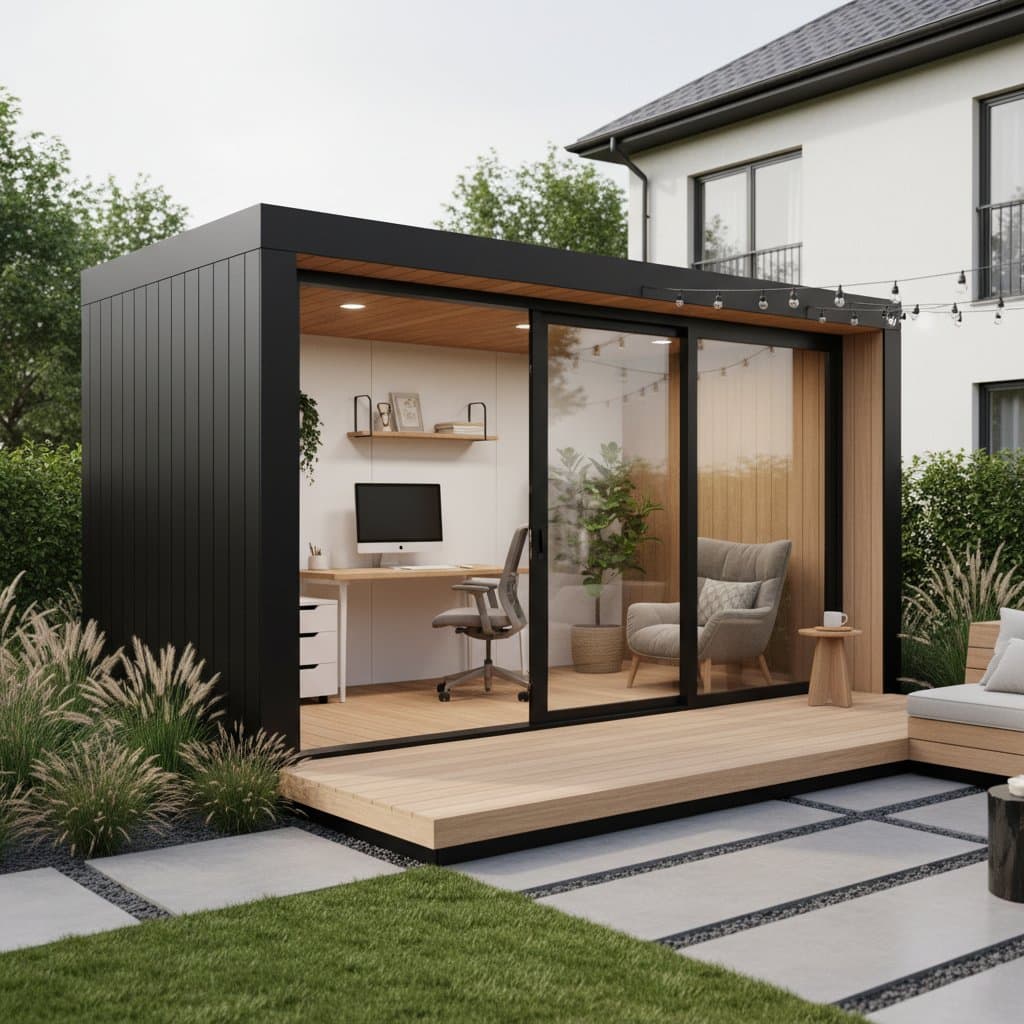
Modular Outdoor Rooms: A $15,000 Alternative to $50,000 Additions
Homeowners seeking additional living space often face high costs and lengthy construction timelines with traditional additions. Modular outdoor rooms offer a practical solution. For approximately $15,000, these prefabricated structures provide functional backyard spaces such as offices, studios, or guest suites, without the need for extensive site work.
This guide covers the essentials of modular outdoor rooms, including their design, installation, and maintenance. Readers will gain insights into planning, budgeting, and customization to integrate these spaces effectively into daily life.
What Are Modular Outdoor Rooms?
Modular outdoor rooms consist of prefabricated units constructed off-site and assembled on location. Known also as backyard pods or prefab studios, these structures function as detached accessory spaces. They differ from conventional additions by requiring minimal foundation modifications or connections to the primary residence.
Benefits Driving Their Popularity
Several factors contribute to the appeal of modular outdoor rooms:
- Cost Savings: Entry-level models begin at $15,000, compared to over $50,000 for standard extensions.
- Rapid Installation: Delivery and setup often complete in days rather than months.
- Adaptable Design: Options range from compact units to expansive configurations tailored to specific uses.
- Low Impact: Off-site fabrication minimizes on-site disturbance to household routines.
- Mobility Potential: Certain designs allow disassembly and relocation upon property changes.
Common Applications
These rooms adapt to diverse needs:
- Dedicated home offices for remote professionals.
- Accommodations for overnight guests.
- Studios for artistic pursuits like painting or music.
- Fitness areas equipped for exercise or meditation.
- Recreation zones for adolescents or family gatherings.
- Serene escapes for personal downtime.
Customization extends to interior elements, including fixtures, glazing, and spatial arrangements, to align with individual preferences.
Planning Your Modular Outdoor Room Investment
Effective planning maximizes the utility of a $15,000 modular room. Begin by clarifying intended function, dimensions, and positioning to align with property constraints and lifestyle demands.
Defining Function and Dimensions
Evaluate the primary role of the space. A compact office might suffice with 100 square feet, whereas a guest area with amenities could demand 150 to 200 square feet. Providers typically supply predefined options:
- Compact Units (80-120 square feet): Suited for solitary workspaces or creative nooks.
- Mid-Size Units (120-180 square feet): Versatile for combined activities.
- Expanded Units (180-250 square feet): Appropriate for fitness or lodging setups.
Note that scaling up often pushes costs beyond $15,000 when incorporating utilities or premium features.
Navigating Zoning and Permits
Verify compliance with municipal codes prior to purchase. Regulations vary; some jurisdictions exempt small detached buildings from full permits, while others impose limits on dimensions, elevations, or service integrations.
Consult the local planning office with these queries:
- What size and height restrictions apply to accessory structures?
- Are approvals necessary for electrical or water systems?
- Do placement rules govern distance from boundaries?
Many suppliers assist with permit applications, streamlining the process.
Selecting Optimal Placement
Site selection influences daily comfort and efficiency. Key considerations include:
- Solar Orientation: Align openings to optimize daylight while mitigating excess heat.
- Seclusion: Maintain separation from adjacent properties, enhanced by foliage barriers.
- Connectivity: Provide unobstructed routes to the main dwelling.
- Service Proximity: Favor locations near existing power or plumbing to reduce hookup expenses.
Evaluating Models and Materials
With specifications established, assess available constructions and components for durability and aesthetics.
Structural Options
- Timber Frameworks: Deliver organic aesthetics and solid thermal performance.
- Metal Frameworks: Ensure contemporary style and resilience against elements.
- Insulated Panel Systems: Achieve superior thermal retention.
- Synthetic Composites: Withstand humidity with reduced upkeep.
Selections balance expense, endurance, and appearance; timber provides warmth, while metals and synthetics emphasize modernity and ease.
Finish Specifications
At the $15,000 level, standard packages encompass:
- Coated or treated exterior cladding.
- Resilient synthetic or layered flooring.
- Conventional entryways and glazing.
- Fundamental wiring and illumination.
Enhancements such as durable wood exteriors, natural flooring, or bespoke fixtures increase both investment and elegance.
Adapting to Regional Conditions
Select components suited to environmental factors. Maritime regions require rust-proof alloys and sealed barriers. Arid interiors call for fade-resistant treatments and variable-climate insulation.
Breaking Down the $15,000 Budget
Understanding inclusions and add-ons clarifies the value of a $15,000 allocation.
Standard Components
Core packages generally feature:
- Assembled building shell.
- Transport to nearby sites.
- Elementary base, like blocks or runners.
- Routine cladding, power points, and roofing.
- Basic thermal barriers.
Such configurations support professional or leisure applications effectively.
Additional Expenses
Further outlays may arise for:
- Groundwork: Leveling, substrates, or slabs.
- Authorizations: Fees fluctuating by locale.
- Power Links: Extending lines from the residence.
- Water Systems: Essential for sanitary facilities.
- Enhancements: Tailored surfaces or fittings.
- Site Integration: Access routes or enclosures.
Prices fluctuate with geography, selections, and complexity; obtain comprehensive estimates upfront.
The Installation Sequence
These units prioritize efficiency, yet site readiness ensures seamless execution.
Site Readiness
Remove obstacles, flora, or irregularities. Depending on the base, incorporate aggregates, tiles, or reinforcements. Promote runoff to avoid subsurface dampness.
Transport and Positioning
Suppliers arrive with modular segments or complete assemblies. Equipment like lifts facilitates precise placement. Confirm pathway clearance for equipment.
Anchoring and Integration
Securors fasten the unit and link services. Power connections prove simple for modest scales. For water elements, engage certified specialists to meet standards.
Completion Review
Examine the setup alongside professionals. Test operations of access points, electrics, and surfaces. Resolve discrepancies prior to settlement.
Enhancing Design and Utility
Integrate the room thoughtfully to extend living areas naturally.
Optimizing Compact Areas
- Incorporate versatile pieces like retractable workstations or convertible seating.
- Fit recessed storage to preserve open floors.
- Apply pale tones and expansive views to expand perceived volume.
Harmonizing with Existing Architecture
Align cladding hues and textures with the home for unity. Greenery bridges visual connections.
Incorporating Modern Amenities
Equip with:
- Compact climate units for regulation.
- Automated illumination and receptacles.
- Signal boosters for reliable networks.
These elements elevate basic structures to comprehensive environments.
Ensuring Durability Through Maintenance
Quality construction promises longevity with consistent attention.
Routine Upkeep
- Clean outer layers yearly to eliminate residues.
- Examine joints, facades, and covers for damage.
- Refresh timber protections periodically against exposure.
Moisture Management
Direct precipitation via extensions away from bases. Trim surroundings and ventilate undersides to deter decay.
Year-Round Adaptation
In variable weather zones, monitor barriers and seals. Supplemental shading or heating maintains usability across seasons.
Common Queries Addressed
How Much Does a Modular Outdoor Room Cost on Average?
Entry models range from $10,000 to $15,000 for basic, empty shells. Equipped variants with services or refinements span $20,000 to $40,000, influenced by components, additions, and region.
Is a Permit Required?
Regulations differ by area. Compact detachments may bypass full reviews, but service ties typically demand oversight. Consult authorities pre-installation.
What Is the Installation Timeline?
Delivery and assembly span days with prepared grounds. Intricate setups, including foundations or pipes, extend to weeks overall.
Can These Rooms Serve as Rentals or Lodging?
Affirmative, for temporary or visitor use. Verify zoning and install safety features like escape routes and alarms beforehand.
Do They Support All-Season Occupancy?
Premium builds feature wall, base, and ceiling insulation. In harsh winters, opt for reinforced layers or dedicated climate controls.
Is Relocation Feasible?
Modest units disassemble or transport via machinery. Substantial ones anchor more permanently; inquire about transportability at selection.
What Upkeep Follows Setup?
Annual cleansing, sealing, and checks sustain condition. Focus on covers, coatings, and drainage to avert problems.
Maximizing Value in Your Backyard Expansion
A modular outdoor room transforms underutilized yards into vital assets. By selecting appropriate designs and maintaining diligently, homeowners realize enduring benefits in functionality and property enhancement. Begin planning today to unlock these advantages tailored to your needs.