
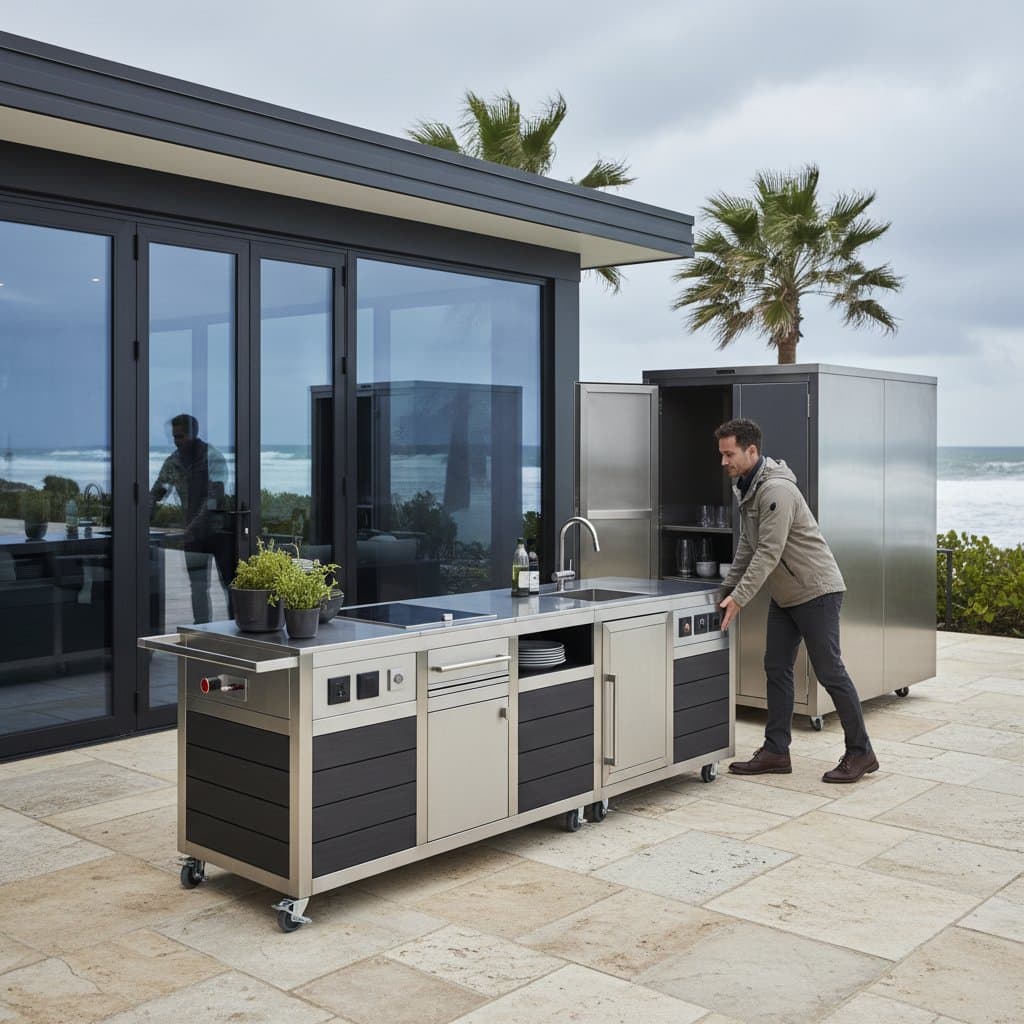
Introduction to Modular Outdoor Kitchens and Storm Readiness
Coastal living brings joy through outdoor gatherings, yet it also demands vigilance against unpredictable weather. Storms can damage fixed outdoor structures, leading to costly repairs and disruptions. Modular outdoor kitchens address this challenge by offering designs that prioritize mobility and resilience, allowing homeowners to protect their investments with minimal effort.
These setups combine functionality with flexibility, enabling quick disassembly and relocation before severe weather arrives. Homeowners in storm-prone areas, such as those along the California coast, benefit from this approach. It ensures safety while maintaining the appeal of al fresco entertaining.
Understanding Modular Outdoor Kitchen Designs
Modular outdoor kitchens consist of prefabricated components that assemble like building blocks. Each module, such as a grill station or sink unit, connects via simple mechanisms without permanent fixtures. This construction differs from traditional built-in kitchens, which integrate into patios or decks.
Manufacturers engineer these units for portability, often using lightweight frames and wheeled bases. Durability comes from corrosion-resistant materials that withstand salt air and heavy rain. Such designs suit variable climates, providing versatility for seasonal use.
Key Benefits for Storm Preparation
The primary advantage lies in relocation ease. Before a storm warning, users disconnect modules and move them to sheltered areas like garages or covered patios. This process typically takes under an hour for a standard setup, preventing wind damage or flooding.
Weather resistance forms another core benefit. Modules feature sealed joints and UV-protected surfaces that resist fading and rust. Even after exposure, they require little maintenance to return to pristine condition.
These kitchens enhance safety by reducing fixed hazards in yards during high winds. Insurance providers often view them favorably, potentially lowering premiums for weather-related claims. Overall, they preserve both property and peace of mind.
Selecting Durable Materials
Choose stainless steel for countertops and cabinetry, as it repels moisture and cleans easily. Grade 304 stainless steel offers optimal corrosion resistance for coastal environments. Avoid lower grades that pit under salt exposure.
For cabinet doors and panels, opt for marine-grade polymers or powder-coated aluminum. These materials endure humidity without warping. Teak or synthetic wood accents provide aesthetic warmth while resisting rot.
Consider flooring modules with non-slip, drainage-friendly surfaces. Rubberized composites channel water away, minimizing slip risks during wet conditions. Test samples for weight and stability before purchase.
Budgeting and Cost Considerations
Modular kitchens range from $5,000 for basic grill-and-storage units to $25,000 for full setups with refrigeration and lighting. Factor in delivery and assembly costs, which add 10 to 20 percent. Shop during off-seasons for discounts up to 30 percent.
Assess long-term savings through durability. High-quality modules last 15 to 20 years, outpacing cheaper alternatives that need frequent replacement. Calculate return on investment by considering reduced repair needs during storms.
Financing options include manufacturer payment plans or home improvement loans. Prioritize warranties covering weather damage, typically spanning five to ten years. This coverage safeguards against unexpected costs.
Step-by-Step Installation Guide
- Select a level, well-drained site away from low-lying areas prone to flooding.
- Assemble base modules first, securing wheels or anchors for stability.
- Connect utility modules, ensuring gas or electrical lines comply with local codes.
- Test all components for functionality before final placement.
- Document the setup process with photos for easy disassembly reference.
Storage and Maintenance Strategies
When storms approach, follow a relocation checklist. Disconnect utilities, cover openings with protective tarps, and transport modules indoors. Store in dry spaces to prevent mold growth.
Routine maintenance involves annual inspections for loose fittings or wear. Clean surfaces with mild soap and apply protective sealants to metal parts. Lubricate moving components to ensure smooth operation year after year.
For extended storage, disassemble into flat-packed units. Label parts for quick reassembly. This method maximizes space efficiency in limited storage areas.
Enhancing Property Value and Lifestyle
Investing in a modular outdoor kitchen increases home appeal, particularly in real estate markets valuing outdoor amenities. Appraisers note these features can boost value by 5 to 10 percent in coastal regions. They signal thoughtful design and preparedness.
Beyond finances, these kitchens foster year-round enjoyment. Relocate for shade in summer or warmth in cooler months. Host barbecues, cocktail hours, or family meals without weather worries.
Securing Your Outdoor Space for Lasting Enjoyment
Modular outdoor kitchens transform storm vulnerabilities into opportunities for smart living. By embracing mobility and resilience, homeowners protect assets and elevate lifestyles. Implement these strategies to create a backyard oasis that withstands the elements and invites endless gatherings.