
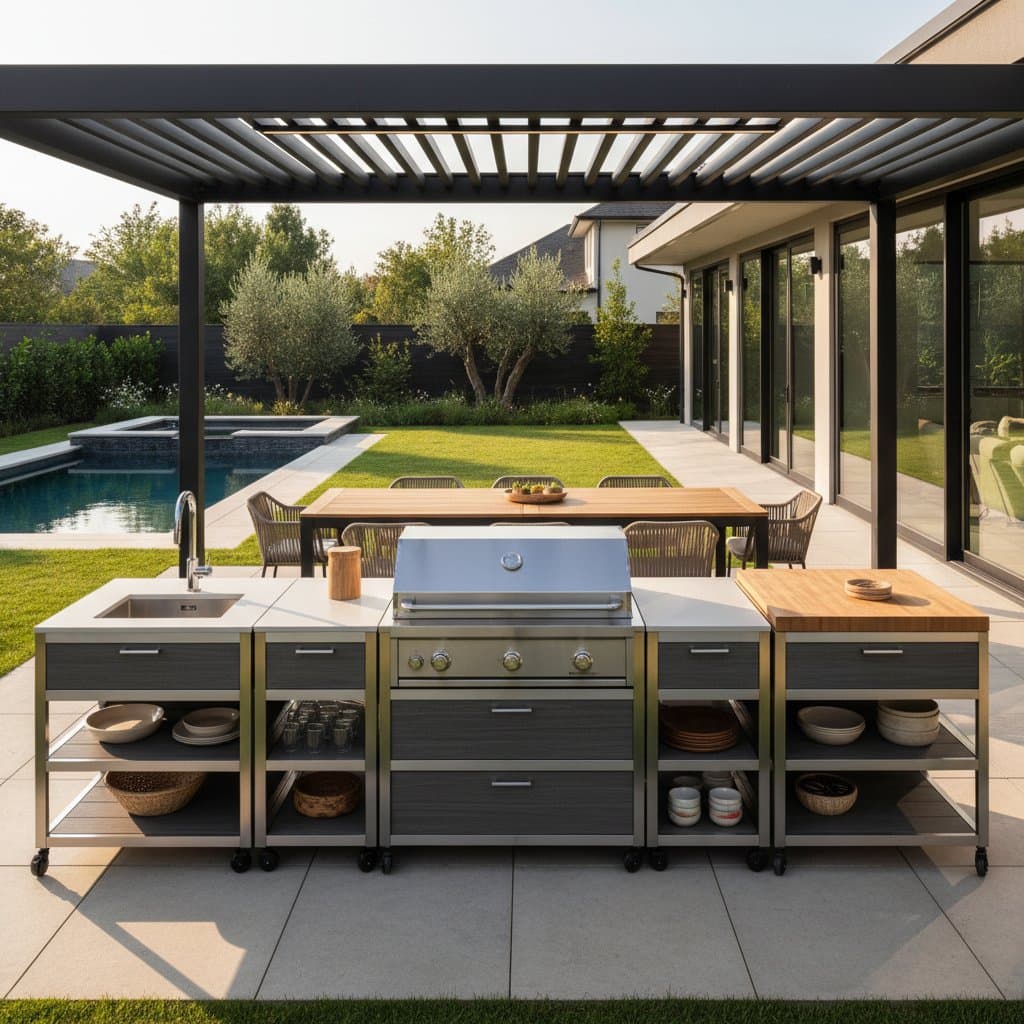
Modular Outdoor Kitchens: Reconfigure Components in Minutes
Outdoor living spaces serve as vital extensions of contemporary homes, and an outdoor kitchen delivers one of the most striking enhancements. Traditional designs often prove inflexible, costly, and challenging to modify over time. Modular outdoor kitchens alter this dynamic entirely. These systems enable reconfiguration, expansion, or removal of elements in mere minutes, providing a versatile area for cooking and gatherings that aligns with evolving needs.
For those who desire a patio kitchen as adaptable as their culinary preferences, modular options provide the solution. This guide details the nature of modular outdoor kitchens, associated expenses, available materials and elements, and strategies for creating a design suited to any residence.
Defining a Modular Outdoor Kitchen
A modular outdoor kitchen consists of prefabricated units that assemble into varied arrangements. Each unit fulfills a distinct role, such as grilling, food preparation, storage, or cooling. Standardized dimensions and connectors permit rearrangement or substitution without major structural work.
Unlike fixed installations relying on masonry or concrete, these kitchens employ lightweight, weather-resistant frameworks and swappable surfaces. Begin with a basic grill station and preparation counter, then incorporate additions like a pizza oven, bar area, or smoker as desired. The full arrangement shifts or relocates with little exertion.
Pricing Overview for Modular Outdoor Kitchens
Modular outdoor kitchens typically cost between $4,000 and $15,000, influenced by module count, material choices, and integrated appliances. Basic configurations with two or three units and a standard grill range from $3,500 to $5,000. Premium versions featuring numerous appliances, stone accents, and built-in illumination may exceed $20,000.
| Project Scale | Cost Range | Average Installed Price |
|---|---|---|
| Small (2-3 modules) | $3,500 - $7,000 | $5,000 |
| Mid-Range (4-6 modules) | $7,000 - $12,000 | $9,000 |
| Large/Custom (7+ modules) | $12,000 - $20,000+ | $15,000 |
These estimates cover initial assembly and basic linkages but exclude utility extensions like gas or power lines. Budget an extra $500 to $2,000 for expert connections if required.
Material Costs and Characteristics
Choices in materials significantly affect visual appeal and endurance. The following outlines prevalent options for frameworks and surfaces in modular outdoor kitchens.
| Material | Cost per Linear Foot | Durability | Maintenance | Aesthetic |
|---|---|---|---|---|
| Powder-Coated Aluminum | $200 - $350 | Excellent | Low | Sleek, modern |
| Stainless Steel | $250 - $450 | High | Moderate | Industrial |
| Concrete Composite Panels | $300 - $500 | Very High | Moderate | Solid, contemporary |
| Marine-Grade Polymer | $150 - $300 | Excellent | Very Low | Relaxed, seaside |
| Natural Stone Veneer | $350 - $600 | High | Moderate | Elegant, traditional |
Powder-coated aluminum or marine-grade polymer strikes an optimal balance for many residents, combining affordability, reduced weight, and resistance to elements. Stone veneers and concrete panels impart a more enduring presence, though their heft limits reconfiguration ease.
Installation Labor Expenses
Assembly labor for modular kitchens generally spans $500 to $2,000, varying by scale and intricacy. Pre-engineered designs shorten the process compared to conventional masonry builds. Anticipate the following for most projects:
- Assembly duration: One to two days for compact setups, three to five days for expansive ones.
- Contractor rates: $60 to $120 hourly for qualified installers.
- Specialized services: Electricians or plumbers charge $80 to $150 per hour for utility integrations.
This streamlined approach minimizes expenses and site disturbance, contributing to the rising appeal of modular systems among those seeking prompt outcomes without prolonged upheaval.
Elements Affecting Overall Expenses
Multiple factors shape the total investment in a modular outdoor kitchen. Grasping these aids precise financial planning and sidesteps unexpected charges.
- Module quantity: Additional units elevate material and labor outlays.
- Appliance varieties: Integrated grills, smokers, and coolers differ substantially in price points.
- Surface selections: Quartz or granite exceeds composites or steel in cost.
- Utility integrations: Extending fuel, water, or wiring lines boosts expenditures notably.
- Surface treatments: Tailored panels, illumination, or tiled accents increase material fees.
- Transport fees: Freight for certain systems adds $300 to $700.
To manage costs effectively, initiate with a foundational arrangement addressing routine requirements. Future expansions remain feasible as resources permit.
Essential Modular Elements
These kitchens assemble from specialized components tailored to particular functions. Standard modules encompass:
- Grill station: Central to most designs, offered in gas, charcoal, or pellet variants.
- Preparation counter: Supplies ample space for slicing or assembling dishes.
- Sink module: Facilitates on-site rinsing, eliminating indoor trips.
- Cooling unit: Maintains beverages and perishables at optimal temperatures.
- Storage compartment: Organizes tools, accessories, and seasonings efficiently.
- Pizza oven: Favored for communal meals or hosted events.
- Serving bar: Suited for interactive zones near pools or lounges.
Units operate independently or link sequentially for unified functionality. Interlocking mechanisms or hidden anchors facilitate rapid, often tool-less exchanges.
Strategies to Minimize Expenses
Achieve savings on a modular outdoor kitchen while preserving quality and adaptability through targeted approaches.
- Initiate modestly: Focus on core elements like the grill and work surface, scaling up subsequently.
- Opt for standard dimensions: Avoid bespoke sizing or treatments that inflate prices.
- Undertake self-assembly: Numerous kits support homeowner setup using basic implements.
- Leverage proximate utilities: Position near current gas or water sources to bypass excavation fees.
- Time purchases for promotions: Off-season discounts frequently apply to outdoor components.
- Invest in balanced appliances: Reserve upgrades for high-end items until finances align.
This incremental method suits those preferring distributed spending over singular large disbursements.
Self-Installation Versus Expert Services
Each method offers distinct advantages, with suitability hinging on expertise and project magnitude.
| Consideration | Self-Installation | Expert Installation |
|---|---|---|
| Expense | Minimal, $0 - $500 | Elevated, $500 - $2,000+ |
| Duration | Extended for novices | Swift and precise |
| Expertise Needed | Intermediate | Managed by specialists |
| Guarantee Scope | Potentially restricted | Encompasses workmanship |
| Utility Handling | Confined to simple plugs | Comprehensive, including fuel and pipes |
Plug-and-play elements with adaptable tubing suit independent efforts. For embedded gas units or fixed lighting, professionals guarantee adherence to safety norms and ordinances.
Pitfalls to Sidestep
Modular designs demand thoughtful preparation to avert issues. Steer clear of these frequent oversights for optimal results.
- Overlooking airflow: Grills require ventilation to mitigate heat buildup.
- Disregarding even terrain: Irregular bases lead to instability or separations.
- Exceeding load capacities: Dense stone tops may strain structural supports.
- Forgetting service points: Map utility routes prior to setup.
- Combining mismatched parts: Adhere to a single brand for seamless integration.
- Insufficient work areas: Allocate generous counter space for preparation tasks.
Precise schematics and measurements forestall delays and supplementary costs.
Emerging Design Directions
Contemporary modular outdoor kitchens blend utility with stylistic flexibility. Trends emphasize harmonious materials alongside user-centric configurations.
- Material fusions: Metal bases paired with stone or timber imitations yield striking contrasts.
- Embedded illumination: Counter-level LEDs or cabinet fixtures support evening activities.
- Connected devices: Networked grills and sensors streamline meal preparation.
- Hue options: Coated frames span from deep matte tones to bright seaside shades.
- Eco-friendly selections: Reclaimed composites and efficient units lessen ecological footprints.
- Adaptable frameworks: Mobile foundations or removable sections enable yearly adjustments.
Such innovations position modular kitchens as focal points for al fresco hospitality.
Common Inquiries on Modular Outdoor Kitchens
Permit Requirements?
Portable modular setups seldom necessitate construction permits. Permanent utility additions like gas, water, or wiring may trigger specific approvals. Consult municipal guidelines prior to proceeding.
Assembly Timeline?
Compact arrangements often complete in one day. Expansive or customized versions, including utility work, span three to five days.
Most Resilient Materials?
Powder-coated aluminum and marine-grade polymer withstand corrosion and discoloration, excelling in moist or saline environments. Stainless steel endures well with routine upkeep to avert oxidation.
Relocation Feasibility?
Disassembly, transport, and reassembly in fresh configurations prove straightforward, safeguarding value during moves.
Value-Adding Features?
Incorporating a grill, cooler, and preparation zone establishes a robust cooking hub, boosting usability and resale appeal.
Upkeep Routine?
Clean surfaces biweekly using gentle detergent solutions. Shun harsh abrasives on coated or metallic areas. Inspect and oil moving parts seasonally; apply covers during idle periods.
Post-Installation Adjustments?
Detach and reorganize modules freely to integrate new items or alter positions without structural alterations.
Maximizing Your Outdoor Culinary Haven
A modular outdoor kitchen empowers precise customization for cooking and socializing. Commence with a streamlined duo of modules and progress to comprehensive facilities matching shifting demands. The capacity to exchange elements swiftly elevates outdoor areas from static assets to dynamic realms.
Prioritize robust materials, intelligent layouts, and expandable strategies to craft a space resilient across seasons. From intimate meals to expansive gatherings, this setup synchronizes with daily rhythms, delivering enduring utility and motivation.