
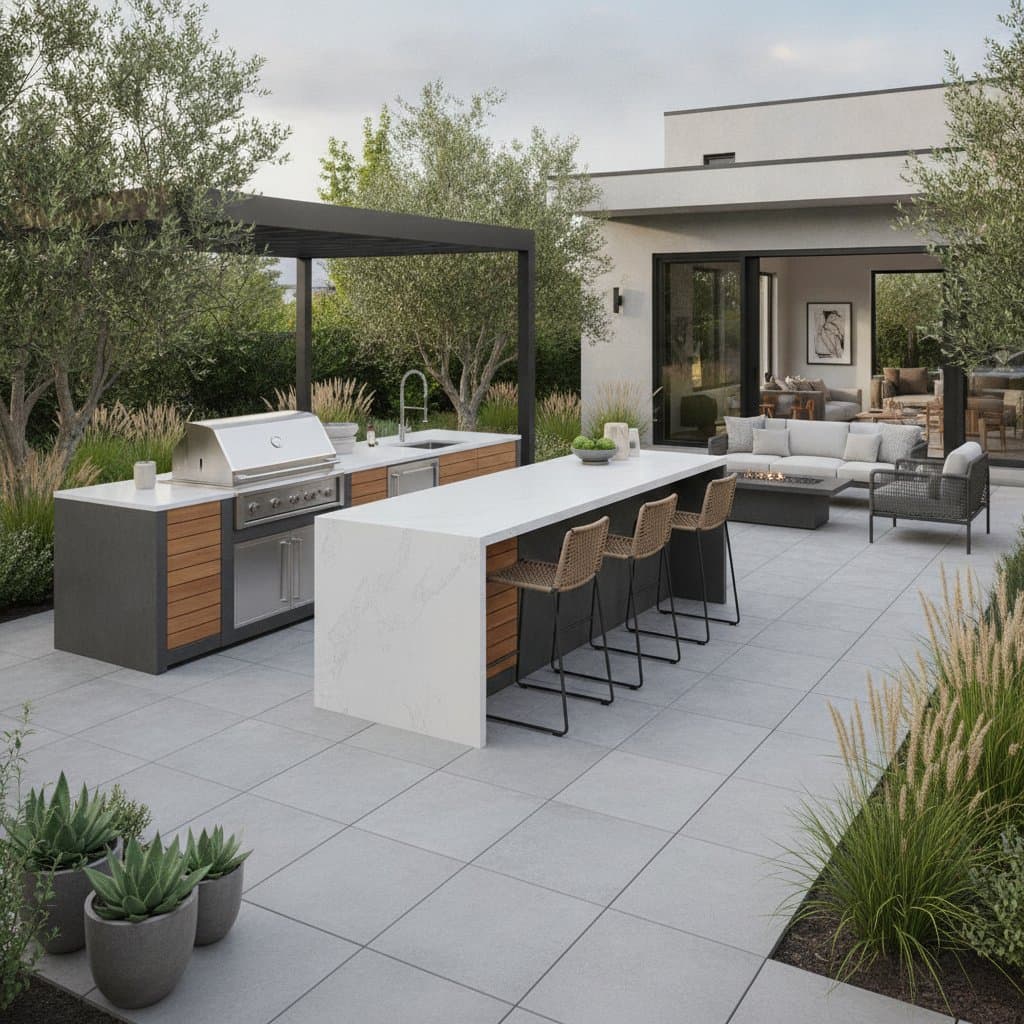
Mix-and-Match Modular Outdoor Islands for 2026 Homes
Creating a flexible outdoor cooking space ranks among the top remodeling trends for homeowners who enjoy entertaining outside. Modular outdoor islands allow precise customization of an outdoor kitchen to match available space, lifestyle needs, and budget constraints. Average costs for a modular outdoor island setup range from $4,000 to $15,000 based on materials, appliances, and overall layout size. In coastal markets such as San Diego, prices often trend higher because of requirements for premium, weather-resistant materials.
Modular outdoor kitchens rely on interchangeable island units arranged in varied configurations. This approach lets homeowners begin with a basic grill station and add bar components, prep counters, or storage modules over time. The systems deliver both practical function and design adaptability for compact patios as well as expansive backyards.
Average Costs of Modular Outdoor Islands
Costs depend on materials, brand, size, and included features. The following table shows typical price ranges.
| Component | Low-End Range | Mid-Range Average | High-End Range |
|---|---|---|---|
| Grill module | $1,200 | $2,800 | $5,000+ |
| Prep station | $900 | $2,000 | $3,800 |
| Bar island | $1,500 | $3,500 | $6,000 |
| Storage unit | $600 | $1,200 | $2,500 |
| Pizza oven module | $1,800 | $3,200 | $5,500 |
| Complete modular setup | $4,000 | $9,000 | $15,000+ |
A mid-size modular outdoor kitchen with three to four connected units averages $9,000.
Design Ideas for Mix-and-Match Outdoor Islands
Linear Layout
A linear setup suits narrow patios or wall-adjacent placements. Modules align in a straight line to simplify utility connections and optimize limited floor space.
L-Shaped Island
An L-shaped configuration creates distinct zones for cooking and serving. Guests can gather along one side while the cook maintains comfortable workspace on the opposite side.
U-Shaped or Wraparound Kitchen
U-shaped designs produce multiple work zones that mimic professional kitchen layouts. Large patios benefit from dedicated areas for prep, cooking, and serving.
Mobile or Rolling Modules
Wheeled modules allow repositioning for different events. A bar island can move closer to a pool area when needed and return to its original spot afterward.
Budget-Friendly Options and DIY Approaches
Modular systems support phased upgrades. Homeowners can start with a grill island and prep counter, then add modules later. Mixing stainless steel units with concrete or brick countertops reduces material expenses. Many kits include adjustable legs and leveling features that permit assembly without professional assistance. Existing sturdy tables or cabinets can receive weatherproof finishes and serve as functional modules.
Return on Investment and Property Value
An outdoor kitchen typically returns 60 to 80 percent of its cost, with higher figures in warm climates where outdoor spaces see frequent use. Modular designs protect this value by permitting future reconfiguration.
| Upgrade Type | Estimated ROI | Notes |
|---|---|---|
| Basic grill island | 60% | Adds convenience for casual cooking |
| Mid-level modular setup | 70% | Increases entertainment value |
| High-end multi-module kitchen | 80% | Strong selling point for luxury homes |
Lighting, refrigeration, and seating additions further improve daily usability.
Tips for a Successful Installation
- Coordinate utility placements with electricians and plumbers before finalizing module positions.
- Verify local permit requirements for gas or electrical connections.
- Select corrosion-resistant finishes and sealed countertops suited to outdoor exposure.
- Incorporate dedicated storage to protect tools and accessories.
- Test layouts with cardboard templates before permanent installation.
- Reserve 10 to 15 percent of the budget for fittings and finishing details.
Maintenance and Longevity
Weekly cleaning of stainless steel surfaces with mild soap and water prevents corrosion. Stone or concrete countertops require sealing twice annually. Grill grates should be cleaned after every use. Protective covers shield modules during heavy rain, and gas lines should be disconnected during extended storage periods. Annual inspections of fittings and seals maintain structural integrity.
Modular construction permits targeted upgrades. A grill module can be exchanged for a smoker or new cabinetry can be added without full reconstruction.
Frequently Asked Questions
| Question | Answer |
|---|---|
| Can modular outdoor islands be used on a wooden deck? | Yes, provided the deck meets structural and leveling requirements. |
| Do I need a permit for an outdoor kitchen? | Permits are commonly required for gas, electrical, or plumbing work. |
| How do modular systems connect? | Locking brackets or side channels align and secure adjacent modules. |
| Are modular kitchens weatherproof? | Quality models withstand outdoor conditions, yet covers extend service life. |
| Can I move or rearrange the islands later? | Modules disconnect and reposition without difficulty. |
| What is the best countertop for outdoor use? | Granite, concrete, and porcelain slabs resist temperature fluctuations effectively. |
Integrating Modules Into Daily Outdoor Life
After assembly, experiment with layouts that support weekend barbecues, family meals, or evening gatherings. Outdoor rugs, herb planters, and nearby fire pits create a unified living area. The system accommodates changing preferences because new modules integrate without major reconstruction. Thoughtful material choices and planning produce a durable centerpiece for outdoor entertaining.