
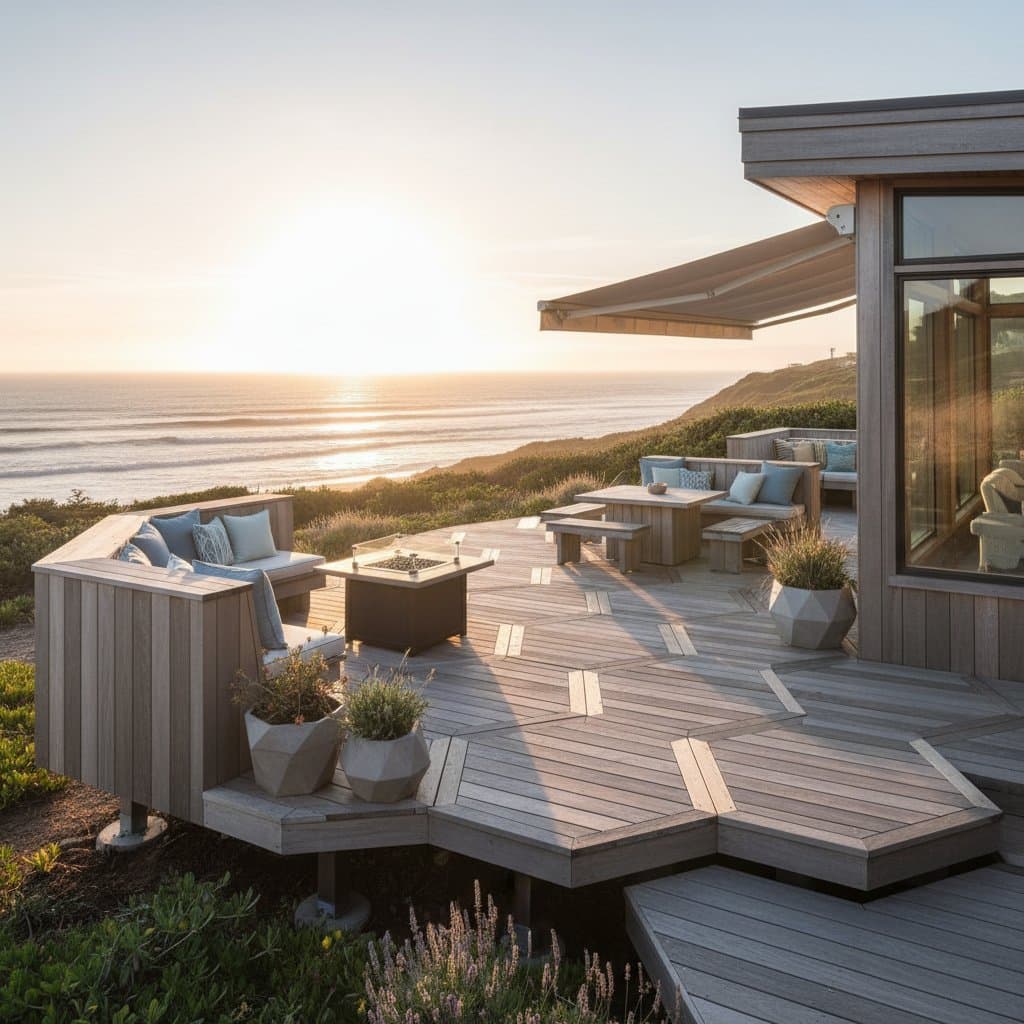
Modular Decks: Expand Coastal Living Effortlessly
Coastal homeowners cherish the opportunity to step outside and inhale the fresh sea breeze from a private outdoor haven. Outdoor spaces represent more than convenience; they embody a way of life. Modular decks emerge as an effective choice for extending this lifestyle through adaptability, elegance, and simplicity. Homeowners can realize visions of sunlit relaxation areas or open-air dining spots with ocean vistas without undertaking extensive building efforts.
Highlights
- Modular decks provide straightforward assembly and scalable growth.
- They suit coastal properties by managing humidity and uneven landscapes effectively.
- Customizable arrangements enable ongoing modifications to outdoor areas.
- Durable materials ensure effortless care and enduring appeal.
- These systems appeal to individuals interested in hands-on projects or those preferring swift expert setup.
What Is a Modular Deck?
A modular deck consists of a prefabricated outdoor platform assembled from interconnecting components. Rather than constructing from raw timber and fasteners, users connect prefabricated units that align precisely. These arrangements support expansion, rearrangement, or relocation to accommodate evolving preferences.
Consider modular decks as efficient, robust alternatives to traditional builds, optimized for marine conditions. Begin with a compact relaxation zone, then incorporate additional units for meals, social events, or spa installations.
Photo: A modular deck facing the Pacific Ocean, constructed with composite surfaces and modern railings.
Why Modular Decks Suit Coastal Homes
Proximity to the sea delivers numerous advantages, yet it poses difficulties for conventional deck builds. Exposure to dampness, saline atmosphere, and soil movement accelerates deterioration in wood and metal. Modular systems address these issues inherently through specialized engineering.
Key Benefits
- Weather resistance: Select systems incorporate marine-grade aluminum, composite blends, or recycled polymers that defy rust, decay, and discoloration.
- Adaptability: Modify or enlarge the deck to reflect lifestyle shifts.
- Efficiency: Assembly completes in less time than bespoke constructions.
- Mobility: Certain designs permit disassembly and repositioning upon relocation.
Tip: Opt for composite or aluminum options instead of raw wood for properties near shorelines. Such choices endure longer and reduce ongoing efforts.
Design Options and Configurations
Modular decks vary in dimensions, forms, and surface treatments. They replicate wood aesthetics while delivering contemporary strength. Homeowners frequently personalize coastal installations in creative ways.
Popular Configurations
- Lounge platforms: Suitable for reclining in sunlight or sharing sunsets with companions.
- Dining decks: Accommodate tables and cooking stations for ocean-side meals.
- Multi-level systems: Introduce elevation and aesthetic layers on inclined seaside terrain.
- Pathway connections: Integrate modules to connect decks, patios, or swimming zones.
- Hot tub zones: Fortified areas bear the load of therapeutic baths or cooling pools.
Photo: A stepped modular deck incorporating integrated benches and transparent barriers, merging interior and exterior realms.
Material Choices
| Material Type | Pros | Cons |
|---|---|---|
| Composite | Minimal care, robust, non-slip surface | Higher initial investment |
| Aluminum | Light weight, corrosion-free, humidity-tolerant | Fewer shade varieties |
| Recycled Plastic | Sustainable, climate-proof | Less authentic texture than timber |
| Treated Wood | Economical, traditional appearance | Needs regular treatments and checks |
Tip: Combine elements for harmonious results. Pair composite flooring with aluminum barriers to achieve a crisp, modern seaside style.
Installation: Simpler Than Expected
Modular decks excel in user-friendly setup processes. Many property owners manage modest designs independently, whereas complex or elevated projects gain from specialist involvement.
Typical Installation Steps
- Plan the layout: Assess the site dimensions and calculate required units.
- Prepare the foundation: Establish a flat base with aggregates, cement blocks, or height-adjustable supports.
- Assemble the units: Connect segments via clips or bolts per guidelines.
- Incorporate accessories: Fasten barriers, access steps, and ornamental edges.
- Verify integrity: Confirm steadiness and precision prior to adding elements.
Tip: Review municipal regulations prior to starting. Permits may apply based on elevation or location, even for modular builds.
Maintenance and Longevity
Seaside settings challenge exterior features, yet modular decks endure through purposeful design. Basic upkeep preserves their condition over extended periods.
Simple Maintenance Routine
- Flush surfaces each month to clear salt deposits and grit.
- Examine joints and hardware yearly for wear.
- Reapply sealants as advised by producers.
- Clear accumulations from gaps to avoid fungal growth.
Modular decks often outlast standard wooden versions, particularly those using composite or aluminum components.
Photo: Detailed view of composite surfacing with water droplets, illustrating resilience and straightforward cleansing.
Cost Considerations
Expenses for modular decks depend on scale, composition, and intricacy. The following outlines aid in financial planning.
| Project Type | Estimated Cost Range | Notes |
|---|---|---|
| Small lounge deck | $2,500 - $6,000 | Fits small terraces or apartment settings |
| Medium dining deck | $6,000 - $12,000 | Encompasses barriers and entry steps |
| Large multi-level deck | $12,000 - $25,000+ | Suited to broad waterfront estates |
Figures cover supplies and standard labor. Self-assembly reduces outlays, while luxury additions like embedded illumination raise totals.
Enhancing Outdoor Experiences
With the deck established, it serves as the focal point for exterior activities. Envision starting the day with coastal panoramas over beverages or hosting dusk assemblies beneath ambient glows.
Styling Ideas
- Select resilient furnishings paired with marine-themed fabrics.
- Deploy solar-powered fixtures for evening radiance.
- Position containers with drought-tolerant plants for effortless vegetation.
- Employ adaptable dividers or overhead canopies for shelter and privacy.
Steps to Build Your Coastal Deck
Integrating a modular deck enlarges usable space while elevating property appeal. Identify intended functions first, then select compatible systems within financial limits. Proceed with personal assembly or professional assistance to foster extended outdoor engagement, tranquility, and coastal recollections.