
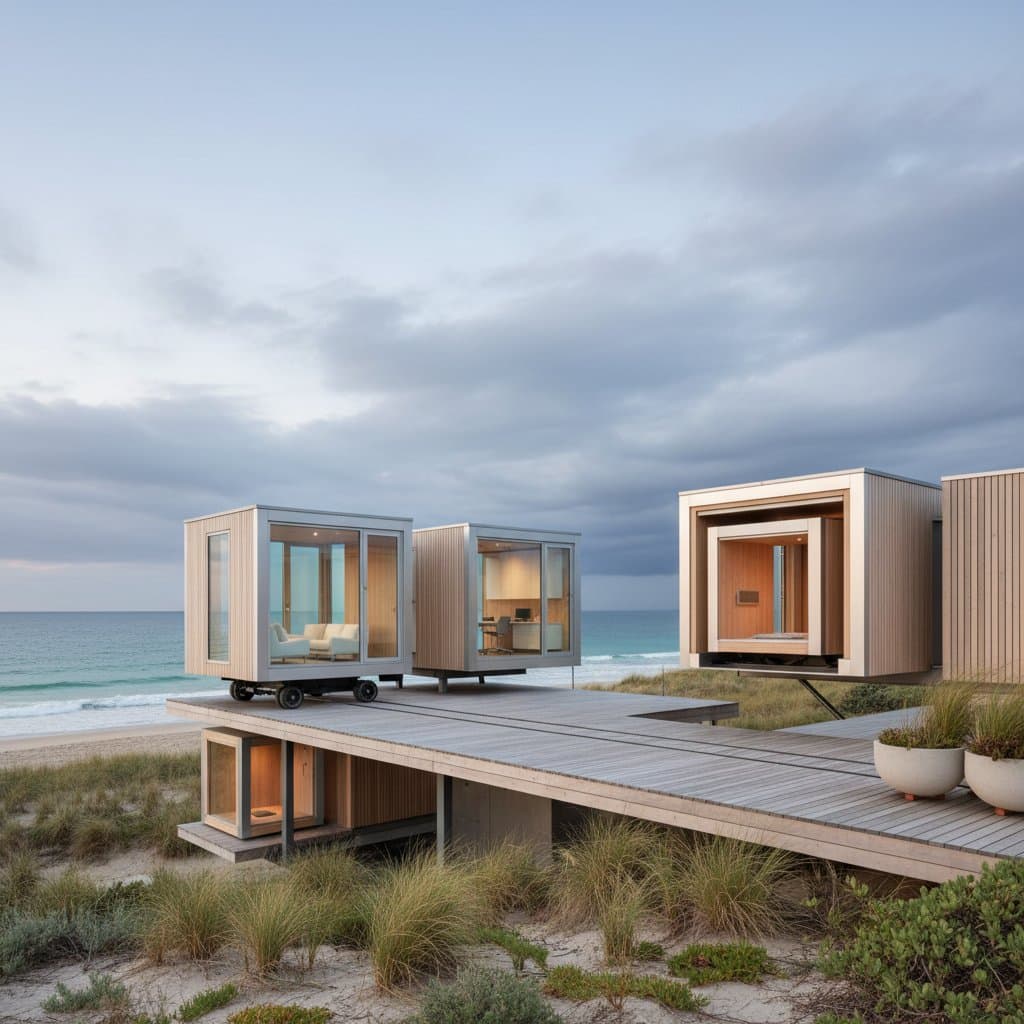
Build Movable Outdoor Rooms for Coastal Storm Preparation
Living along the coast delivers stunning ocean vistas and invigorating sea air, yet it demands vigilance against erratic storms. Movable outdoor rooms, also known as modular or portable enclosures, provide an intelligent solution for embracing adaptable living spaces while maintaining readiness for severe weather. These versatile structures allow relocation, securing in place, or complete disassembly as conditions worsen. For residents in coastal areas, such designs deliver essential comfort alongside reliable protection.
A typical movable outdoor room ranges in price from $5,000 to $25,000, influenced by dimensions, construction materials, and integrated features. It functions effectively as a sunroom, guest quarters, or dedicated studio, then shifts position or enters storage ahead of storm season. This strategy harmonizes the fluidity of seaside life with robust safety protocols.
Cost and Material Breakdown
Grasping the elements that drive expenses enables precise project planning. The table below details common price brackets for movable outdoor rooms, categorized by material choices and structural sophistication.
| Material Type | Description | Average Cost Range |
|---|---|---|
| Aluminum frame with composite panels | Lightweight construction resistant to harsh weather | $5,000 - $10,000 |
| Steel-framed modular pod | Enhanced durability against intense winds | $8,000 - $15,000 |
| Timber with treated finishes | Traditional aesthetic paired with organic charm | $10,000 - $18,000 |
| Premium insulated panels with solar integration | Superior energy efficiency in upscale configurations | $15,000 - $25,000 |
Image placeholder: Steel-framed movable garden office featuring expansive ocean views.
Essential Planning and Budgeting Strategies
Thorough preparation guarantees that the installation meets both practical needs and safety standards.
- Establish clear objectives from the outset, weighing the value of mobility against advanced amenities.
- Allocate an additional 10 to 15 percent in the budget to cover transport, secure anchoring systems, and enhanced weather sealing.
- Select interlocking modular components that facilitate rapid breakdown and reassembly.
- Incorporate marine-grade hardware to combat salt-induced corrosion.
- Engage certified local builders to verify adherence to coastal zoning laws and appropriate wind-load specifications.
Consider site-specific factors, such as elevation above flood levels and proximity to evacuation routes, to optimize placement. Professional assessments often reveal opportunities for integrating smart sensors that alert to impending weather changes, further bolstering resilience.
Frequently Asked Questions
How portable do these outdoor rooms prove in practice?
Most designs accommodate transport via standard trailers or elevation by compact cranes. Engineered modular joints simplify the moving process for teams of two to four individuals.
Do they endure high wind forces?
Superior constructions utilizing steel reinforcements or composite alloys maintain stability during gale-force winds, provided anchoring follows manufacturer guidelines.
What permitting processes apply?
Certain jurisdictions mandate approvals for temporary installations. Review municipal codes and consult planning departments prior to commencing work.
Is it possible to incorporate utilities?
Affirmative; numerous configurations support modular electrical outlets and water lines, enabling swift connections without permanent alterations.
Do they support continuous use throughout the seasons?
Equipped with thermal insulation and sealed enclosures, these rooms sustain comfortable interiors across varying climates, from summer heat to winter chills.
Implementing Your Coastal Retreat
Constructing movable outdoor rooms grants coastal dwellers unparalleled liberty and assurance. Through the adoption of modular architecture, resilient materials, and strategic positioning, individuals secure inviting extensions to their homes that prioritize safety without sacrificing enjoyment. This investment not only safeguards assets but also enriches daily life amid the dynamic coastal environment.