
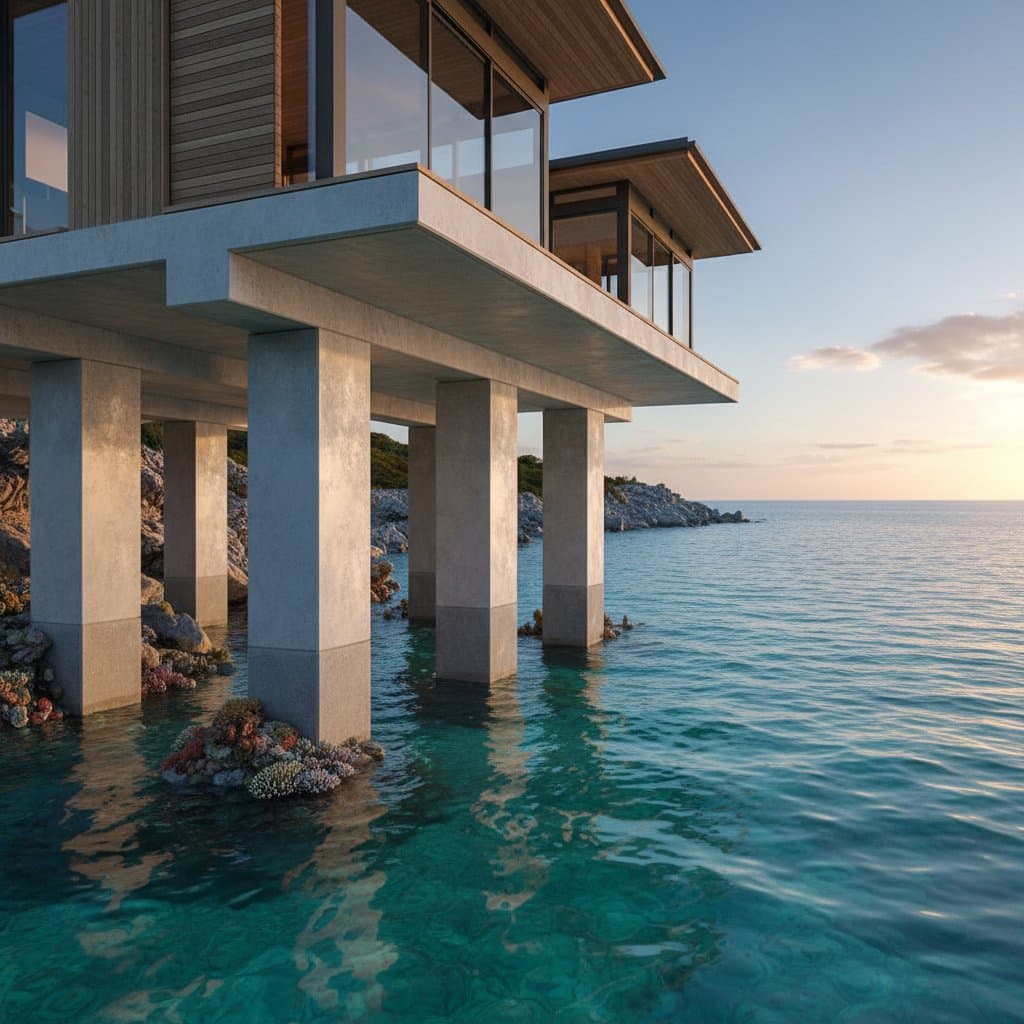
Coral-Resistant Concrete: The Future of Coastal Home Building
Coastal homeowners confront persistent threats from saltwater corrosion, high humidity, and marine growth that undermine traditional building materials. Coral-resistant concrete emerges as an innovative solution tailored for these demanding conditions. This marine-grade material withstands harsh environments while promoting ecological harmony, potentially transforming construction practices along shorelines.
For individuals planning to build or renovate properties near the ocean, grasping the mechanics of coral-resistant concrete, its associated costs, and its significance enables informed choices that enhance property longevity.
Understanding Coral-Resistant Concrete
Coral-resistant concrete represents a specialized marine-grade mixture developed to endure prolonged saltwater exposure, deter coral and algae adhesion, and preserve structural integrity for decades. Engineers achieve this through low-permeability cement combined with supplementary materials such as fly ash or slag, plus integrated sealants that seal off pathways for chloride ions and moisture ingress.
In contrast to ordinary concrete, which deteriorates via spalling and weakening in saline settings, this formulation counters chemical degradation and biological fouling. By inhibiting coral larvae settlement on surfaces, it minimizes upkeep demands and safeguards both built structures and adjacent marine habitats.
Pricing Overview for Coral-Resistant Concrete Projects
Projects incorporating coral-resistant concrete generally incur 10 to 25 percent higher expenses than those using standard concrete. Basic concrete averages 120 to 150 dollars per cubic yard, whereas coral-resistant variants fall between 135 and 190 dollars per cubic yard, influenced by specific additives and regional supply chains.
In a representative 2,000-square-foot oceanfront residence, material costs for conventional concrete range from 25,000 to 35,000 dollars. Opting for coral-resistant concrete elevates this to 28,000 to 42,000 dollars, yet diminished repair needs and maintenance often recoup the premium within several years.
Cost Variations by Project Scale
| Project Type | Estimated Cost Range | Key Considerations |
|---|---|---|
| Small structure (garage, guesthouse) | 15,000 - 25,000 dollars | Limited exposure, reduced material volume |
| Mid-range coastal home | 28,000 - 42,000 dollars | Comprehensive structural application, routine reinforcement |
| Large or luxury build | 45,000 - 65,000 dollars | Expansive foundations, bespoke surface treatments |
Structures nearer to zones of direct ocean spray yield amplified value from these resilient materials, justifying the investment through extended service life.
Composition Details and Comparative Options
This concrete derives its resilience from a precise formulation that curbs corrosion and repels organic accumulation. The following table contrasts principal alternatives for seaside builds.
| Material Type | Cost (per cubic yard) | Durability in Marine Environment | Maintenance Needs | Environmental Impact |
|---|---|---|---|---|
| Standard concrete | 120 - 150 dollars | Moderate | High | Moderate |
| Coral-resistant concrete | 135 - 190 dollars | Excellent | Low | Eco-friendly additives |
| Fiber-reinforced concrete | 140 - 180 dollars | High | Moderate | Neutral |
| Geopolymer concrete | 160 - 210 dollars | Very high | Low | Low carbon footprint |
Coral-resistant concrete distinguishes itself by harmonizing superior strength, environmental compatibility, and endurance beyond many competitors.
Labor Expenses in Coastal Concrete Installation
Labor constitutes 40 to 60 percent of overall project budgets. Deploying coral-resistant concrete necessitates teams proficient in marine-grade handling, precise curing methods, and application of protective barriers. Rates hover at 60 to 90 dollars per hour, exceeding the 50 to 75 dollars per hour typical for routine concrete work.
Budget for supplementary quality checks, including tests for chloride penetration and compressive capacity, which append 500 to 1,000 dollars yet verify enduring performance.
Elements Shaping Overall Project Expenses
Multiple elements dictate the ultimate cost of coral-resistant concrete endeavors:
- Distance from the shoreline and degree of saltwater aerosol contact
- Site accessibility for transporting bulky supplies and machinery
- Foundation configuration and design intricacy
- Availability of regional materials alongside delivery charges
- Regulatory approvals and oversight in shoreline areas
- Surface enhancements such as barriers, sealers, or ornamental layers
These components may alter totals by thousands of dollars, underscoring the importance of thorough preparation and consultations with area specialists.
Strategies to Reduce Expenses on Coral-Resistant Concrete Initiatives
- Refine designs at the outset to streamline forms and curtail labor demands.
- Source materials locally to cut transport costs and ecological footprints.
- Prioritize functional barriers over elaborate aesthetic modifications.
- Coordinate pours meticulously to eliminate surplus material from imprecise scheduling.
- Negotiate volume discounts for substantial orders from providers.
Such approaches can trim expenditures by 5 to 15 percent while upholding essential robustness.
Professional Installation Versus DIY Approaches
Minor fixes or surface repairs suit adept hobbyists, but comprehensive coral-resistant concrete applications require expert intervention. Professionals possess the acumen for:
- Accurate dosing of chemical enhancers
- Supervised hardening amid saline, moist atmospheres
- Finishing techniques that thwart biological adhesion
Engaging certified marine concrete experts guarantees adherence to shoreline regulations, backed by guarantees and verified outcomes. Amateurs tackling major installations hazard flawed blends or inadequate setting, inviting fissures, separation, or premature failure. Professional oversight proves indispensable for sustained dependability.
Pitfalls to Sidestep in Coastal Concrete Work
- Overlooking jurisdiction-specific mandates, which mandate particular substances and review timelines in seaside locales.
- Neglecting supplemental barriers, as even resilient blends gain from exterior shields.
- Rushing the setting phase, where elevated moisture prolongs timelines and impairs outcomes.
- Pairing with unsuitable embeds, like uncoated steel that erodes swiftly unless substituted with composites.
Steering clear of these errors prolongs concrete viability by generations.
Frequently Asked Questions on Coral-Resistant Concrete
Do permits apply to coral-resistant concrete usage?
Yes, shoreline authorities typically demand approvals for foundational concrete tasks, particularly proximate to water edges. Contractors manage submissions and verify alignment with regional standards.
What is the expected lifespan of coral-resistant concrete?
Properly executed installations endure 70 to 100 years with scant intervention. Resistance to salt penetration and organism settlement markedly outpaces conventional mixes.
Is coral-resistant concrete suitable for driveways or patios?
Yes, it excels in open-air settings subject to brine and mist. Select sealers attuned to the blend for any cosmetic applications.
Does coral-resistant concrete adversely affect ocean ecosystems?
No, its design discourages coral bonding sans toxic releases. Certain formulations employ sustainable agents that lessen emissions and nurture surrounding biology.
How does it stack up against other sustainable concrete variants?
Coral-resistant concrete offers balanced corrosion defense and biological deterrence, often surpassing geopolymers in availability while matching their green profile, though it may trail fiber options in flexibility for non-structural uses.
What maintenance does coral-resistant concrete require?
Routine inspections every few years suffice, focusing on sealant integrity and minor cleaning to prevent debris buildup. Avoid abrasive methods that could compromise the surface.
Securing Coastal Properties for Generations
Embracing coral-resistant concrete equips homeowners to fortify against environmental rigors, ensuring residences remain robust and inviting amid shifting tides. This investment not only preserves structural value but also aligns with sustainable practices that honor coastal legacies. Consult local experts to integrate these advancements into your next project, yielding enduring peace of mind.