
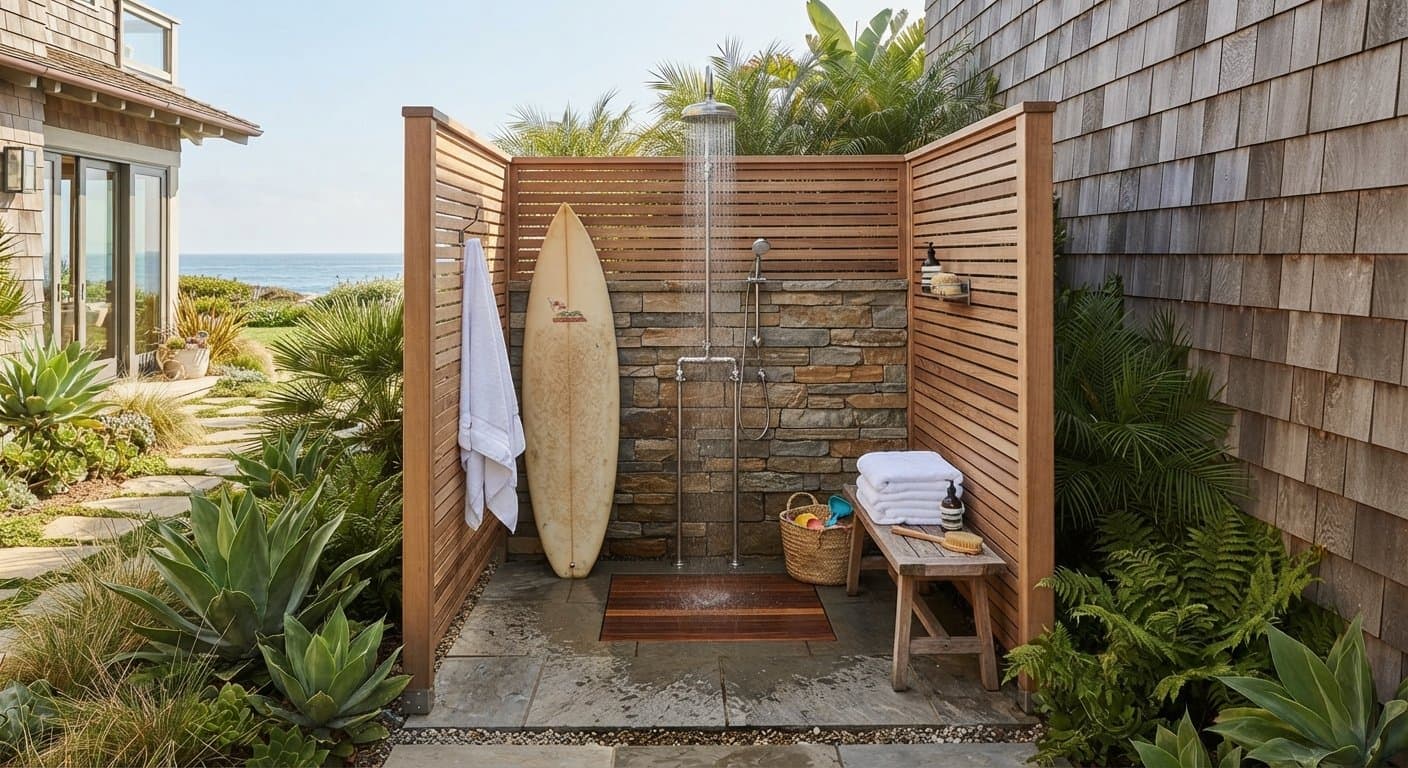
Coastal Homes Now Feature Luxury Outdoor Showers: Design Ideas and Costs
A luxury outdoor shower can rinse off sand, protect indoor floors, and make a coastal home feel more connected to the beach. A basic cold-water rinse station can cost about $500 to $2,000, while a private, fully finished shower with hot water, drainage, and premium materials often costs $5,000 to $15,000 or more. Your final price depends on plumbing access, enclosure design, surface materials, and local code requirements.
For San Diego homeowners, a successful beach-house outdoor shower needs to handle salt air, moisture, privacy, and water use. The most practical designs combine corrosion-resistant fixtures with a sound drainage plan and finishes suited to outdoor exposure.
Outdoor Shower Cost and Scope
A simple fixture beside an exterior hose connection costs far less than a tiled, enclosed shower connected to household hot water. Use these ranges as planning estimates, then request local bids based on your site and design.
| Project scope | Typical installed cost | Common features |
|---|---|---|
| Basic rinse station | $500 to $2,000 | Cold water, simple fixture, limited screening |
| Mid-range shower | $2,000 to $7,000 | Hot and cold water, privacy panels, durable floor |
| Luxury shower | $7,000 to $15,000 or more | Enclosure, premium finishes, custom drainage, lighting |
A shower close to an existing bathroom or laundry line is usually less expensive to plumb. A remote location may require longer pipe runs, excavation, and more work to connect drainage.
Where the Budget Goes
Labor and plumbing commonly account for 30 to 50 percent of the project total. Plumbers may charge $75 to $150 per hour, while carpenters, tile setters, and general contractors have separate rates that depend on the work and local market. A design with custom masonry or detailed tile needs more installation time than a prefabricated screen.
| Component | Planning range | Cost considerations |
|---|---|---|
| Plumbing and fixtures | $500 to $3,000 | Hot water, pipe distance, valve quality |
| Enclosure and privacy screen | $500 to $4,000 | Wood, masonry, metal, or composite |
| Floor and drainage | $500 to $3,500 | Slope, drain type, connection to approved system |
| Lighting and accessories | $150 to $1,500 | Weather-rated lights, hooks, benches |
Ranges overlap because site conditions and finish choices vary. Ask contractors to separate labor, materials, permits, and allowances in each proposal.
Materials for Coastal Outdoor Shower Ideas
Salt air, sun, and frequent dampness can shorten the life of unsuitable materials. Choose products rated for outdoor use, and confirm their maintenance needs before committing.
| Material | Relative cost | Durability and upkeep | Look |
|---|---|---|---|
| Stainless steel fixtures | Medium to high | Strong corrosion resistance; rinse and clean regularly | Clean, modern |
| Teak or other exterior-rated wood | Medium to high | Needs periodic cleaning and care | Warm, natural |
| Composite panels | Medium | Low upkeep; check heat and color performance | Uniform, contemporary |
| Porcelain tile | Medium to high | Durable when correctly installed; grout needs care | Broad range of styles |
| Concrete or stone | Medium to high | Long-lasting with suitable sealing and drainage | Organic, substantial |
For a beach-house outdoor shower, use a slip-resistant floor and avoid untreated metal. Wood screens can soften a modern exterior, while masonry offers a more permanent sense of privacy.
Design Choices That Affect the Price
The biggest cost variables include plumbing distance, hot water access, drainage requirements, privacy needs, permits and code compliance, access and site work, and coastal exposure. Longer pipe runs increase pipe, labor, and excavation costs. Connecting to an existing hot water line is often simpler than adding a dedicated heater. The shower must drain safely without pooling or sending water onto a neighbor property. A simple side screen costs less than a full enclosure with a door. Plumbing, electrical, drainage, and setback rules depend on the property and local jurisdiction. Sloped yards, concrete removal, and narrow work areas can add labor. Higher-grade fixtures and finishes may cost more upfront but can reduce replacement needs.
Before choosing a location, check applicable building and plumbing rules. Do not assume that shower water can drain freely into the yard. Requirements may depend on the system, site, and local regulations.
Ways to Save Without Cutting Corners
- Place the shower near existing plumbing. Shorter runs can reduce labor and material costs.
- Keep the layout simple. A standard fixture and straightforward screen usually cost less than custom masonry.
- Choose durable, practical finishes. A slip-resistant concrete pad may be more economical than extensive tile.
- Compare itemized bids. Confirm that each quote includes drainage, waterproofing, cleanup, and permit costs.
- Spend strategically. Prioritize reliable valves, corrosion-resistant hardware, and a properly built base before adding decorative features.
DIY or Hire a Professional
You can often assemble a simple freestanding screen, install hooks, or apply an approved exterior finish if you have the right tools and experience. These tasks offer savings without changing the home plumbing.
Hire licensed, qualified professionals for water supply lines, hot-water connections, drainage, electrical work, waterproofing, and structural attachments. Poor slope or faulty connections can cause leaks, standing water, and costly repairs. Ask who will obtain permits and arrange inspections before work begins.
Questions to Ask a Contractor
- Have you built outdoor showers in coastal conditions?
- What drainage method will this design use, and does it meet local requirements?
- Which fixtures and fasteners are suitable for salt air?
- Does the proposal include permits, waterproofing, and site restoration?
- What is excluded from the price, and how are unexpected conditions handled?
- Who is responsible for inspections and warranty coverage?
Frequently Asked Questions About Outdoor Showers
Does an outdoor shower need a permit?
It may. Plumbing connections, drainage changes, electrical work, and enclosure construction can trigger permits. Confirm requirements with the local building department before construction.
How long does installation take?
A straightforward installation may take a few days. Custom plumbing, excavation, tile work, or inspections can extend the schedule. Ask for a written sequence of work.
Can an outdoor shower have hot water?
Yes. A plumber can connect it to an existing hot-water line or assess a dedicated system. The best option depends on distance, capacity, and local code.
What adds the most value to an outdoor shower?
Reliable plumbing, safe drainage, durable materials, and a private layout improve daily usefulness. Treat resale value as a possible benefit, not a guaranteed return.
Plan a Shower That Fits Your Home
Set a budget around the plumbing and drainage first, then choose the enclosure and finishes. With a clear scope, corrosion-resistant materials, and professional connections where needed, your outdoor shower can make beach days easier and coastal living more comfortable.