
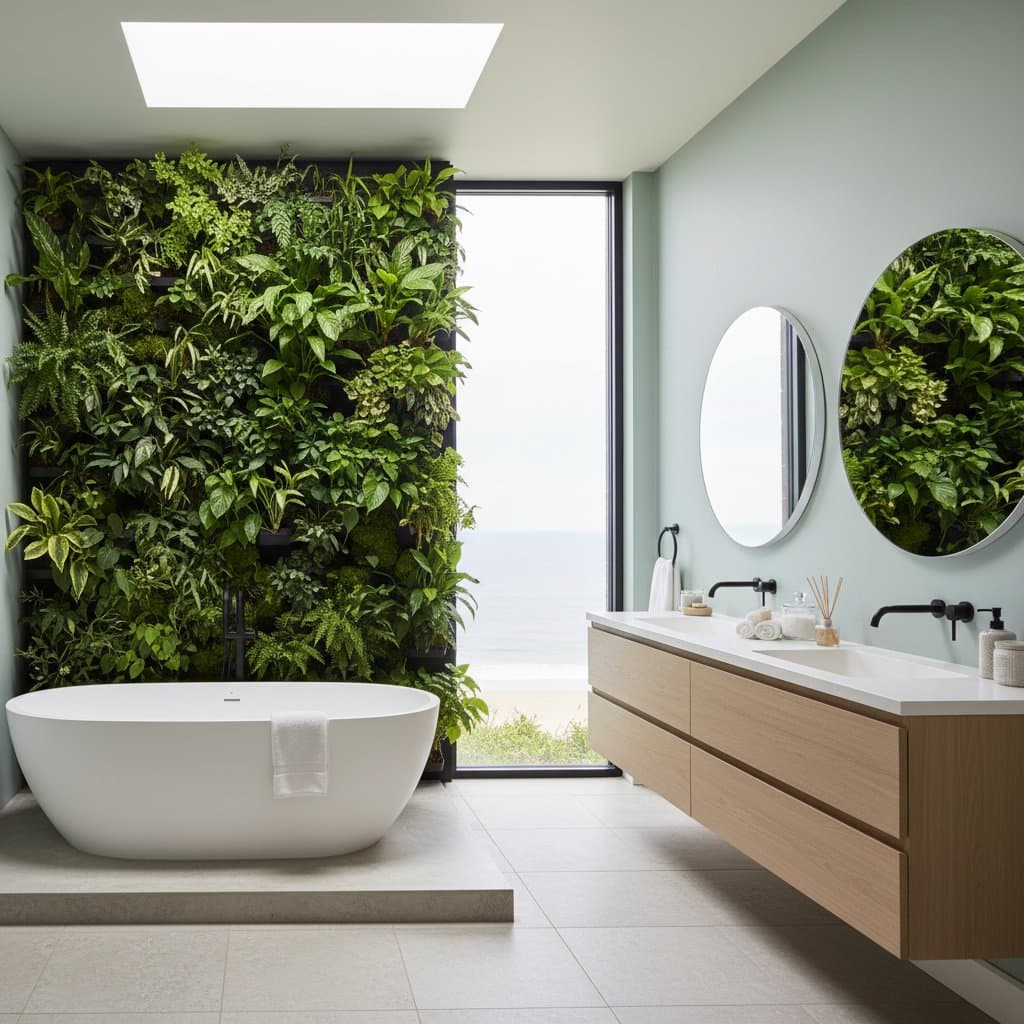
Biophilic Living Walls: Transforming Coastal Spa Baths
Biophilic living walls have emerged as a key element in contemporary spa bathrooms, particularly in coastal residences where tranquility and natural aesthetics align seamlessly. These vertical gardens integrate lush foliage into the bathroom environment, fostering a peaceful sanctuary that promotes well-being, purifies the air, and elevates aesthetic appeal. In coastal settings, such installations bridge indoor spaces with the surrounding seascape, preserving the calming influence of oceanfront lifestyles.
Installation costs for a biophilic living wall in a spa bathroom typically range from $2,000 to $10,000, influenced by dimensions, chosen vegetation, and watering mechanisms. Although the upfront expense appears substantial, enduring advantages encompass regulated humidity levels, diminished anxiety, and enhanced real estate worth.
Average Cost of Biophilic Living Walls in Spa Bathrooms
Expenses for a living wall installation vary based on components, scale, and intricacy. The table below outlines estimates for standard setups in coastal spa bathrooms.
| Type of Living Wall | Size | Average Cost | Maintenance Needs |
|---|---|---|---|
| Small accent wall | 4x6 feet | $2,000 - $3,500 | Low |
| Medium feature wall | 6x8 feet | $4,000 - $6,500 | Moderate |
| Full spa wall | 8x10 feet or larger | $7,000 - $10,000 | Moderate to high |
These figures account for materials, irrigation setups, and professional labor. Annual upkeep expenses generally fall between $200 and $500, contingent on vegetation varieties and hydration methods.
Image: Modern bathroom with a full-height living wall behind a rainfall shower.
Factors That Influence Cost and Performance
Multiple elements determine the expense and durability of a biophilic living wall. Grasping these aspects aids in avoiding expensive errors and sustains the vibrancy of the spa bathroom.
1. Wall Size and Location
Expansive surfaces demand greater quantities of plants and extended irrigation networks. A compact accent behind a vanity incurs lower costs and simpler maintenance routines.
2. Irrigation and Drainage Systems
Automated drip irrigation enhances ease of use yet elevates starting expenses. Manual alternatives prove more economical but necessitate consistent monitoring.
3. Lighting
Ambient illumination from windows or skylights minimizes reliance on artificial sources. In dimly lit bathrooms, embedded LED grow lights sustain plant vitality.
4. Material Choices
Panels may consist of felt, plastic, or metal constructions. Felt options offer affordability and environmental benefits, whereas metal frameworks provide resilience in moisture-rich zones.
5. Professional Installation
Engaging specialists guarantees adequate sealing against water and robust anchoring, vital in moisture-prone bathroom conditions.
DIY and Low-Cost Alternatives
Budget-conscious homeowners may opt for self-assembled projects, achieving comparable outcomes at reduced prices.
DIY Options
- Vertically aligned mounted planters
- Suspended garden pockets featuring moisture-retaining liners
- Adaptable modular kits compatible with tiled walls
A pocket planter-based DIY installation may total $250 to $600, varying with supplies and flora selections. Such arrangements demand frequent hand-watering yet allow creative customization.
Image: DIY hanging planter wall above a soaking tub with natural light.
Return on Investment and Long-Term Value
An thoughtfully executed living wall may generate a 50 to 80 percent return on investment within a comprehensive spa bathroom renovation. Surpassing monetary gains, routine advantages include superior air purification, inherent moisture management, and anxiety alleviation, all fostering enhanced health.
| Benefit | Description | Estimated ROI |
|---|---|---|
| Property value increase | Introduces opulence and distinctiveness to bathrooms | 15 - 25% |
| Reduced stress and improved mood | Supports everyday health enhancements | Non-financial |
| Lower energy use | Provides cooling via plant evaporation | 5 - 10% |
In the long term, the living wall serves as a central element embodying eco-conscious practices and intentional aesthetics.
FAQs About Biophilic Living Walls in Spa Bathrooms
How often should a bathroom living wall be watered?
Automated systems deliver water every few days. Manual configurations require inspections twice weekly.
Are living walls safe for humid environments?
Yes, provided installations include suitable waterproofing and airflow. Numerous plant species flourish amid elevated moisture.
Can a living wall replace regular bathroom ventilation?
No. It augments ventilation through fresher air but cannot substitute exhaust mechanisms.
Do living walls attract insects?
Properly tended units with controlled hydration seldom draw pests. Routine trimming and cleansing avert accumulations.
What lighting is best for bathroom living walls?
Diffuse natural light proves optimal. LED grow lights effectively bolster shaded areas.
How long do living walls last?
Under diligent maintenance, a soundly built system endures 10 years or longer, with occasional flora renewals.
Integrating Nature into Daily Coastal Routines
A biophilic living wall elevates a standard bathroom to a vibrant haven of serenity. The subtle aroma of foliage, the quiet flow of irrigation, and the visual tie to the outdoors craft an everyday refuge echoing coastal resort experiences. Select a bespoke expansive installation or a straightforward DIY approach; either yields a revitalizing space that enriches living spaces and personal health.
Sustainable aesthetics paired with organic elements encourage pauses for deeper breaths and appreciation of nature's equilibrium in routine moments.