
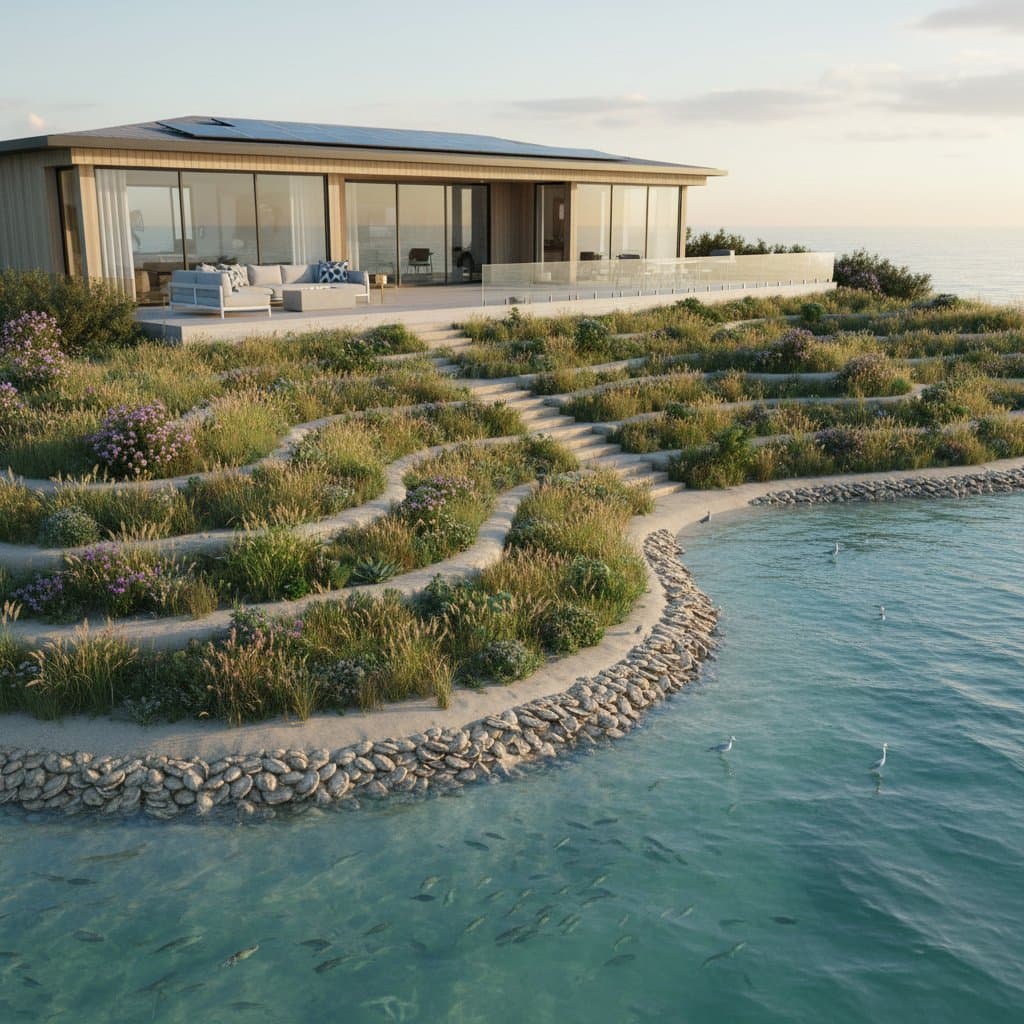
Safeguarding Coastal Homes: The Power of Living Shorelines
Coastal living presents residents with stunning views alongside significant challenges, including erosion, flooding, and storm surges that endanger property and tranquility. Traditional solutions such as seawalls and bulkheads provide temporary relief, yet they harm natural ecosystems and degrade over time due to relentless wave action. Living shorelines emerge as a superior alternative, integrating natural elements to defend shorelines, bolster marine biodiversity, and maintain the scenic allure of waterfront properties.
These systems employ vegetation, sediments, and biogenic structures to create resilient barriers that adapt to environmental changes. Homeowners benefit from enhanced protection without sacrificing ecological integrity. As climate pressures intensify, living shorelines gain prominence for their ability to deliver long-term durability and environmental harmony.
Key Advantages at a Glance
- Living shorelines utilize native plants, sand dunes, and oyster reefs to mitigate erosion effectively.
- They safeguard properties while purifying water and fostering diverse habitats for aquatic species.
- Initial costs align closely with those of rigid structures, with lower expenses over decades due to reduced repairs.
- Maintenance involves routine monitoring rather than intensive interventions required for concrete barriers.
- Ideal for properties seeking sustainable defenses that evolve with natural coastal dynamics.
- Proven effective in regions like the Gulf Coast and Mid-Atlantic, adaptable to various tidal conditions.
The Appeal of Living Shorelines for Coastal Residents
Homeowners along coastlines increasingly adopt living shorelines for their dual role in security and enhancement. Rather than imposing stark concrete barriers, these designs feature verdant marshes, shellfish clusters, and indigenous flora that harmonize with tidal rhythms.
This approach restores balance to altered shorelines, promoting resilience against rising sea levels and intensified weather events. Property values often appreciate due to the added natural aesthetics and ecological value. Local examples demonstrate how such installations transform vulnerable edges into thriving buffers.
Core Benefits
- Erosion Prevention: Roots from salt-tolerant plants, such as cordgrass (Spartina alterniflora) and black needlerush (Juncus roemerianus), anchor soil and resist wave undercutting.
- Storm Surge Mitigation: Dense vegetation dissipates wave energy, reducing flood heights by up to 50 percent in moderate conditions, according to coastal engineering studies.
- Biodiversity Support: Structures like oyster reefs provide nurseries for juvenile fish, crustaceans, and shorebirds, revitalizing depleted ecosystems.
- Pollutant Removal: Oysters and wetland plants absorb excess nutrients and sediments, clarifying water and combating algal blooms.
- Visual and Economic Enhancement: Natural landscapes elevate curb appeal, potentially increasing resale values by 10 to 20 percent in waterfront markets.
For properties adjacent to estuaries or sheltered bays, living shorelines minimize site disruption during installation, often requiring only manual labor and biodegradable materials.
Steps to Construct a Living Shoreline
Building a living shoreline demands careful planning but yields rewarding outcomes with professional guidance. Collaborate with certified coastal specialists to tailor the design to local conditions. The following outline details the essential phases.
-
Site Evaluation: Analyze shoreline composition, water depth, salinity levels, and wave exposure. Engage a marine biologist or engineer to map vulnerabilities and select appropriate native species.
-
System Planning: Select components based on site specifics, such as sills made from oyster shells for wave attenuation or living breakwaters using submerged aquatic vegetation. Incorporate hybrid elements like low-profile rock for high-energy areas.
-
Regulatory Approval: Consult state or federal agencies, such as those overseeing coastal zones, for permits. Many programs offer incentives, including grants for eco-friendly projects that meet restoration criteria.
-
On-Site Implementation: Install foundational elements like coir fiber rolls or gabion baskets filled with shells along the intertidal zone. Plant seedlings of mangroves or rushes in prepared substrates, ensuring spacing allows for growth.
-
Ongoing Oversight: Conduct quarterly inspections to assess sediment accretion and vegetation health. Adjust as necessary, such as adding mulch after erosion events, to support maturation over the initial two to three years.
![A vibrant living shoreline featuring dense marsh grasses, oyster clusters, and a protected residential dock against a serene bay backdrop.]
Budget conservatively by allocating an extra 20 to 25 percent for contingencies, including supplemental plantings or adaptive modifications based on post-installation observations.
Addressing Prevalent Concerns
Living shorelines enjoy widespread adoption, yet misconceptions persist among prospective users. Clarifying these issues encourages more informed decisions.
Concern 1: Insufficient Defensive Capacity
Perceptions of vulnerability arise from their organic appearance, but living shorelines excel in energy absorption. Layered vegetation and reefs can reduce wave heights by 30 to 70 percent, outperforming vertical walls in dynamic environments by flexing rather than fracturing.
Concern 2: Demanding Upkeep Requirements
Initial establishment demands attention, including watering and weed control, but mature systems self-sustain through natural propagation. Annual efforts typically involve two to four hours per 100 linear feet, far less than the frequent repairs needed for aging seawalls.
Concern 3: Limited Applicability to Exposed Coasts
Optimal in low- to moderate-wave settings, these shorelines adapt via reinforcements like timber sills or geotextile tubes for rougher waters. Successful implementations in areas with fetch distances up to one mile illustrate their versatility.
Strategies for Long-Term Preservation
Sustaining a living shoreline ensures its protective and ecological functions endure.
- Examine the installation following major weather events to reposition any shifted components.
- Introduce new plantings in denuded areas, selecting species resilient to local salinity fluctuations.
- Clear accumulated litter and suppress non-native invaders, such as phragmites, to favor indigenous growth.
- Refrain from applying chemical treatments; opt for organic mulches to nurture soil biology.
- Document changes seasonally to track evolution and inform future enhancements.
Advancing Your Coastal Resilience
Embracing a living shoreline positions homeowners to fortify their properties against environmental threats while contributing to broader conservation efforts. Contact regional extension services or shoreline restoration groups to explore feasibility assessments and funding opportunities.
This integrated strategy not only secures homes but also enriches surrounding waters, creating enduring legacies of sustainability along vulnerable coasts.