
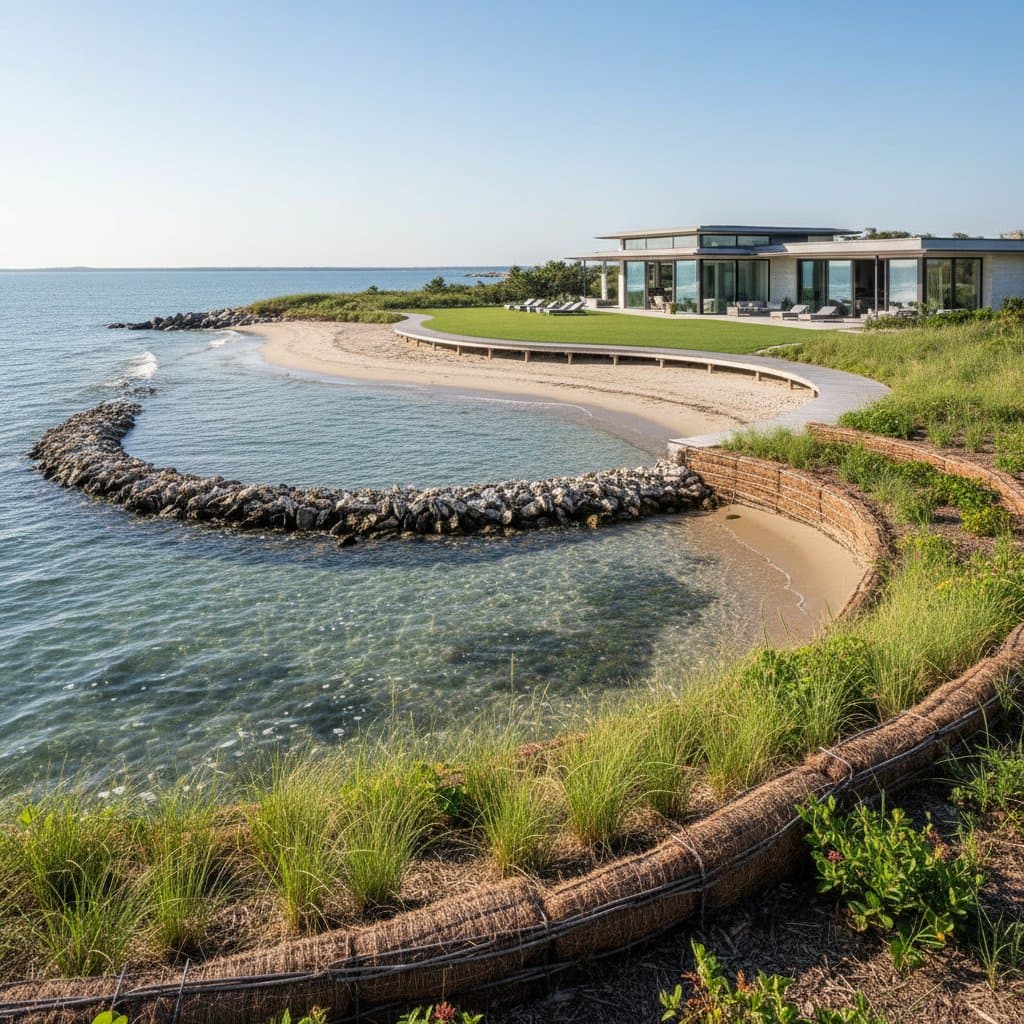
Luxury Beach Homes Swap Seawalls for Living Shorelines
Coastal homeowners who once relied on concrete seawalls now turn to living shorelines as a smarter, more sustainable option for erosion control. In high-value coastal real estate areas, including luxury beach communities, this shift gains momentum quickly. Living shorelines safeguard waterfront property from erosion, maintain natural beauty, and frequently boost long-term property value.
If you own a beachfront home and consider replacing or supplementing your seawall, this guide provides the details needed for an informed decision. Explore the definition of a living shoreline, cost breakdowns, advantages and drawbacks versus traditional barriers, and planning and maintenance strategies for enduring results.
What Is a Living Shoreline?
A living shoreline integrates natural elements like plants, sand, shells, and occasionally oyster reefs to shield land from wave action and erosion. In contrast to a seawall that reflects wave energy, a living shoreline absorbs it. This approach promotes sediment buildup and habitat development instead of erosion.
In upscale coastal settings, these systems receive customization to match architectural styles and property configurations. Options include native marsh grasses, coir logs, biodegradable mats, or engineered oyster reef structures that integrate smoothly with surrounding landscapes while fulfilling protective functions.
Average Cost of a Living Shoreline
The average cost for a residential living shoreline falls between 60 and 200 dollars per linear foot, varying with materials, site conditions, and design intricacy. A standard waterfront lot might demand 150 to 300 feet of stabilization, leading to total project expenses from 9,000 to 60,000 dollars.
By comparison, a concrete seawall typically ranges from 150 to 600 dollars per linear foot, resulting in totals of 22,500 to 180,000 dollars for equivalent lengths. Although a seawall provides instant resistance, it demands greater maintenance and may hasten erosion on adjacent properties.
| Shoreline Type | Average Cost per Linear Foot | Lifespan Estimate | Maintenance Needs | Aesthetic Value |
|---|---|---|---|---|
| Living Shoreline | 60 - 200 dollars | 20+ years (with growth) | Low to Moderate | Natural, integrates with landscape |
| Concrete Seawall | 150 - 600 dollars | 25 - 40 years | High, post-storm | Industrial, acts as barrier |
| Riprap Revetment | 100 - 350 dollars | 30+ years | Moderate | Rugged, semi-natural |
Cost by Project Size and Scope
Small-scale living shorelines for compact beachfront lots generally cost 10,000 to 25,000 dollars. Medium projects for expansive estates range from 25,000 to 50,000 dollars. Comprehensive luxury setups, incorporating oyster reef sections, boardwalk paths, and cohesive landscaping, surpass 75,000 dollars.
These variations stem from shoreline length as well as features like plant variety, water depth, and equipment access during construction.
Labor and Installation Costs
Labor constitutes 40 to 60 percent of overall project expenses. Coastal restoration experts charge 50 to 100 dollars per hour for tasks such as site preparation, planting, mat anchoring, and reef construction.
Permitting and design fees contribute another 5 to 15 percent. Engineers and environmental consultants verify compliance with local coastal rules and ecological standards. Though initial documentation seems thorough, it safeguards investments against fines or mandated alterations.
Cost by Material Type
Various materials fulfill distinct protective roles. Selecting appropriate components affects cost, longevity, and environmental efficacy.
| Material Type | Typical Cost per Linear Foot | Function | Durability |
|---|---|---|---|
| Native Marsh Grass and Sedges | 10 - 25 dollars | Stabilizes soil, filters runoff | Moderate |
| Coir Fiber Logs | 15 - 40 dollars | Retains sediment for plant growth | Biodegradable |
| Oyster Reef Structures | 50 - 120 dollars | Dissipates wave energy, builds habitat | Long-term, self-sustaining |
| Sand Fill and Grading | 5 - 15 dollars | Restores natural contours | Moderate |
| Stone Sills or Revetments | 100 - 250 dollars | Provides reinforcement | High |
Luxury homeowners often choose hybrid setups blending native vegetation, engineered oyster reefs, and subtle stone barriers. Such combinations optimize protection while preserving a seamless, natural look.
Factors That Influence Total Cost
Multiple elements shape the ultimate project price:
- Site slope and elevation: Steeper inclines necessitate extensive grading and reinforcement.
- Wave energy exposure: Intense conditions require robust materials or additional reef elements.
- Equipment accessibility: Restricted sites extend labor duration.
- Permitting demands: Delicate ecosystems call for detailed environmental assessments.
- Aesthetic preferences: Features like pathways, illumination, or diverse planting elevate expenses.
- Maintenance strategy: Regular oversight and replanting impact ongoing costs.
Grasping these aspects aids in assessing contractor proposals and sidestepping surprises.
How to Save Money on Living Shoreline Installation
Living shorelines represent a worthwhile investment, yet targeted approaches can manage expenses effectively:
- Select locally sourced native plants, which prove more affordable, resilient, and low-maintenance.
- Pair professional structural installation with DIY planting after the base setup completes.
- Pursue regional grants or shared-cost initiatives for eco-friendly shoreline efforts.
- Schedule projects in off-peak seasons, when contractors apply reduced rates.
- Adopt a phased design, initiating with essential segments and expanding gradually.
These methods reduce totals by 10 to 25 percent while upholding performance and durability.
DIY vs. Hiring a Professional: A Cost-Benefit Analysis
Gentle slopes and low-energy sites on smaller properties suit DIY efforts, particularly for those with landscaping experience. DIY expenses average 30 to 70 dollars per linear foot, focused on materials.
Professionals remain essential for wave-exposed or permit-heavy sites. They guarantee accurate grading, strategic planting, and regulatory adherence, averting failures or penalties that inflate costs.
| Option | Average Cost per Linear Foot | Best For | Pros | Cons |
|---|---|---|---|---|
| DIY | 30 - 70 dollars | Calm, compact sites | Cost savings, hands-on involvement | Demanding, skill-dependent |
| Professional | 60 - 200 dollars | Exposed, premium properties | Expert execution, reliability | Elevated initial outlay |
For high-stakes luxury properties, where aesthetics and value matter most, professional services deliver superior returns.
Common Mistakes to Avoid
Steering clear of frequent errors ensures optimal shoreline performance:
- Neglecting permits: Unauthorized alterations risk demolition or penalties.
- Favoring ornamental non-native plants: They disrupt native ecosystems.
- Applying improper slopes: Vertical designs succumb quickly to waves.
- Overlooking upkeep: Initial lapses permit erosion prior to root establishment.
- Disregarding tidal variations: Misplaced zones hinder plant viability rates.
Consulting seasoned contractors from the outset mitigates these issues and their financial repercussions.
Environmental and Property Value Benefits
Living shorelines yield ecological and financial gains. For luxury owners, advantages surpass mere erosion prevention:
- Superior water quality through pollutant filtration by plants and reefs.
- Boosted biodiversity, drawing fish, birds, and crustaceans to revitalized zones.
- Elevated curb appeal, as the design harmonizes with the environment.
- Property value uplift of 3 to 10 percent over seawall-equipped homes.
- Favorable regulatory standing for future modifications like docks.
These elements position living shorelines as strategic assets for ecological stewardship and equity growth.
Frequently Asked Questions About Living Shorelines
Do I need a permit for a living shoreline?
Yes, coastal authorities mandate permits for shoreline alterations, including natural designs. These verify minimal impact on habitats and flows. Partnering with regulation-savvy contractors streamlines approvals.
How long does a living shoreline take to establish?
Installation and planting span one to three weeks based on scale. Vegetation and reefs achieve stability over one to two seasons. Mature systems then require minimal intervention.
What maintenance is required?
Tasks encompass weed control, spot replanting, and post-storm inspections of anchors. Oyster reefs sustain themselves post-establishment, though plants benefit from periodic trimming or nutrients.
Can a living shoreline withstand storms?
Well-engineered versions endure storms effectively. Vegetation and reefs dissipate energy, curbing erosion. Hybrids with stone elements manage intense surges without sacrificing ecology.
How do oyster reefs protect the shoreline?
Oyster reefs function as wave attenuators. Expanding oyster populations fortify the structure organically. This barrier tempers waves pre-impact and fosters marine life.
Do living shorelines attract wildlife?
Yes, they host diverse species like fish, crabs, and birds. Homeowners appreciate the enhanced ecology and views, balanced with managed access.
What adds the most value to a living shoreline?
Merging functional habitats with aesthetic touches, such as pathways or lighting, maximizes appeal. This balance elevates usability alongside protection.
Sustaining and Maximizing Your Shoreline
Regular monitoring forms the cornerstone of longevity. Conduct seasonal checks for erosion signs, invasive growth, or structural shifts. Replant as needed to sustain density, and document changes for future adjustments.
Integrate the shoreline into daily enjoyment through accessible paths or viewing spots. This not only reinforces its protective role but also amplifies the lifestyle benefits of coastal living. Over time, observe how the ecosystem evolves, contributing to both personal satisfaction and broader environmental health.