
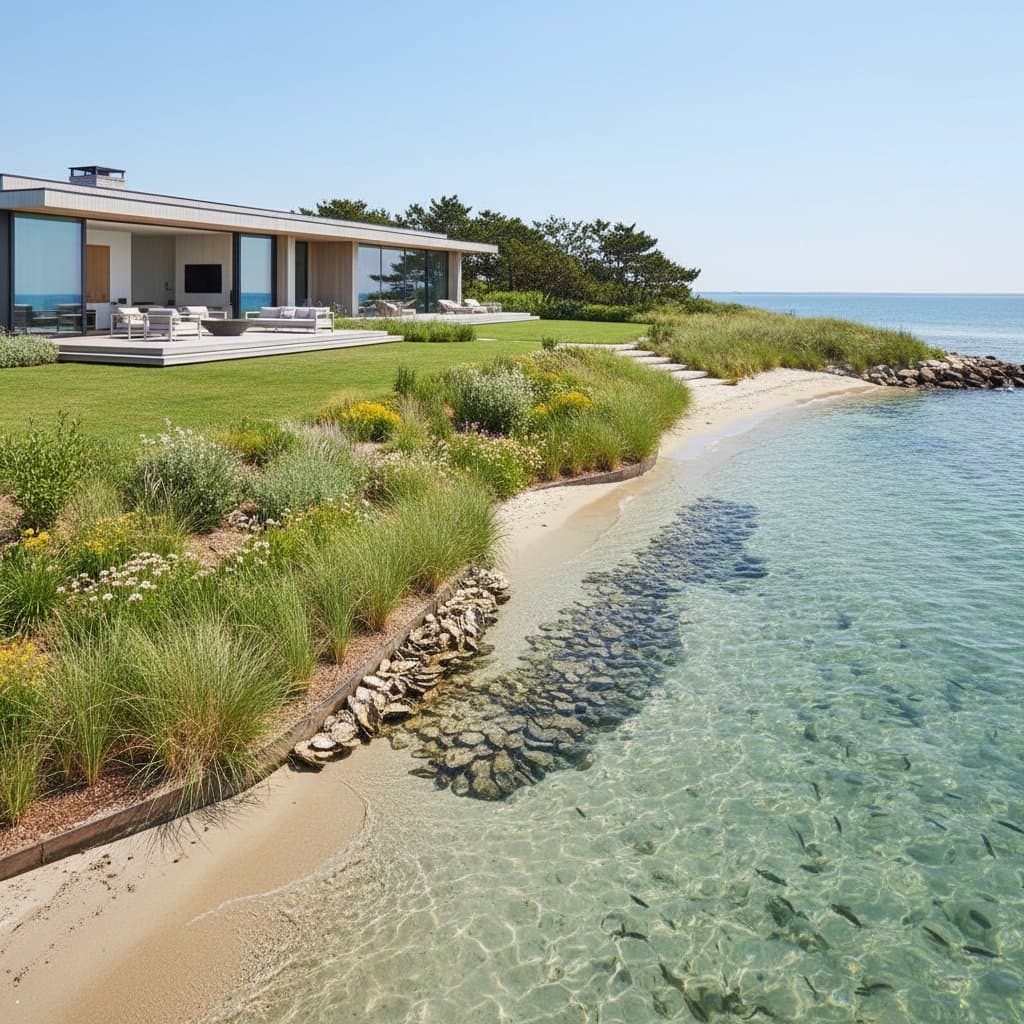
Coastal Homeowners Save $80,000 by Replacing Seawalls with Living Shorelines
Property owners near the coast traditionally depend on concrete seawalls to shield their land from erosion and floodwaters. However, these structures carry substantial expenses and produce negative side effects. In numerous coastal areas, individuals now opt to substitute seawalls with natural living shorelines, which deliver savings of $80,000 or greater and strengthen property resilience over time.
This resource outlines the mechanics of living shorelines, their advantages over conventional seawalls, and practical measures for homeowners to implement these eco-conscious approaches for enduring safeguards and visual appeal.
The Transition from Seawalls to Living Shorelines
Seawalls consist of solid concrete or stone barriers constructed to deflect incoming waves. Although they appear robust, these installations redirect wave force instead of dissipating it. Such redirection accelerates erosion at the structure's foundation, compromises its integrity, and disrupts adjacent ecological systems.
Living shorelines, by comparison, employ organic components like indigenous grasses, oyster reefs, rock sills, and sand deposits to secure shorelines. These features dissipate wave energy, reduce soil loss, and generate environments for aquatic species and avian populations. They integrate harmoniously into the surrounding landscape while defending the adjacent terrain.
Key Reasons for the Change
-
Financial Advantages: The construction or upkeep of a seawall frequently exceeds $100,000, whereas living shorelines generally cost from $20,000 to $60,000, influenced by site dimensions and configuration.
-
Durability: Organic structures evolve with time, gaining fortitude as plants develop. Seawalls, in contrast, develop fissures, shift position, and demand costly fixes.
-
Ecological Gains: These shorelines enhance water purity and bolster marine biodiversity. They also mitigate storm surges without damaging inherent habitats.
-
Visual Enhancement: A verdant, vibrant shoreline elevates real estate worth and harmonizes with the seaside scenery.
Developing a Living Shoreline Initiative
Homeowners must first analyze site-specific factors, including terrain incline, tidal fluctuations, and current plant life. Every location demands a customized plan that respects its inherent patterns.
Step 1: Engage Local Specialists
Contact coastal engineers, ecological advisors, or regional preservation organizations versed in shoreline revival. These professionals evaluate the area and suggest appropriate resources and flora varieties suited to local conditions.
Step 2: Obtain Necessary Permits
Living shorelines encounter fewer bureaucratic obstacles than seawalls, yet approvals remain essential. Collaborate with regional environmental authorities to verify adherence to regulations, often submitting site plans and impact assessments.
Step 3: Select Appropriate Components
Essential features encompass:
-
Indigenous marsh grasses, which bind soil and moderate wave velocity through root systems that extend deep into the ground.
-
Oyster shells or modular reef units, providing foundational support and fostering shellfish growth to further stabilize sediment.
-
Timber coir logs or biodegradable fiber barriers, shielding emerging vegetation during the initial rooting phase against tides and currents.
Consider soil composition and exposure to winds when choosing; for instance, salt-tolerant species like Spartina alterniflora thrive in brackish zones.
Step 4: Employ Skilled Contractors
Choose builders proficient in bioengineered shoreline methods. Request client testimonials, examine past installations, and insist on itemized proposals detailing resource sourcing, labor allocation, and timelines for completion.
Sustaining a Living Shoreline
Established living shorelines demand little ongoing effort, though vigilant oversight proves crucial in the formative period.
-
Conduct evaluations following significant weather events to identify any sediment displacement or foliage damage.
-
Supplement plantings where gaps appear to preserve full coverage and structural integrity.
-
Restrict pedestrian access during the inaugural growth cycle to avoid compaction of developing roots.
-
Eradicate non-native plants that threaten to overshadow beneficial species, using manual removal or targeted herbicides approved for aquatic use.
Regular monitoring, such as quarterly walks along the edge, ensures the system remains effective and adapts to seasonal changes.
Common Inquiries
What savings result from selecting a living shoreline instead of a seawall?
Numerous property owners realize approximately $80,000 in reductions relative to fresh seawall builds, with variations tied to project scope, regional pricing, and workforce expenses.
Do living shorelines necessitate extensive upkeep?
Following the setup phase, care remains light. Periodic replanting and routine checks suffice to uphold vitality.
Are living shorelines as robust as seawalls?
Indeed, with sound engineering. They respond organically to environmental shifts and often outlast inflexible barriers prone to fracturing or undermining.
Is it feasible to construct a living shoreline independently?
Modest undertakings might suit self-directed efforts, yet professional input typically yields superior outcomes for sustained performance.
Cultivating a Resilient Coastal Legacy
Homeowners who exchange rigid concrete for dynamic natural frameworks secure their assets, nurture marine environments, and realize considerable financial relief. Through meticulous preparation and expert collaboration, a shoreline emerges as a dual asset: a steadfast defender and a flourishing ecological haven.