
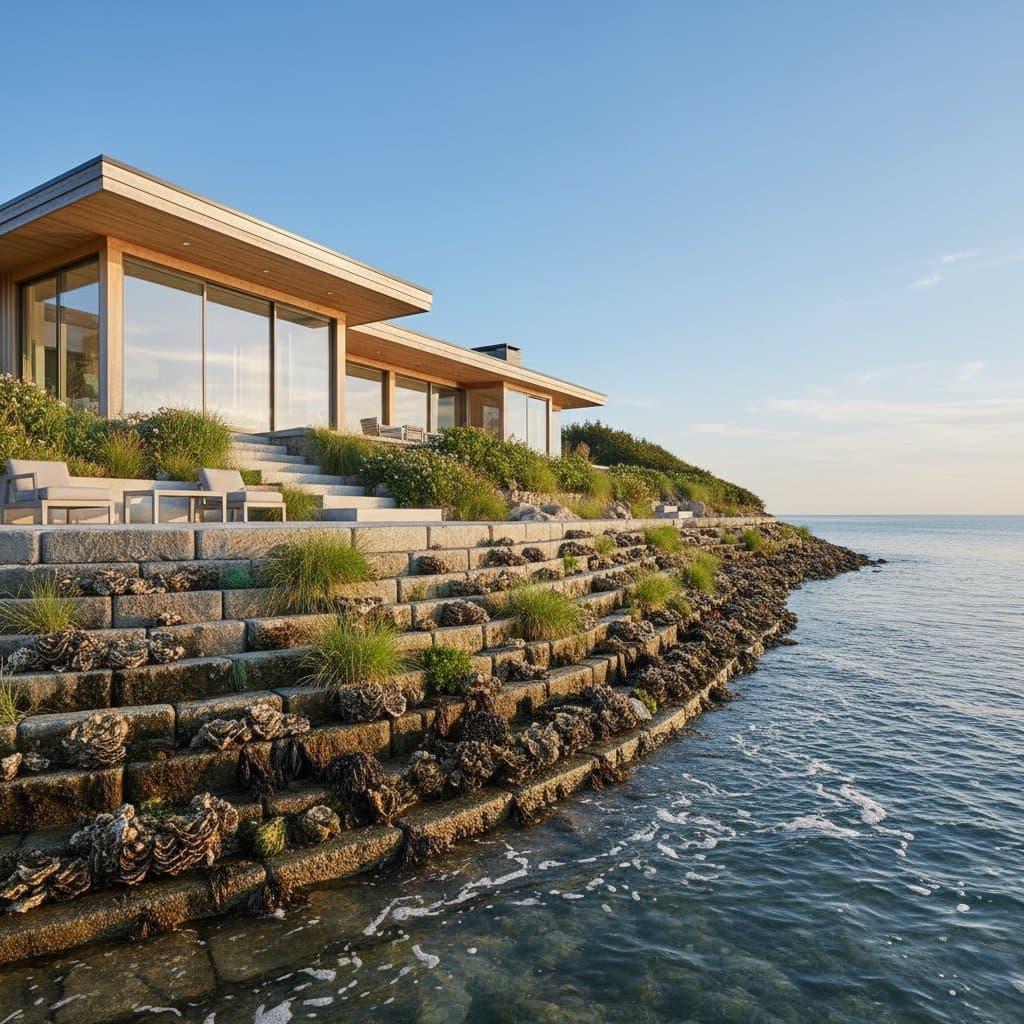
Living Seawalls Outperform Bulkheads in Erosion Control
Imagine standing on a serene waterfront at dawn, observing sunlight dance across gentle waves. Over the years, you may have noticed subtle shifts in the shoreline. Perhaps the water edges nearer to your deck, or the rocks once exposed at low tide now lie hidden beneath the surface. Coastal erosion poses real threats to property values, local ecosystems, and the structural integrity of waterfront residences. For many years, bulkheads and concrete barriers served as standard defenses. Although they appeared robust, numerous property owners later realized these structures frequently accelerated erosion.
The living seawall represents an innovative strategy that integrates engineering principles with ecological design. Rather than opposing natural forces, this approach collaborates with them. Living seawalls incorporate textured surfaces, indigenous vegetation, and habitats such as oyster reefs to capture wave energy, minimize sediment loss, and promote biological diversity. Initial expenses typically fall between $250 and $1,200 per linear foot, yet the enduring advantages frequently surpass those of conventional barriers. A standard living seawall installation averages $35,000 to $70,000, influenced by project scale and selected components.
For those evaluating shoreline safeguards, this sustainable alternative merits consideration. Property owners can customize designs with expert advice or solicit estimates from reputable contractors experienced in environmentally conscious stabilization techniques.
Cost Factors
Constructing a living seawall demands upfront investment, yet it extends beyond mere erosion prevention. These structures also cultivate habitats and elevate water quality. Property owners generally incur costs of $250 to $1,200 per linear foot, determined by material choices, environmental conditions, and structural intricacy.
Average project cost: Approximately $50,000 for a typical mid-sized waterfront site.
Main Cost Drivers
- Site conditions – Sloped terrain, restricted access, or loose substrates necessitate advanced engineering and preparatory measures.
- Materials – Options such as modular concrete panels featuring rough textures, recycled oyster shells, limestone aggregates, or locally sourced stone exhibit significant price variations.
- Labor – Projects in coastal areas require skilled teams versed in tidal operations and regulatory adherence.
- Permits and design – Budget $2,000 to $10,000 for consultations, topographic surveys, and ecological approvals.
- Habitat features – Incorporating elements like oyster clusters, mangrove plantings, or salt-resistant flora elevates expenses while substantially amplifying environmental gains.
Bulkheads might seem more economical initially, with costs around $200 to $600 per linear foot, but they often demand repairs or full replacements within ten years. In contrast, living seawalls endure longer when maintained appropriately, positioning them as the superior long-term choice.
Factors to Consider Before Building
When comparing living seawalls to bulkheads, evaluate their performance during dynamic conditions. Bulkheads redirect wave forces, leading to sediment erosion at their foundations. Living seawalls, however, mitigate this through absorbent vegetation and engineered textures that diffuse energy.
Key Considerations
- Wave exposure: Regions with intense wave action benefit from hybrid configurations or supplementary rock armoring.
- Soil stability: Loose sands or silts require robust anchoring systems paired with sediment-retaining vegetation.
- Tidal range: Structures must accommodate fluctuating exposure patterns tied to daily cycles.
- Permits: Local authorities frequently mandate ecological assessments for any shoreline modifications.
- Maintenance access: Plan for secure pathways to facilitate routine inspections and upkeep.
Living seawalls excel in settings that permit ongoing natural dynamics while providing protection. Although not universally applicable, they adapt effectively to diverse coastal environments.
Strategies to Reduce Installation Costs
If budget constraints concern you regarding a living seawall, consider practical methods to lower expenses while upholding durability.
- Incorporate recycled materials: Utilize crushed concrete, salvaged stone, or discarded oyster shells to decrease procurement costs.
- Implement phased construction: Prioritize high-risk areas initially, then extend coverage incrementally as funds become available.
- Leverage community initiatives: Certain regional conservation groups provide financial assistance for projects that advance habitat recovery.
- Handle plantings independently: Reduce labor fees by personally installing suitable native species.
- Solicit competitive bids: Contractor rates differ considerably, even locally, so compare several proposals.
Through thoughtful resourcefulness and strategic planning, property owners can achieve an economical yet steadfast shoreline solution.
Environmental and Aesthetic Advantages
Living seawalls transcend property protection by rehabilitating coastal ecosystems altered by rigid infrastructure.
Ecological Value
- Habitat creation: The irregular surfaces attract fish, crustaceans, oysters, and avian species for refuge and foraging.
- Water filtration: Oysters and wetland flora extract contaminants and surplus nutrients from surrounding waters.
- Carbon sequestration: Plant roots and accumulated sediments store atmospheric carbon over time.
Visual Appeal
Rather than presenting a monotonous concrete facade, these installations yield vibrant shorelines rich in form and vitality. Many owners report increased property appraisals stemming from enhanced scenery and ecological prestige.
Frequently Asked Questions
How does a living seawall differ from a bulkhead?
A bulkhead functions as a rigid vertical shield that repels waves, whereas a living seawall employs organic textures and plant life to soften and redirect wave impacts. This design averts base scour and nurtures aquatic biodiversity, avoiding the rebound of energy into adjacent waters.
Do living seawalls require permits?
Yes, jurisdictions typically enforce environmental clearances due to impacts on coastal habitats. Engaging a qualified advisor streamlines compliance with regional and statewide mandates.
Can living seawalls withstand major storms?
Well-engineered versions manage substantial wave loads. Hybrid variants blending stone reinforcements with biotic elements prove particularly effective in extreme events.
Are they suitable for all coastlines?
These systems thrive in protected or moderately active zones. Areas with relentless surf demand fortified builds or complementary offshore defenses.
How soon does marine life colonize them?
Algae and microorganisms often appear within months. Over subsequent seasons, established populations of oysters, barnacles, and fish develop robust ecosystems.
Steps to Implement Your Living Seawall
Residing on the coast highlights the formidable influence of water. Opting for a living seawall selects a method that persists through harmony with elemental processes, rather than opposition. It safeguards assets, bolsters regional biology, and fosters a dynamic rather than barren waterfront.
Initiate with a professional site evaluation, collect bids from varied specialists, and consult authorities blending technical and natural expertise. Whether undertaking elements personally or delegating to professionals, each installation fortifies collective coastal endurance.