
Nine Key Differences Between Limestone and Concrete for Coastal Salt Air Durability
Coastal residences offer breathtaking views and a serene lifestyle, yet the persistent salt-laden air poses significant challenges to outdoor structures. Homeowners must select materials that resist corrosion, erosion, and moisture while preserving visual appeal. Limestone and concrete stand out as favored options for patios, driveways, and walkways, each presenting unique strengths and vulnerabilities in saline conditions.
This analysis outlines nine critical distinctions to guide your decision-making process. By understanding how these materials interact with salt exposure, you can choose wisely and implement protective measures to extend their service life.
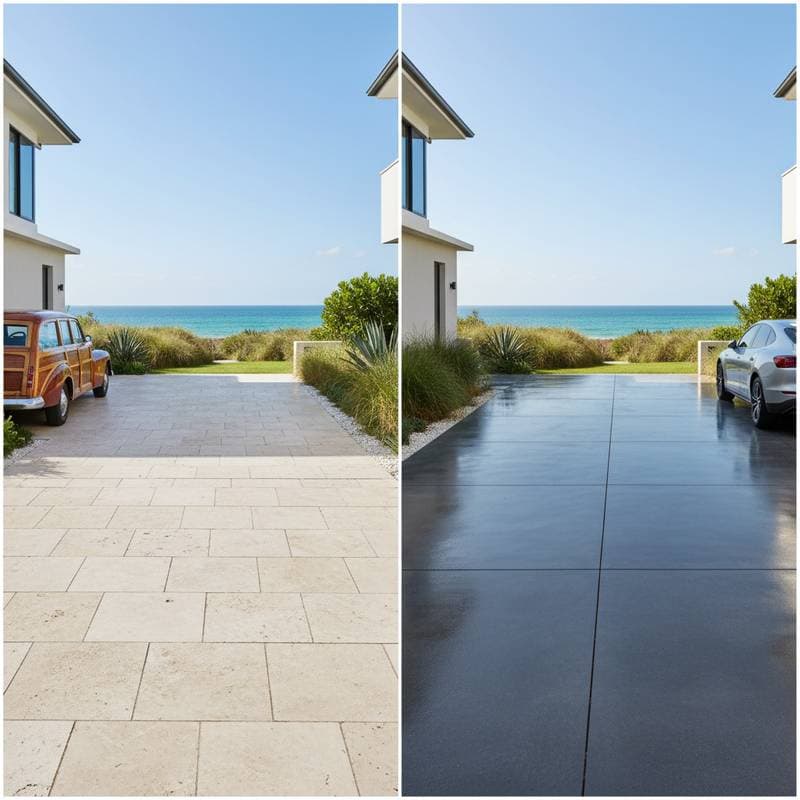
[Image: Coastal home patio with limestone pavers and concrete driveway]
Material Composition and Structure
1. Natural Formation Versus Engineered Mix
Limestone emerges from ancient marine deposits compressed over millennia, resulting in a sedimentary rock with inherent veining and tonal variations. This natural composition lends an authentic, earthy look ideal for blending with beachside landscapes. In contrast, concrete arises from a blend of Portland cement, aggregates like sand and gravel, and water, allowing customization in color, texture, and form.
The organic origins of limestone make it more susceptible to environmental influences, while concrete's controlled formulation enables enhancements for specific conditions.
2. Porosity Levels and Moisture Absorption
Limestone's porous nature permits salt crystals and water to penetrate deeply, potentially causing spalling or pitting over time. Sealing mitigates this issue, but untreated surfaces degrade faster in humid, salty atmospheres. Concrete varies in porosity based on its water-cement ratio; denser mixes repel moisture effectively, though standard formulations may absorb salts if not optimized.
Lower porosity in high-quality concrete reduces the risk of internal damage, whereas limestone demands vigilant surface protection to maintain integrity.
Resistance to Salt Air and Corrosion
3. Surface Erosion from Salt Crystallization
Salt in coastal air deposits on surfaces and, upon moisture evaporation, forms crystals that expand and erode material. Limestone suffers more pronounced surface wear, developing pits and a roughened texture that alters its smooth finish. Concrete resists surface erosion better due to its harder matrix, but embedded salts can still contribute to gradual crumbling if unchecked.
Regular rinsing with fresh water prevents salt buildup on both, preserving their appearance and structural soundness.
4. Internal Corrosion and Reinforcement Vulnerability
Concrete often incorporates steel rebar for reinforcement, which rusts when chlorides from salt air infiltrate through cracks or pores. This expansion weakens the material from within, leading to spalling and costly repairs. Limestone lacks metal components, avoiding this corrosion risk entirely, though it faces direct dissolution from acidic saltwater solutions.
Selecting fiber-reinforced or stainless steel alternatives in concrete minimizes long-term corrosion threats in marine zones.
Installation Processes
5. Labor-Intensive Placement for Natural Stone
Limestone installation involves sourcing uniform slabs or pavers, preparing a stable sub-base of compacted gravel and sand, and meticulously leveling each piece to prevent uneven settling. Variations in stone thickness require skilled adjustments, extending project timelines. In coastal areas, ensuring proper drainage during installation averts water pooling that exacerbates salt damage.
Professional masons recommend polymeric sand between joints to inhibit weed growth and salt migration.
6. Efficient Pouring and Forming Techniques
Concrete setup proceeds rapidly through formwork, reinforcement placement, and on-site pouring, followed by a curing period of at least seven days under moist conditions. Coastal projects benefit from elevated slabs or sloped surfaces to direct runoff away from foundations. The uniformity of poured concrete simplifies large-scale applications like driveways.
Admixtures such as corrosion inhibitors during mixing bolster performance in salty environments.
Maintenance and Upkeep Demands
7. Sealing and Cleaning Routines
Limestone necessitates periodic sealing with breathable, penetrating products to block salt ingress without trapping moisture, typically every 12 to 24 months in high-exposure zones. Cleaning requires soft brushes and mild detergents to avoid abrasive damage. Concrete maintenance focuses on crack sealing with epoxy fillers and applying acrylic sealers annually to enhance water repellency.
Both materials profit from weekly sweeps and monthly freshwater rinses to dissolve accumulated salts.
Aesthetic and Practical Trade-Offs
8. Visual Aging and Design Flexibility
Limestone matures gracefully, acquiring a weathered patina that complements coastal motifs and hides minor imperfections. Its limited color palette suits neutral schemes but restricts bold designs. Concrete offers endless customization through stamping, staining, or polishing, mimicking stone or wood while allowing vibrant accents.
Over time, limestone's charm endures, whereas concrete may require resurfacing to retain vibrancy.
Economic and Long-Term Factors
9. Initial Costs Versus Lifecycle Expenses
Limestone commands a premium upfront due to quarrying and handling, with installation costs rising from its bespoke nature; expect $10 to $20 per square foot. Ongoing sealing adds to expenses, but its durability can span 50 years with care. Concrete proves more economical at $4 to $8 per square foot initially, though repairs for rebar corrosion or resurfacing every 10 to 15 years balance the scales.
Factor in local labor rates and material availability when budgeting for coastal projects.
[Image: Comparison of limestone patio and concrete driveway near ocean]
Frequently Asked Questions
Can limestone support heavy loads like vehicles in coastal driveways?
Limestone pavers handle moderate traffic well if installed over a reinforced base, but frequent heavy use accelerates wear compared to concrete slabs.
What is the ideal sealing frequency for these materials in salt-heavy areas?
Reseal limestone every one to two years and concrete every one to three years, adjusting based on visible salt residue and weathering.
Do both materials suffer equivalent damage from salt exposure?
Limestone experiences more surface dissolution, while concrete risks deeper structural compromise from rebar rust if not protected.
Which option provides better thermal comfort in sunny coastal climates?
Limestone reflects heat more effectively, remaining cooler underfoot than concrete, which absorbs and retains solar warmth.
Protecting Your Coastal Investment
Sustaining hardscapes in salt air environments requires consistent vigilance and targeted interventions. Schedule annual inspections to identify early signs of deterioration, such as efflorescence or minor cracks. Integrate drought-resistant plants around edges to minimize soil moisture fluctuations that amplify salt effects.
By aligning your choice with lifestyle priorities—whether timeless elegance or practical resilience—you ensure outdoor spaces remain functional and inviting for years. Consult local experts for site-specific advice to optimize performance.