
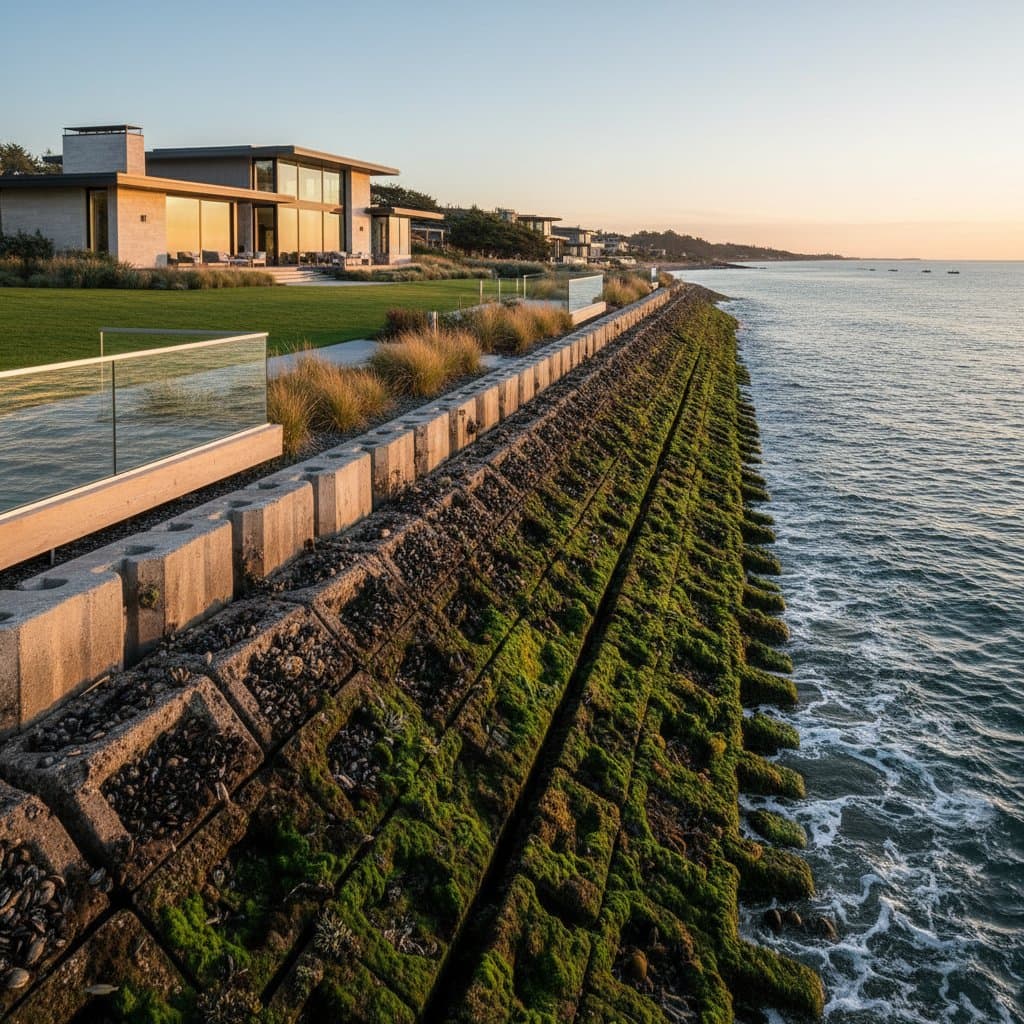
Living Seawalls: A Superior Defense Against Coastal Erosion
Coastal erosion poses a significant threat to shorelines worldwide, endangering homes, infrastructure, and natural habitats. Traditional concrete seawalls have long served as barriers, yet they often exacerbate environmental damage and require frequent repairs. Living seawalls emerge as an innovative alternative, reducing erosion by up to 60 percent while promoting ecological health.
These structures integrate natural elements with engineering precision to create resilient coastal defenses. Homeowners and coastal communities increasingly adopt them for their dual benefits of protection and sustainability. This article explores their design, installation, and advantages.
Understanding Coastal Erosion and Traditional Solutions
Waves, tides, and storms relentlessly wear away shorelines, leading to land loss and habitat disruption. In areas like San Diego, where beaches attract millions annually, erosion accelerates due to rising sea levels and human development. Concrete seawalls attempt to halt this process by reflecting wave energy back to sea.
However, these rigid barriers create scour at their bases, undermining foundations over time. They also block sunlight and sediment flow, harming marine life. Maintenance costs for concrete structures can exceed thousands of dollars yearly, making them a short-term fix with long-term drawbacks.
Living seawalls address these issues by mimicking natural rock formations. Textured surfaces and integrated vegetation absorb rather than deflect waves, dissipating energy more effectively. Studies indicate they retain 60 percent more sediment than concrete counterparts, preserving beach integrity.
Key Features of Living Seawalls
Living seawalls utilize eco-friendly materials such as recycled concrete, basalt rock, or modular polymer blocks. These components feature irregular surfaces that encourage algae, barnacles, and shellfish attachment. Over time, this biofilm layer enhances wave attenuation and provides habitat for fish and invertebrates.
Vegetation plays a crucial role, with native plants like cordgrass or mangroves planted along the upper sections. Roots stabilize soil, while foliage buffers wind and reduces runoff. Some designs incorporate oyster reefs or artificial kelp to further boost biodiversity.
Durability defines these structures. Unlike concrete, which cracks under pressure, living seawalls flex with tidal movements. Their organic growth adapts to changing conditions, extending lifespan beyond 50 years in many cases.
Materials and Construction Techniques
Selection of materials depends on local conditions, including wave intensity and soil type. For moderate erosion zones, permeable geotextile fabrics wrapped around rock cores allow water passage while trapping sediment. In high-energy areas, interlocking concrete modules with pre-drilled holes for plant roots offer added strength.
Construction begins with site assessment by marine engineers. They evaluate water depth, current patterns, and ecological sensitivity. Excavation follows, creating a stable foundation trench filled with gravel for drainage.
Installation proceeds in layers: base rocks for stability, mid-level textured panels for habitat, and topsoil berms for vegetation. The process typically spans two to four weeks, minimizing disruption to beach access. Post-installation monitoring ensures proper establishment of marine communities.
Benefits Beyond Erosion Control
The primary advantage lies in erosion reduction, but living seawalls deliver multifaceted gains. They enhance water quality by filtering pollutants through plant roots and shellfish filtration. This natural purification supports healthier bays and estuaries.
Biodiversity flourishes as these walls become artificial reefs. Species diversity can increase by 30 percent within the first year, attracting birds, fish, and even boosting local fisheries. For homeowners, this translates to scenic views and potential eco-tourism opportunities.
Financially, initial costs range from 20,000 to 50,000 dollars per 100 feet, higher than basic concrete at 15,000 dollars. Yet, savings accrue through reduced maintenance—often 70 percent lower—and increased property values. Resilient shorelines appeal to buyers, potentially raising home prices by 10 to 15 percent in coastal markets.
Insurance providers recognize these benefits, offering premium discounts for sustainable defenses. Long-term, living seawalls mitigate flood risks, protecting investments against climate change impacts.
Design and Installation Tips for Homeowners
Tailor designs to your property's unique needs. Consult certified coastal engineers to model wave patterns using software simulations. Incorporate site-specific elements, such as drought-resistant plants for arid regions like Southern California.
Budget wisely by phasing installation: start with core structures and add vegetation over time. Seek grants from environmental agencies, which often fund up to 50 percent for green infrastructure projects.
Maintenance remains straightforward. Annual inspections check for debris buildup or plant health. Trimming overgrowth and replanting sparse areas prevent issues, requiring only a few hours seasonally.
- Assess your shoreline: Measure erosion rates and identify vulnerable spots.
- Choose materials: Opt for locally sourced rocks to minimize carbon footprint.
- Plan for integration: Ensure the wall blends with existing landscape features.
- Monitor progress: Track sediment retention and wildlife activity quarterly.
Long-Term Resilience and Community Impact
Living seawalls contribute to broader coastal resilience strategies. Communities that adopt them experience fewer emergency responses to storm damage. Enhanced habitats support tourism economies, drawing visitors to vibrant, protected beaches.
As climate projections indicate accelerated sea level rise, these structures future-proof shorelines. They foster a shift from reactive to proactive environmental management, benefiting generations ahead.
Homeowners gain peace of mind knowing their properties stand fortified against nature's forces. The combination of engineering and ecology ensures lasting protection with minimal ecological footprint. Consider living seawalls not just as barriers, but as investments in sustainable coastal living.