
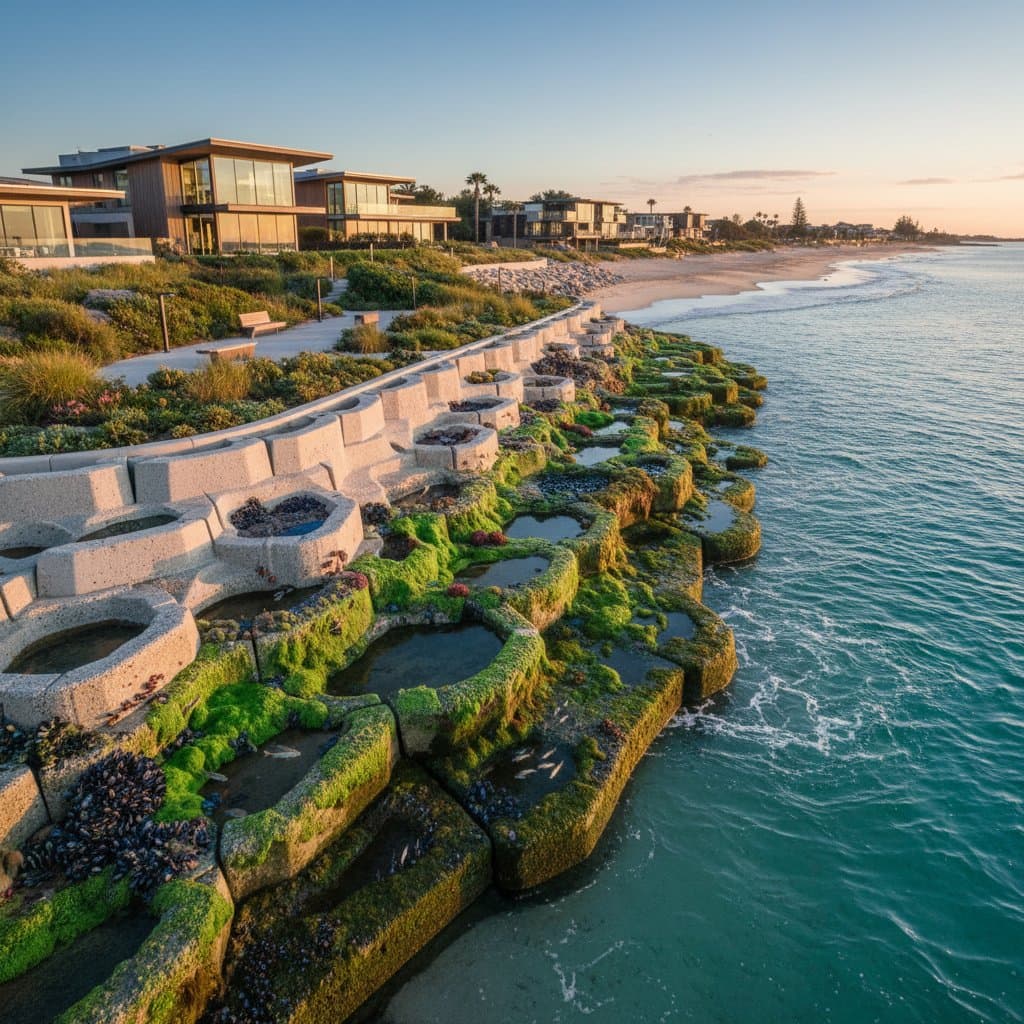
Why Living Seawalls Outperform Concrete in Coastal Protection
Coastal regions provide stunning landscapes, yet they face persistent threats from erosion, rising sea levels, and intense storm surges. For many years, concrete seawalls served as the primary method to shield shorelines. Although these structures project strength, they frequently generate greater environmental damage over time. Living seawalls emerge as an innovative, environmentally integrated option that delivers protection alongside ecological restoration.
This article details the distinctions of living seawalls, their operational principles, and the reasons they represent a superior, sustainable strategy for coastal areas.
Understanding Living Seawalls
Living seawalls fuse engineering principles with ecological design. Rather than depending on impenetrable, barren concrete, they incorporate organic materials and configurations that nurture marine species and bolster coastal durability. Consider them bioengineered defenses that safeguard assets while reconstructing vital ecosystems.
How They Function
A living seawall employs modular panels or frameworks crafted with varied textures, recesses, and contours that replicate natural environments such as tide pools or coral formations. These elements offer refuge for organisms including barnacles, oysters, algae, and juvenile fish. As these species proliferate, they develop organic coatings that reinforce the framework and purify surrounding waters.
Materials Employed
Construction of living seawalls involves a combination of:
- Eco-conscious concrete formulations with minimized carbon emissions
- Recycled shellfish shells or aggregates to generate authentic surface irregularities
- Indigenous plants that secure adjacent soils and mitigate wave impacts
- Strategically positioned timber or stone to encourage species diversity
Professionals choose these components to harmonize with local ecosystems rather than oppose them.
Limitations of Concrete Seawalls
Concrete seawalls convey an impression of robustness, yet they introduce significant issues for ecosystems and landowners alike.
Ecological Impacts
These rigid barriers redirect wave forces rather than dissipate them, resulting in:
- Accelerated erosion at the structure's foundation and adjacent sites
- Elimination of intertidal zones essential for diverse species
- Degraded water conditions from the absence of biological filtration
Consequently, the intended protective measure often exacerbates coastal degradation.
Ongoing Upkeep and Limited Durability
Exposure to saline water and fluctuating tides causes concrete to fracture, erode, and degrade. Restoration efforts prove expensive, and the smooth surfaces discourage marine colonization that might prolong service life. As a result, expenses accumulate while environmental contributions stay absent.
Benefits of Living Seawalls
Living seawalls achieve equilibrium between defense and renewal. They extend beyond mere utility to actively regenerate surroundings.
1. Effective Erosion Management
The textured exteriors and integrated greenery of living seawalls capture and diffuse wave power. This approach minimizes undercutting and preserves sediment dynamics, which prove essential for beach integrity and plant stability.
2. Fostering Habitats
In place of sterile expanses , living seawalls draw and nurture aquatic biodiversity. Species such as oysters, mussels, crabs, and minnows secure homes and sustenance within the design. Such vitality enriches the broader ecosystem and local human interests.
3. Enhanced Water Clarity
Colonizing marine life functions as inherent purifiers. These organisms extract contaminants, surplus nutrients, and particulates, yielding pristine and robust coastal waters.
4. Visual and Social Enhancements
Living seawalls integrate seamlessly with landscapes, elevating the aesthetic quality of waterfronts. They facilitate learning experiences for educational groups, scientists, and community members to engage with marine biology in accessible settings.
5. Sustained Durability
Biological accumulation fortifies the seawall progressively. Expanding organisms seal fissures and form adaptive layers, thereby amplifying structural endurance against environmental stresses.
Planning and Implementing a Living Seawall
Shifting from conventional to living seawalls demands careful preparation.
Step 1: Evaluate Local Conditions
Examine factors like wave intensity, submersion levels, and current biological communities. This analysis informs optimal configurations and material selections tailored to the site.
Step 2: Collaborate with Specialists
Engage coastal engineers and ecologists proficient in bioengineering practices. Their expertise ensures designs fulfill engineering requirements and ecological objectives simultaneously.
Step 3: Select Appropriate Components
Opt for regionally sourced, non-toxic substances conducive to organism attachment. Modular units frequently adapt to upgrade pre-existing concrete installations.
Step 4: Schedule Upkeep
Living seawalls demand minimal intervention compared to concrete alternatives. Regular assessments verify the well-being of flora and fauna while confirming structural integrity.
Frequently Asked Questions
What Defines a Living Seawall?
A living seawall constitutes a shoreline defense incorporating natural elements and features to harbor marine organisms while curbing erosion.
How Long Does a Living Seawall Endure?
With sound design and care, a living seawall persists for multiple decades. Biological reinforcements often extend its service beyond initial projections.
Do Living Seawalls Cost More Than Concrete Ones?
Upfront investments may exceed those for concrete due to specialized materials and design. However, reduced maintenance and ecological gains yield long-term financial advantages.
Is Retrofitting Possible for Existing Concrete Walls?
Yes, modular attachments and surface modifications enable conversion of concrete structures into living seawalls, enhancing their functionality without full replacement.
Do Living Seawalls Suit Every Coastal Setting?
They perform best in moderate wave environments with suitable substrates for growth. Harsh conditions may require hybrid approaches combining living and traditional elements.
Do Living Seawalls Provide Reliable Property Safeguards?
Absolutely, they adhere to rigorous engineering standards for wave resistance and stability, offering protection comparable to or exceeding conventional methods.
Advancing Coastal Vitality Through Living Seawalls
Adopting a living seawall represents a proactive investment in asset security, ecosystem recovery, and marine health. Homeowners along the shore or community planners developing extensive defenses benefit from this method's synergy of safety and ecological harmony.